Chat with us 1
Practical Training Certified Trainers Safer Workplaces

Workplace Stress Management Training

Corporate Training in Bangalore, Hyderabad & Pan-India

In today's fast-paced and highly competitive work environment, employees are constantly exposed to deadlines, performance expectations, workload pressures, organizational changes, technological advancements, interpersonal conflict...
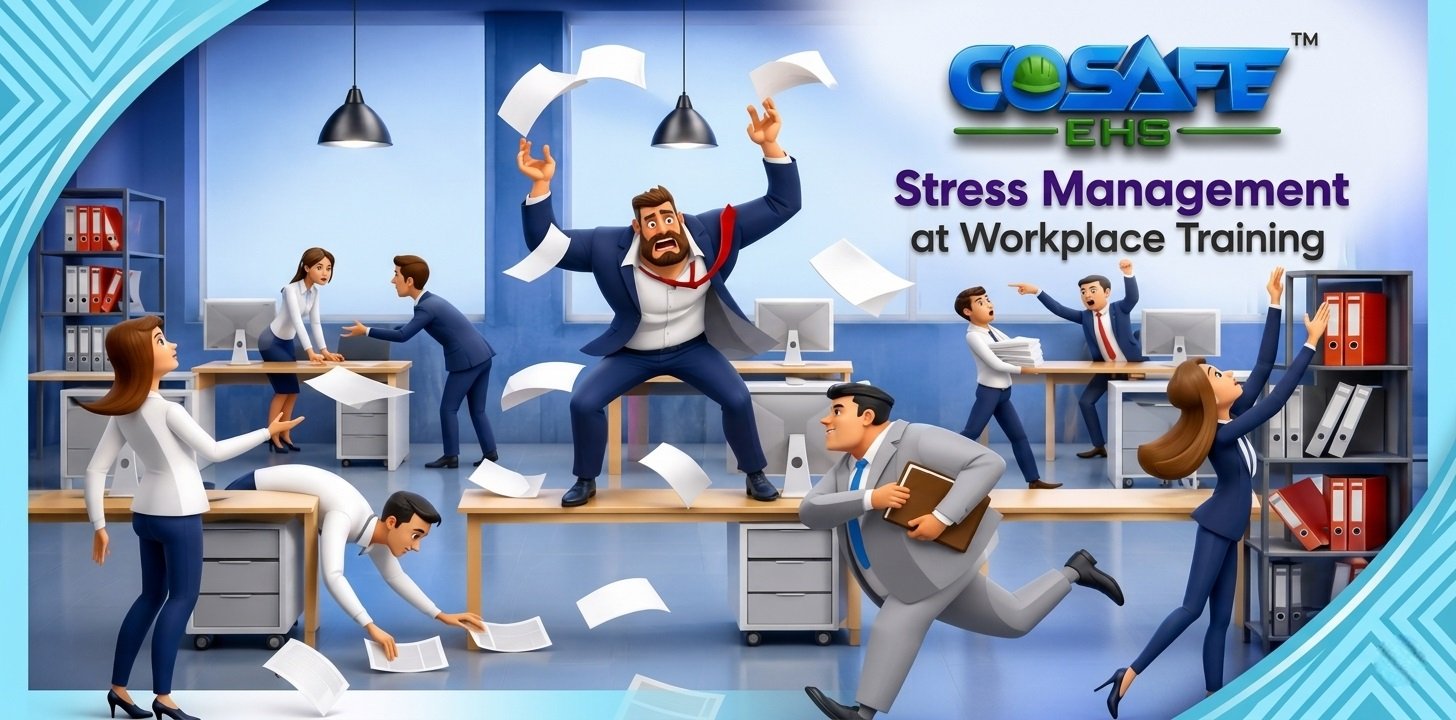
Workplace Stress Management  Training

Flexible Delivery Options

As per your organizational needs

On-SiteClassroomOnline

Practical & Scenario-Based

Real-life examples, live demonstrations and workplace scenarios

Certificate Provided

Issued to every participant after successful completion of the training

Workplace Stress Management  Training session

Overview

Stress Management at Workplace Training in Bangalore & Hyderabad

Professional Workplace Stress Management Training by Cosafe EHS Bangalore & Hyderabad


In today's fast-paced and highly competitive work environment, employees are constantly exposed to deadlines, performance expectations, workload pressures, organizational changes, technological advancements, interpersonal conflicts, and work-life balance challenges. While a certain level of stress can motivate individuals to perform effectively, prolonged or unmanaged workplace stress can negatively impact employee health, productivity, morale, engagement, safety, and overall organizational performance.

According to global occupational health studies, workplace stress is one of the leading contributors to absenteeism, reduced productivity, burnout, mental fatigue, workplace incidents, employee turnover, and decreased job satisfaction. Organizations that proactively address workplace stress create healthier work environments, improve employee well-being, enhance retention, and strengthen overall business performance.

At Cosafe EHS Bangalore & Hyderabad, our Workplace Stress Management Training Program is designed to help employees, supervisors, managers, and organizational leaders recognize stressors, understand the effects of stress, develop resilience, improve emotional well-being, and adopt practical coping strategies for managing workplace pressures effectively.

Our training combines occupational health principles, psychological well-being practices, behavioral science techniques, communication skills, and stress reduction strategies to create healthier, safer, and more productive workplaces.

What is Workplace Stress Management?

Workplace Stress Management is the process of identifying, understanding, controlling, and reducing physical, emotional, mental, and behavioral stress caused by workplace demands and environmental factors. It involves developing skills, strategies, and support systems that help employees manage challenges effectively while maintaining health, performance, and job satisfaction.

Stress management focuses on:

  • Identifying workplace stressors

  • Recognizing early warning signs of stress

  • Managing emotional responses

  • Building resilience and adaptability

  • Improving work-life balance

  • Enhancing communication and relationships

  • Preventing burnout and fatigue

  • Promoting mental well-being

  • Improving focus and productivity

  • Creating a positive workplace culture

Why Workplace Stress Management is Important

Unmanaged workplace stress can lead to numerous organizational and individual consequences, including:

  • Reduced employee productivity

  • Increased absenteeism

  • Higher employee turnover

  • Increased workplace conflicts

  • Reduced concentration and focus

  • Poor decision-making

  • Increased workplace accidents and incidents

  • Burnout and emotional exhaustion

  • Lower employee engagement

  • Negative impacts on organizational culture

By implementing effective stress management programs, organizations can significantly improve employee wellness, performance, and workplace satisfaction.

Objectives of Workplace Stress Management Training

The primary objectives of this training include:

  • Understanding workplace stress and its causes

  • Identifying personal and organizational stressors

  • Recognizing signs and symptoms of stress

  • Learning effective stress management techniques

  • Building resilience and emotional intelligence

  • Improving communication and conflict resolution skills

  • Enhancing work-life balance

  • Managing workplace pressure effectively

  • Preventing burnout and mental fatigue

  • Promoting overall employee well-being

Key Benefits of Workplace Stress Management Training

Organizations that invest in stress management training can achieve:

  • Improved employee productivity

  • Enhanced job satisfaction

  • Better employee engagement

  • Reduced absenteeism

  • Lower turnover rates

  • Improved workplace relationships

  • Increased resilience and adaptability

  • Better mental and emotional health

  • Enhanced organizational culture

  • Stronger team performance

Common Workplace Stressors

Participants learn how to identify common stress triggers such as:

  • Excessive workload

  • Tight deadlines

  • Job insecurity

  • Organizational changes

  • Role ambiguity

  • Workplace conflicts

  • Lack of communication

  • Poor management practices

  • Long working hours

  • Work-life imbalance

Understanding these stressors is the first step toward effective management.

Who Should Attend?

This training is ideal for:

  • Employees at all levels

  • Team Leaders

  • Supervisors

  • Managers

  • HR Professionals

  • EHS Managers

  • Corporate Trainers

  • Department Heads

  • Project Managers

  • Customer Service Teams

  • Healthcare Professionals

  • Organizational Leaders

At Cosafe EHS Bangalore & Hyderabad, our Workplace Stress Management Training is customized to address industry-specific challenges and organizational wellness objectives.

Workplace stress is one of the most significant challenges affecting employee well-being, productivity, safety, and organizational success. When left unmanaged, stress can lead to burnout, absenteeism, reduced performance, workplace conflicts, and diminished morale. However, with the right knowledge, skills, and support systems, employees can effectively manage workplace pressures, build resilience, and maintain a healthy work-life balance.

At Cosafe EHS Bangalore & yderabad, our Workplace Stress Management Training Program equips employees, supervisors, and leaders with practical tools to identify stressors, improve emotional well-being, enhance resilience, and foster a positive workplace culture. Through interactive learning, real-world case studies, and practical stress management techniques, we help organizations create healthier, happier, and more productive work environments.

Manage Stress. Improve Well-Being. Enhance Workplace Performance. Choose Cosafe EHS for Professional Workplace Stress Management Training in Bangalore & Hyderabad.

Enquire Now

Get a customized Workplace Stress Management Training proposal for your organization.

Who Should Attend?

All Employees
Managers & Team Leaders
Safety Officers & HR Professionals
Emergency Response Teams
New Joinees
Leadership Teams

Training Modules

Our Workplace Stress Management Training program is structured to provide clear understanding, practical insights and real-world examples for better awareness and compliance.

01 Definition of stress
02 Types of stress
03 Positive vs negative stress
04 Workplace stress statistics
05 Occupational stress factors
06 Impact of stress on organizations
07 Workload pressures
08 Organizational changes
09 Interpersonal conflicts
10 Communication challenges
11 Leadership issues
12 Environmental stress factors
13 Fatigue
14 Headaches
15 Sleep disturbances
16 Muscle tension
17 Digestive issues
18 Anxiety
19 Irritability
20 Mood swings
21 Frustration
22 Emotional exhaustion
23 Reduced productivity
24 Withdrawal
25 Increased absenteeism
26 Poor concentration
27 Workplace conflicts
28 Psychological effects of stress
29 Emotional resilience
30 Mental wellness strategies
31 Self-awareness techniques
32 Positive mindset development
33 Mental health awareness
34 Understanding resilience
35 Growth mindset development
36 Adaptability skills
37 Emotional regulation
38 Self-confidence building
39 Coping mechanisms
40 Goal setting
41 Prioritization techniques
42 Task planning
43 Productivity improvement methods
44 Managing competing demands
45 Avoiding procrastination
46 Active listening
47 Assertive communication
48 Providing feedback
49 Managing difficult conversations
50 Conflict prevention
51 Building trust
52 Understanding workplace conflicts
53 Conflict resolution techniques
54 Emotional intelligence principles
55 Managing emotions under pressure
56 Empathy development
57 Relationship management
58 Setting boundaries
59 Managing personal and professional responsibilities
60 Flexible work practices
61 Lifestyle management
62 Family and social support systems
63 Personal wellness planning
64 Relaxation techniques
65 Breathing exercises
66 Mindfulness practices
67 Guided relaxation methods
68 Positive thinking techniques
69 Focus and concentration exercises
70 Understanding change-related stress
71 Coping with uncertainty
72 Adaptability strategies
73 Managing transitions
74 Maintaining motivation
75 Building confidence during change
76 Supportive leadership practices
77 Identifying employee stress
78 Creating psychologically safe workplaces
79 Employee engagement strategies
80 Recognition and appreciation
81 Promoting wellness culture
82 Wellness program design
83 Employee assistance programs
84 Health promotion initiatives
85 Mental wellness campaigns
86 Stress prevention strategies
87 Continuous improvement practices
88 High-pressure work environments
89 Workplace conflicts
90 Employee burnout
91 Organizational change challenges
92 Team stress management
93 Leadership interventions
94 Self-assessment exercises
95 Goal setting
96 Wellness planning
97 Resilience development planning
98 Personal improvement strategies
99 Action plan creation

Training Methodology

01
Professional presentations
02
Wellness discussions
03
Interactive learning activities
04
Occupational health workshops
05
Industry-specific examples
06
Question-and-answer sessions
07
Stress self-evaluations
08
Personal resilience assessments
09
Behavioral analysis exercises
10
Emotional intelligence evaluations
11
Wellness planning activities
12
Goal-setting exercises
13
Employee burnout
14
Work overload
15
Team conflicts
16
Organizational change
17
Leadership challenges
18
Workplace wellness interventions
19
Stress management workshops
20
Team-building exercises
21
Problem-solving activities
22
Communication exercises
23
Experience sharing
24
Peer learning sessions
25
Conflict resolution
26
Difficult conversations
27
Stressful workplace situations
28
Leadership interventions
29
Employee support strategies
30
Communication under pressure
31
Deep breathing techniques
32
Relaxation exercises
33
Focus and concentration methods
34
Stress reduction activities
35
Mindfulness practices
36
Mental wellness techniques
37
Personal stress management plans
38
Work-life balance strategies
39
Wellness improvement goals
40
Productivity enhancement plans
41
Resilience-building action plans
42
Long-term well-being strategies
43
Knowledge assessments
44
Interactive exercises
45
Case study participation
46
Group activities
47
Scenario analysis
48
Personal action plan development
49
Experienced workplace wellness and EHS trainers
50
Practical and interactive learning approach
51
Industry-specific stress management solutions
52
Real-world workplace case studies
53
Focus on employee well-being and productivity
54
Customized corporate wellness programs
55
Interactive workshops and exercises
56
Leadership-focused stress management modules
57
Competency-based assessments
58
Commitment to healthier and safer workplaces

Industries We Serve

Our Workplace Stress Management Training is relevant for organizations across all industries, including:

IT & ITES
Manufacturing
Healthcare
Education Institutions
Hospitality
Construction & Infrastructure
Logistics & Warehousing
Corporate Offices & All Other Sectors

Why Choose CoSafe EHS?

Experienced Trainers
Customized Training Programs
Practical & Interactive Approach
Flexible Delivery Modes
Industry-Focused Content

Frequently Asked Questions

View All FAQs
Workplace Stress Management Training helps employees understand workplace stressors, recognize early warning signs, build resilience, manage workplace pressures, and adopt practical strategies for maintaining well-being and productivity.
Unmanaged workplace stress can contribute to reduced productivity, absenteeism, employee turnover, workplace conflicts, poor concentration, burnout, reduced engagement, and workplace incidents. Effective stress management can improve employee wellness, performance, and workplace satisfaction.
Participants learn to identify stressors such as excessive workload, tight deadlines, job insecurity, organizational changes, role ambiguity, workplace conflicts, communication problems, poor management practices, long working hours, and work-life imbalance.
The program is suitable for employees at all levels, team leaders, supervisors, managers, HR professionals, EHS managers, corporate trainers, department heads, project managers, customer service teams, healthcare professionals, and organizational leaders.
The training aims to help participants understand workplace stress, identify stressors, recognize signs and symptoms, learn stress management techniques, build resilience and emotional intelligence, improve communication, manage workplace pressure, prevent burnout, and promote employee well-being.
Participants learn practical techniques including relaxation methods, breathing exercises, mindfulness practices, guided relaxation, positive thinking, and focus and concentration exercises.
Yes. The program includes self-assessment exercises, case studies, group activities, role-playing, scenario-based learning, mindfulness and relaxation demonstrations, communication exercises, and workplace wellness planning workshops.
Participants learn resilience-building, emotional regulation, adaptability, coping mechanisms, boundary setting, management of personal and professional responsibilities, lifestyle management, and personal wellness planning.
The training covers supportive leadership, identifying employee stress, creating psychologically safe workplaces, employee engagement, recognition and appreciation, and promoting a workplace wellness culture.
Yes. Participants are evaluated through knowledge assessments, interactive exercises, case study participation, group activities, scenario analysis, and personal action plan development. Certificates are awarded upon successful completion of the training program.

Let's Create a Safer and More
Compliant Workplace Together

Contact us today to get a customized Workplace Stress Management Training proposal for your organization.