Chat with us 1
Practical Training Certified Trainers Safer Workplaces

Chemical Exposure Rescue Mock Drill Training

Corporate Training in Bangalore, Hyderabad & Pan-India

Chemical exposure incidents are among the most complex workplace emergencies due to the wide variety of hazardous substances used across industries. Whether involving corrosive chemicals, toxic gases, solvents, acids, alkalis, rea...
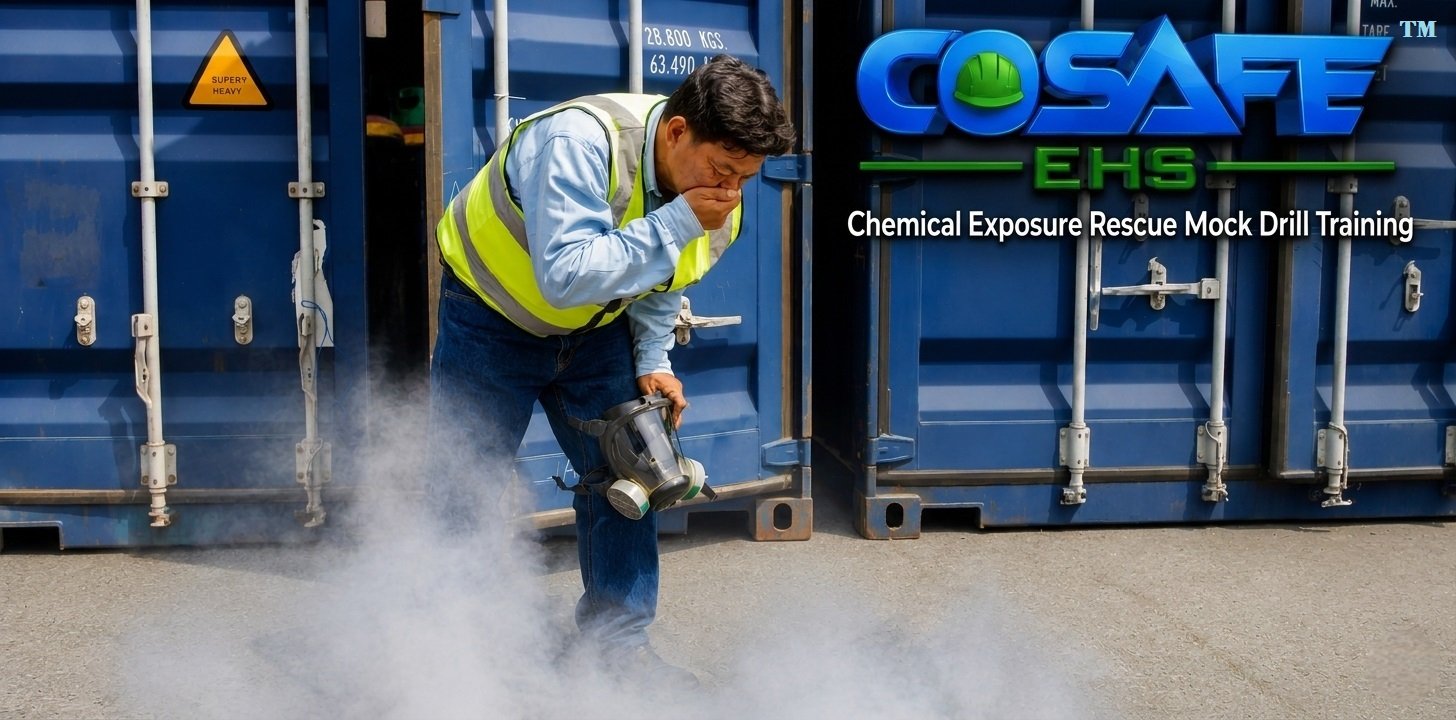
Chemical Exposure Rescue Mock Drill Training

Flexible Delivery Options

As per your organizational needs

On-SiteClassroomOnline

Practical & Scenario-Based

Real-life examples, live demonstrations and workplace scenarios

Certificate Provided

Issued to every participant after successful completion of the training

Chemical Exposure Rescue Mock Drill Training session

Overview

Chemical Exposure Rescue Mock Drill Training in Bangalore & Hyderabad

Professional Chemical Exposure Rescue Mock Drill Training by Cosafe EHS Bangalore & Hyderabad

Chemical exposure incidents are among the most complex workplace emergencies due to the wide variety of hazardous substances used across industries. Whether involving corrosive chemicals, toxic gases, solvents, acids, alkalis, reactive substances, or hazardous process chemicals, a single exposure incident can result in severe injuries, chemical burns, respiratory distress, poisoning, environmental contamination, equipment damage, and even multiple casualties.

Industries such as chemical manufacturing, pharmaceuticals, petrochemicals, oil & gas, laboratories, food processing, electronics manufacturing, paints and coatings, water treatment facilities, and research institutions routinely handle chemicals that require specialized emergency response capabilities.

A chemical exposure emergency demands far more than first aid. Effective response requires rapid hazard identification, emergency isolation, rescue planning, decontamination procedures, casualty handling, respiratory protection, incident command coordination, and safe evacuation practices. Rescue teams must be trained to protect themselves while assisting affected personnel, as secondary contamination of rescuers is a significant risk during chemical incidents. Chemical emergency guidance consistently emphasizes the use of proper PPE, respiratory protection, and decontamination procedures before rescue operations begin.

At Cosafe EHS Bangalore & Hyderabad, our Chemical Exposure Rescue Mock Drill Training Program is designed to prepare Emergency Response Teams (ERT), Safety Officers, Supervisors, Rescue Teams, Plant Personnel, and Emergency Coordinators to effectively manage chemical exposure incidents. The program combines emergency preparedness, hazard recognition, spill response, rescue planning, decontamination techniques, casualty management, and realistic rescue simulations to ensure personnel can respond confidently during actual emergencies.

Why Chemical Exposure Rescue Mock Drill Training is Important

Many chemical incidents escalate because responders lack practical emergency response experience. Delayed response, improper PPE selection, inadequate decontamination, poor communication, or incorrect casualty handling can significantly increase the severity of an incident.

Regular Chemical Exposure Rescue Mock Drills help organizations:

  • Test emergency response procedures

  • Improve rescue team preparedness

  • Strengthen incident command capabilities

  • Evaluate decontamination effectiveness

  • Improve PPE competency

  • Enhance chemical hazard awareness

  • Reduce emergency response time

  • Improve medical emergency coordination

  • Identify procedural gaps

Strengthen overall workplace safety culture

Common Chemical Exposure Emergencies

Organizations may encounter:

  • Chemical spills and leaks

  • Toxic vapor releases

  • Corrosive chemical exposure

  • Acid and alkali splashes

  • Chemical inhalation incidents

  • Skin contamination emergencies

  • Eye exposure incidents

  • Laboratory accidents

  • Process chemical releases

  • Hazardous material transportation incidents


Objectives of Chemical Exposure Rescue Mock Drills

The primary objectives include:

  • Testing chemical emergency response plans

  • Evaluating rescue readiness

  • Practicing decontamination procedures

  • Improving hazard identification skills

  • Enhancing emergency communication

  • Improving casualty rescue operations

  • Strengthening emergency leadership

  • Testing rescue equipment readiness

  • Reducing responder risk

  • Building organizational resilience


Industries Requiring Chemical Exposure Rescue Preparedness

This training is highly beneficial for:

  • Chemical Manufacturing Industries

  • Petrochemical Plants

  • Oil & Gas Facilities

  • Pharmaceutical Companies

  • Paint and Coating Industries

  • Laboratories and Research Facilities

  • Fertilizer Plants

  • Water Treatment Facilities

  • Food Processing Industries

  • Electronics Manufacturing Units

  • Textile Industries

  • Industrial Manufacturing Plants


Benefits of Chemical Exposure Rescue Mock Drill Training

Organizations conducting regular rescue drills benefit from:

  • Faster emergency response

  • Improved worker protection

  • Enhanced rescue competency

  • Better emergency coordination

  • Reduced incident severity

  • Improved compliance readiness

  • Stronger emergency preparedness

  • Better decontamination capability

  • Increased workforce confidence

  • Improved business continuity


Who Should Attend?

This training program is ideal for:

  • Emergency Response Team (ERT) Members

  • Safety Officers

  • EHS Professionals

  • Plant Operators

  • Supervisors and Managers

  • Chemical Handlers

  • Laboratory Personnel

  • Fire & Rescue Teams

  • Maintenance Personnel

  • Contractors

  • Incident Commanders

  • Emergency Coordinators

At Cosafe EHS Bangalore & Hyderabad, our Chemical Exposure Rescue Mock Drill Training is customized according to the specific chemicals handled, operational risks, industry requirements, and emergency response needs of each organization.

Chemical exposure emergencies can escalate rapidly and often involve multiple hazards including toxicity, corrosivity, inhalation risks, contamination, and environmental impact. Without proper planning, trained responders, effective PPE, and regular rescue drills, even minor incidents can become major emergencies. Regular Chemical Exposure Rescue Mock Drills provide organizations with the confidence, preparedness, and practical capability required to protect workers and respond effectively during chemical incidents.

At Cosafe EHS Bangalore & Hyderabad, our Chemical Exposure Rescue Mock Drill Training Program equips Emergency Response Teams, safety professionals, plant operators, and rescue personnel with the knowledge, practical skills, and confidence needed to manage chemical emergencies safely and effectively. Through realistic simulations, expert instruction, and hands-on rescue exercises, we help organizations strengthen emergency preparedness, reduce risks, and protect lives.

Identify the Hazard. Execute the Rescue. Protect People. Choose Cosafe EHS for Professional Chemical Exposure Rescue Mock Drill Training in Bangalore & Hyderabad.

Enquire Now

Get a customized Chemical Exposure Rescue Mock Drill Training proposal for your organization.

Who Should Attend?

All Employees
Managers & Team Leaders
Safety Officers & HR Professionals
Emergency Response Teams
New Joinees
Leadership Teams

Training Modules

Our Chemical Exposure Rescue Mock Drill Training program is structured to provide clear understanding, practical insights and real-world examples for better awareness and compliance.

01 Chemical emergency awareness
02 Types of chemical incidents
03 Consequences of chemical exposure
04 Rescue challenges
05 Emergency preparedness principles
06 Importance of mock drills
07 Hazard classification systems
08 Chemical properties and behavior
09 Toxicity awareness
10 Corrosive hazards
11 Reactive substances
12 Flammable chemicals
13 Exposure pathways
14 Risk assessment techniques
15 Inhalation exposure
16 Skin absorption
17 Eye contact
18 Ingestion hazards
19 Acute health effects
20 Chronic health effects
21 Exposure symptom recognition
22 SDS structure and interpretation
23 Hazard identification sections
24 First aid measures
25 Spill response information
26 PPE requirements
27 Emergency contact details
28 Chemical-resistant gloves
29 Protective suits
30 Respiratory protection
31 Face shields
32 Chemical splash goggles
33 PPE limitations
34 PPE inspection procedures
35 Respiratory hazards
36 Air-purifying respirators
37 SCBA systems
38 Emergency breathing procedures
39 Air management awareness
40 Respiratory protection limitations
41 Spill classification
42 Emergency isolation
43 Spill containment techniques
44 Hazard zone establishment
45 Emergency notifications
46 Spill response team activation
47 Rescue planning procedures
48 Resource identification
49 Emergency response activation
50 Rescue route planning
51 Equipment readiness
52 Rescue team deployment
53 Casualty assessment
54 Victim stabilization
55 Rescue prioritization
56 Safe extraction techniques
57 Contaminated casualty handling
58 Rescue team coordination
59 Emergency decontamination principles
60 Gross decontamination
61 Technical decontamination
62 Clothing removal procedures
63 Skin decontamination
64 Eye wash procedures
65 Emergency shower utilization
66 Chemical burn management
67 Respiratory distress awareness
68 Poisoning symptoms
69 First aid procedures
70 Emergency medical coordination
71 Casualty transfer protocols
72 Incident Commander responsibilities
73 Emergency communication
74 Resource allocation
75 Team coordination
76 External agency coordination
77 Emergency reporting
78 Simulated chemical release scenarios
79 Casualty rescue operations
80 PPE deployment exercises
81 Emergency response activation
82 Decontamination procedures
83 Evacuation exercises
84 Acid splash incidents
85 Chemical inhalation emergencies
86 Laboratory accidents
87 Toxic vapor release scenarios
88 Process plant chemical leaks
89 Multi-casualty events
90 Response time evaluation
91 Rescue effectiveness review
92 Equipment performance assessment
93 Communication analysis
94 Corrective action planning
95 Lessons learned documentation

Training Methodology

01
Multimedia presentations
02
Chemical incident case studies
03
Emergency response workshops
04
Hazard recognition exercises
05
Group discussions
06
Industry best-practice reviews
07
Chemical inventory reviews
08
Hazard identification studies
09
Emergency preparedness assessments
10
Rescue capability evaluations
11
Spill response reviews
12
PPE assessments
13
Chemical PPE
14
Spill response kits
15
Emergency showers
16
Eye wash stations
17
Gas monitoring devices
18
SCBA systems
19
Rescue equipment
20
Spill containment drills
21
Emergency isolation exercises
22
Hazard zone establishment
23
Incident communication activities
24
PPE deployment practices
25
Decontamination procedures
26
Chemical splash emergencies
27
Toxic vapor exposure incidents
28
Casualty rescue operations
29
Decontamination procedures
30
Emergency evacuation exercises
31
Incident command activation
32
Laboratory chemical exposure incidents
33
Chemical storage area leaks
34
Process plant emergencies
35
Hazardous material release events
36
Multi-casualty rescue situations
37
Decontamination challenges
38
Performance feedback
39
Response time analysis
40
Improvement recommendations
41
Equipment assessments
42
Strength identification
43
Lessons learned discussions
44
Written assessments
45
PPE competency evaluations
46
Rescue simulations
47
Decontamination exercises
48
Emergency response assessments
49
Team performance reviews
50
Experienced chemical emergency response trainers
51
Practical and hands-on training methodology
52
Realistic rescue simulations
53
Industry-specific emergency scenarios
54
Advanced decontamination training
55
Competency-based assessments
56
Site-specific emergency planning support
57
Emergency Response Team development programs
58
Detailed post-drill evaluation reports
59
Customized corporate training solutions

Program Details

Training Duration

- 1 Day / 2 Days

Mode of Training

- Classroom + Practical

Certification

- Certificate Provided

Certificate Validity

- 1–2 Years

Training Location

- Onsite / Training Center

Languages Available

- Kannada / Hindi / English / Telugu

Details Information

Chemical Exposure Rescue Mock Drill Training program
Customizable for your organization

Industries We Serve

Our Chemical Exposure Rescue Mock Drill Training is relevant for organizations across all industries, including:

IT & ITES
Manufacturing
Healthcare
Education Institutions
Hospitality
Construction & Infrastructure
Logistics & Warehousing
Corporate Offices & All Other Sectors

Why Choose CoSafe EHS?

Experienced Trainers
Customized Training Programs
Practical & Interactive Approach
Flexible Delivery Modes
Industry-Focused Content

Frequently Asked Questions

View All FAQs
Chemical Exposure Rescue Mock Drill Training is a practical emergency response program designed to prepare ERT members, Safety Officers, supervisors, rescue teams, plant personnel, and emergency coordinators to safely manage chemical exposure incidents through hazard recognition, rescue planning, decontamination, casualty handling, and realistic emergency simulations.
Chemical emergencies can involve toxicity, corrosivity, inhalation risks, contamination, and environmental hazards. Regular mock drills help organizations test emergency procedures, improve rescue preparedness, strengthen incident command, evaluate decontamination effectiveness, and reduce emergency response time.
The program covers chemical spills and leaks, toxic vapor releases, corrosive chemical exposure, acid and alkali splashes, chemical inhalation incidents, skin contamination, eye exposure, laboratory accidents, process chemical releases, and hazardous-material transportation incidents.
The training is suitable for ERT members, Safety Officers, EHS professionals, plant operators, supervisors, managers, chemical handlers, laboratory personnel, Fire & Rescue Teams, maintenance personnel, contractors, incident commanders, and emergency coordinators.
Yes. Participants learn about chemical-resistant gloves, protective suits, respiratory protection, face shields, chemical splash goggles, PPE limitations, inspection procedures, respirators, and SCBA awareness. Proper PPE selection and usage are emphasized to protect rescuers from chemical exposure.
Yes. Decontamination is a major component of the program and includes gross decontamination, technical decontamination, clothing removal, skin decontamination, eyewash procedures, emergency shower utilization, and preventing secondary contamination.
Yes. Participants practice realistic scenarios involving simulated chemical releases, casualty rescue, PPE deployment, emergency response activation, decontamination procedures, evacuation exercises, and incident command activation.
Scenario-based exercises may include acid splash incidents, chemical inhalation emergencies, laboratory accidents, toxic vapor releases, process-plant chemical leaks, multi-casualty events, chemical storage-area leaks, and hazardous-material release situations.
The drill includes response-time evaluation, rescue effectiveness review, equipment assessment, communication analysis, performance feedback, improvement recommendations, corrective-action planning, and lessons-learned discussions to support continuous improvement.
Yes. Cosafe EHS customizes the training according to the chemicals handled, operational risks, industry requirements, site-specific hazards, emergency response needs, chemical inventories, spill-response capabilities, and PPE requirements. Site hazard assessments and rescue capability evaluations can also be incorporated into the training.

Let's Create a Safer and More
Compliant Workplace Together

Contact us today to get a customized Chemical Exposure Rescue Mock Drill Training proposal for your organization.