Chat with us 1
Practical Training Certified Trainers Safer Workplaces

Toxic Gas Rescue Mock Drill Training

Corporate Training in Bangalore, Hyderabad & Pan-India

Toxic gas incidents are among the most dangerous industrial emergencies, capable of causing multiple casualties within minutes. Industries such as oil & gas, petrochemicals, chemical manufacturing, pharmaceuticals, refineries, was...
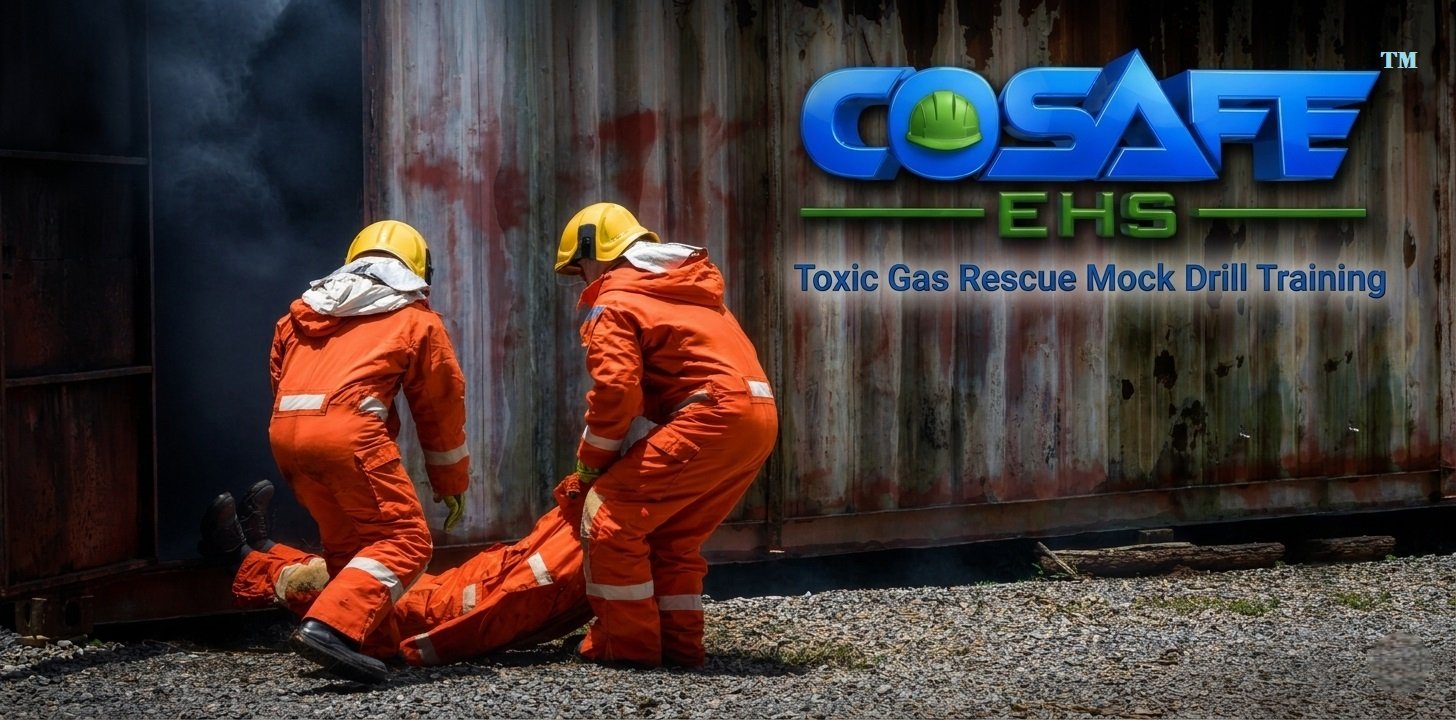
Toxic Gas Rescue Mock Drill Training

Flexible Delivery Options

As per your organizational needs

On-SiteClassroomOnline

Practical & Scenario-Based

Real-life examples, live demonstrations and workplace scenarios

Certificate Provided

Issued to every participant after successful completion of the training

Toxic Gas Rescue Mock Drill Training session

Overview

Toxic Gas Rescue Mock Drill Training in Bangalore & Hyderabad

Professional Toxic Gas Rescue Mock Drill Training by Cosafe EHS Bangalore & Hyderabad

Toxic gas incidents are among the most dangerous industrial emergencies, capable of causing multiple casualties within minutes. Industries such as oil & gas, petrochemicals, chemical manufacturing, pharmaceuticals, refineries, wastewater treatment plants, mining operations, fertilizer plants, and process industries face the constant risk of accidental toxic gas releases. Common hazardous gases include Hydrogen Sulfide (H₂S), Ammonia (NH₃), Chlorine (Cl₂), Sulfur Dioxide (SO₂), Carbon Monoxide (CO), and Hydrogen Cyanide (HCN).

Unlike many workplace hazards, toxic gases are often invisible, fast-acting, and capable of affecting workers before they realize they are in danger. Certain gases can cause respiratory failure, unconsciousness, asphyxiation, and death within a very short period. Hydrogen Sulfide (H₂S), for example, is classified as an Immediately Dangerous to Life or Health (IDLH) hazard at 100 ppm and can cause rapid collapse at higher concentrations.

At Cosafe EHS Bangalore & Hyderabad, our Toxic Gas Rescue Mock Drill Training Program is specifically designed to prepare Emergency Response Teams (ERT), rescue personnel, safety officers, plant operators, and emergency coordinators to effectively manage toxic gas emergencies. The program combines hazard recognition, gas detection, respiratory protection, rescue planning, casualty recovery techniques, emergency communication, incident command systems, and realistic rescue simulations.

Our training focuses on building practical rescue capabilities, strengthening emergency preparedness, reducing response times, and ensuring personnel can safely respond to toxic gas emergencies without becoming secondary victims themselves.

Why Toxic Gas Rescue Mock Drill Training is Important

Many fatalities during toxic gas incidents occur not only among victims but also among untrained rescuers attempting emergency rescue without proper protection. Rescue personnel entering hazardous atmospheres without respiratory protection are at significant risk of becoming casualties themselves. OSHA and emergency response guidance emphasize the need for trained rescuers, proper respiratory protection, rescue planning, and regular drills.
Common Toxic Gas Hazards in Industry

Organizations may encounter:

  • Hydrogen Sulfide (H₂S)

  • Ammonia (NH₃)

  • Chlorine (Cl₂)

  • Sulfur Dioxide (SO₂)

  • Carbon Monoxide (CO)

  • Hydrogen Cyanide (HCN)

  • Nitrogen Oxides (NOx)

Toxic process gases

  • Oxygen-deficient atmospheres

  • Chemical vapor releases

  • Objectives of Toxic Gas Rescue Mock Drills

  • The training aims to:

  • Test toxic gas emergency response plans

  • Improve rescue team readiness

  • Enhance gas hazard awareness

  • Strengthen respiratory protection competency

  • Improve emergency communication

  • Reduce rescue response time

  • Improve casualty recovery capability

  • Test gas monitoring systems

  • Strengthen incident command coordination

  • Build organizational emergency preparedness


Industries Requiring Toxic Gas Rescue Preparedness

This training is highly recommended for:

  • Oil & Gas Industries

  • Petrochemical Facilities

  • Chemical Manufacturing Plants

  • Fertilizer Industries

  • Pharmaceutical Industries

  • Refineries

  • Power Generation Facilities

  • Wastewater Treatment Plants

  • Food Processing Industries

  • Mining Operations

  • Steel and Cement Industries

  • Manufacturing Facilities


Benefits of Toxic Gas Rescue Mock Drill Training

Organizations benefit through:

  • Faster emergency response

  • Improved worker safety

  • Better rescue preparedness

  • Reduced workplace fatalities

  • Enhanced ERT competency

  • Improved emergency coordination

  • Stronger compliance performance

  • Better equipment readiness

  • Increased workforce confidence

  • Stronger safety culture


Who Should Attend?

This program is suitable for:

  • Emergency Response Team (ERT) Members

  • Fire & Rescue Personnel

  • Safety Officers

  • EHS Professionals

  • Plant Operators

  • Shift Supervisors

  • Incident Commanders

  • Rescue Team Members

  • Maintenance Personnel

  • Process Engineers

  • Contractors

  • Emergency Coordinators

At Cosafe EHS Bangalore & Hyderabad, our Toxic Gas Rescue Mock Drill Training is customized according to site-specific hazards, toxic gas inventories, emergency response requirements, and industry risks.

Toxic gas emergencies can escalate rapidly, often leaving little time for decision-making. Without proper planning, training, gas monitoring, respiratory protection, and rescue preparedness, these incidents can result in severe injuries, fatalities, environmental damage, and operational disruption. Many toxic gas fatalities occur because rescuers enter hazardous atmospheres without proper protection or training.

At Cosafe EHS Bangalore & Hyderabad, our Toxic Gas Rescue Mock Drill Training Program equips Emergency Response Teams, safety professionals, plant operators, and rescue personnel with the practical knowledge, technical skills, and confidence required to manage toxic gas emergencies safely and effectively. Through realistic simulations, hands-on rescue exercises, and expert-led instruction, we help organizations build a stronger emergency response capability and protect lives.

Detect the Hazard. Execute the Rescue. Save Lives. Choose Cosafe EHS for Professional Toxic Gas Rescue Mock Drill Training in Bangalore & Hyderabad.

Enquire Now

Get a customized Toxic Gas Rescue Mock Drill Training proposal for your organization.

Who Should Attend?

All Employees
Managers & Team Leaders
Safety Officers & HR Professionals
Emergency Response Teams
New Joinees
Leadership Teams

Training Modules

Our Toxic Gas Rescue Mock Drill Training program is structured to provide clear understanding, practical insights and real-world examples for better awareness and compliance.

01 Understanding toxic gases
02 Industrial toxic gas incidents
03 Common causes of gas releases
04 Toxic gas behavior
05 Emergency response principles
06 Importance of rescue preparedness
07 Topics include:
08 Properties of hazardous gases
09 Toxicity levels
10 Flammability hazards
11 Reactivity characteristics
12 Oxygen displacement hazards
13 Exposure pathways
14 Sources of H₂S
15 Health effects of exposure
16 H₂S exposure symptoms
17 Olfactory fatigue limitations
18 Emergency response actions
19 Rescue precautions
20 Portable gas detectors
21 Fixed gas monitoring systems
22 Alarm management
23 Detector calibration awareness
24 Atmospheric monitoring techniques
25 Continuous monitoring requirements
26 Respiratory hazards
27 SCBA components
28 Positive-pressure breathing apparatus
29 Respirator limitations
30 Emergency air management
31 Respiratory protection procedures
32 Emergency response plans
33 Gas release scenarios
34 Hazard zone establishment
35 Evacuation planning
36 Resource allocation
37 Emergency coordination
38 Incident Commander responsibilities
39 Emergency coordination structure
40 Communication flow
41 Resource deployment
42 Decision-making during emergencies
43 External agency coordination
44 Rescue Team Leaders
45 Entry Rescue Teams
46 Backup Rescue Teams
47 Gas Monitoring Personnel
48 Safety Officers
49 Medical Response Teams
50 Casualty location techniques
51 Search procedures
52 Rescue entry planning
53 Casualty stabilization
54 Victim extraction methods
55 Rescue safety principles
56 SCBA systems
57 Gas detectors
58 Rescue stretchers
59 Retrieval systems
60 Communication equipment
61 Emergency lighting
62 Alarm activation procedures
63 Emergency evacuation techniques
64 Assembly point management
65 Accountability systems
66 Exclusion zones
67 Traffic control measures
68 Toxic gas exposure symptoms
69 Initial casualty assessment
70 Oxygen administration awareness
71 Patient stabilization
72 Emergency medical coordination
73 Post-exposure management
74 Simulated toxic gas releases
75 Emergency alarm activation
76 Rescue team deployment
77 SCBA entry operations
78 Casualty recovery
79 Emergency evacuation exercises
80 H₂S release incidents
81 Ammonia leak scenarios
82 Chlorine gas emergencies
83 Confined space gas exposure incidents
84 Multi-casualty events
85 Process plant toxic gas releases
86 Response time analysis
87 Rescue effectiveness evaluation
88 Equipment performance review
89 Communication assessment
90 Corrective action planning
91 Lessons learned documentation

Training Methodology

01
Multimedia presentations
02
Toxic gas incident case studies
03
Emergency response workshops
04
Hazard identification exercises
05
Rescue planning discussions
06
Industry best-practice reviews
07
Toxic gas hazard evaluations
08
Process risk assessments
09
Gas monitoring reviews
10
Emergency preparedness assessments
11
Rescue feasibility studies
12
Equipment inspections
13
Gas detectors
14
SCBA equipment
15
Rescue stretchers
16
Communication systems
17
Monitoring equipment
18
Emergency rescue tools
19
Atmospheric testing
20
Gas detector operation
21
Alarm interpretation
22
Monitoring procedures
23
Hazard zone establishment
24
Exposure assessment activities
25
Toxic gas release scenarios
26
Casualty rescue operations
27
SCBA rescue deployment
28
Emergency evacuations
29
Incident command activation
30
Multi-team coordination exercises
31
H₂S release emergencies
32
Confined space toxic gas incidents
33
Process plant gas leaks
34
Multiple casualty situations
35
Emergency evacuation scenarios
36
Communication failure simulations
37
Performance feedback
38
Response time analysis
39
Equipment assessment reviews
40
Strength identification
41
Improvement recommendations
42
Lessons learned discussions
43
Written assessments
44
Gas detection exercises
45
SCBA competency evaluations
46
Rescue simulations
47
Emergency response assessments
48
Team performance reviews
49
Experienced industrial emergency response instructors
50
Practical and hands-on training methodology
51
Realistic toxic gas emergency simulations
52
Advanced gas detection and monitoring exercises
53
SCBA and respiratory protection training
54
Customized site-specific rescue drills
55
Competency-based assessments
56
Emergency Response Team development programs
57
Detailed post-drill evaluation reports
58
Industry-focused safety training solutions

Program Details

Training Duration

- 1 Day / 2 Days

Mode of Training

- Classroom + Practical

Certification

- Certificate Provided

Certificate Validity

- 1–2 Years

Training Location

- Onsite / Training Center

Languages Available

- Kannada / Hindi / English / Telugu

Details Information

Toxic Gas Rescue Mock Drill Training program
Customizable for your organization

Industries We Serve

Our Toxic Gas Rescue Mock Drill Training is relevant for organizations across all industries, including:

IT & ITES
Manufacturing
Healthcare
Education Institutions
Hospitality
Construction & Infrastructure
Logistics & Warehousing
Corporate Offices & All Other Sectors

Why Choose CoSafe EHS?

Experienced Trainers
Customized Training Programs
Practical & Interactive Approach
Flexible Delivery Modes
Industry-Focused Content

Frequently Asked Questions

View All FAQs
Toxic Gas Rescue Mock Drill Training is a practical emergency response program designed to prepare ERT members, rescue personnel, Safety Officers, plant operators, and emergency coordinators to respond safely and effectively to toxic gas release emergencies.
Toxic gas incidents can escalate rapidly and may cause respiratory distress, unconsciousness, asphyxiation, or multiple casualties. Regular rescue drills help organizations test emergency response plans, improve rescue readiness, reduce response time, strengthen communication, and prevent untrained rescuers from becoming secondary victims.
The program covers common industrial toxic gas hazards including Hydrogen Sulfide (H₂S), Ammonia (NH₃), Chlorine (Cl₂), Sulfur Dioxide (SO₂), Carbon Monoxide (CO), Hydrogen Cyanide (HCN), Nitrogen Oxides (NOx), toxic process gases, and oxygen-deficient atmospheres.
The training is suitable for ERT Members, Fire & Rescue Personnel, Safety Officers, EHS Professionals, Plant Operators, Shift Supervisors, Incident Commanders, Rescue Team Members, Maintenance Personnel, Process Engineers, Contractors, and Emergency Coordinators.
Yes. Participants learn about portable gas detectors, fixed gas monitoring systems, alarm management, atmospheric monitoring, continuous monitoring requirements, gas detector operation, alarm interpretation, and hazard-zone establishment.
Yes. The program covers SCBA systems, positive-pressure breathing apparatus, respiratory hazards, SCBA components, emergency air management, respirator limitations, and respiratory protection procedures for high-risk toxic gas rescue operations.
Yes. Participants perform realistic simulations involving toxic gas releases, emergency alarm activation, rescue team deployment, SCBA rescue operations, casualty recovery, emergency evacuation, incident command activation, and multi-team coordination.
Scenario-based exercises can include H₂S release incidents, ammonia leaks, chlorine gas emergencies, confined-space gas exposure incidents, multi-casualty events, process-plant toxic gas releases, and communication-failure situations.
The drill is evaluated through response-time analysis, rescue effectiveness assessment, equipment performance reviews, communication assessment, team performance reviews, corrective-action planning, and lessons-learned discussions to support continuous improvement.
Yes. Cosafe EHS customizes the program according to site-specific hazards, toxic gas inventories, process risks, emergency response requirements, gas monitoring systems, rescue challenges, and industry-specific conditions. Site hazard assessments and equipment inspections can also be incorporated before practical exercises.

Let's Create a Safer and More
Compliant Workplace Together

Contact us today to get a customized Toxic Gas Rescue Mock Drill Training proposal for your organization.