Bangalore Office
Warehouse No 4, Survey No 198/6, Janatha Colony, Dommsandra Bangalore Karnataka 562125

Warehouse No 4, Survey No 198/6, Janatha Colony, Dommsandra Bangalore Karnataka 562125
Godown No 3/C, Survey No. 217, Beside ORR, Shamshabad, R.R. District, Hyderabad, Telangana - 501218
+91 7892978960
corporate@cosafe.in
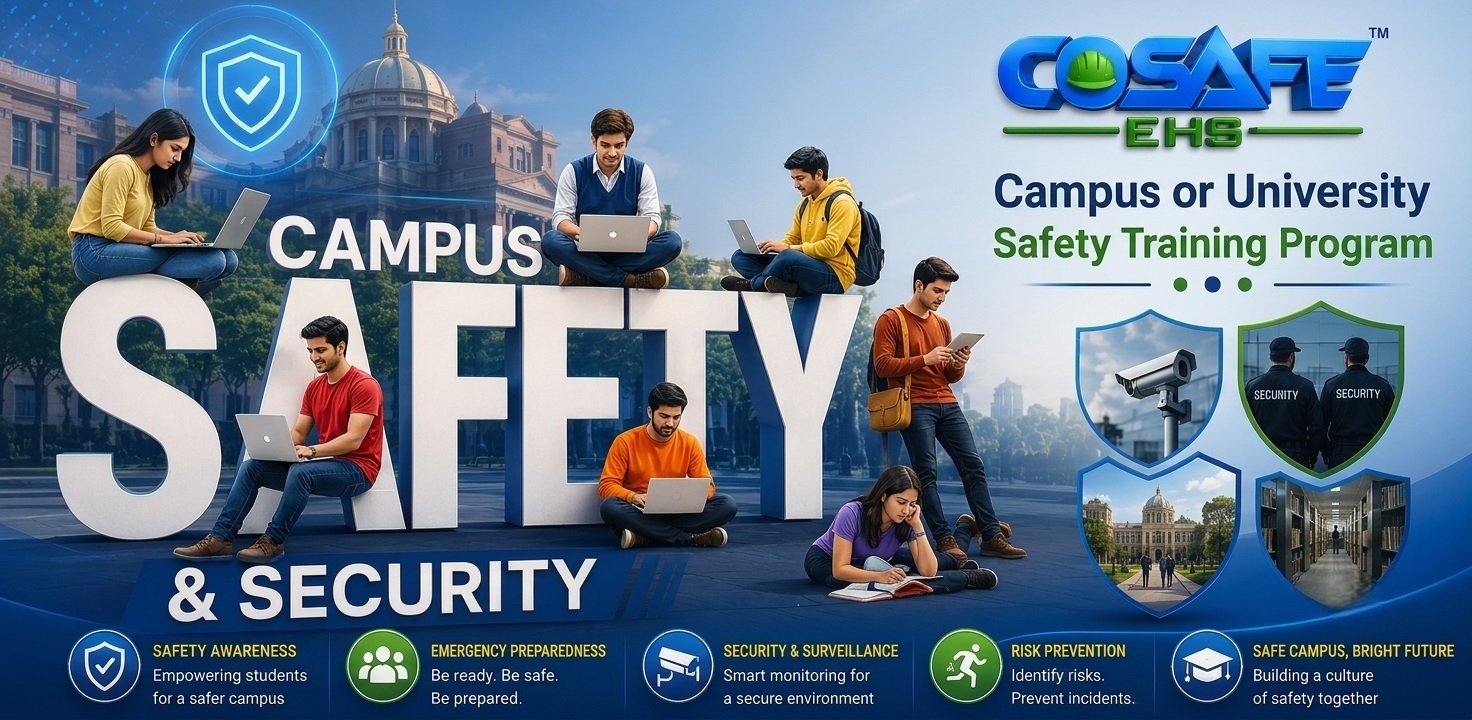
Educational institutions such as universities, colleges, research centers, technical institutes, residential campuses, and higher education facilities accommodate thousands of students, faculty members, researchers, visitors, contractors, and support staff daily. With diverse activities occurring across classrooms, laboratories, libraries, workshops, hostels, cafeterias, sports complexes, auditoriums, transportation systems, and administrative buildings, campuses face a wide range of safety and security challenges.
A comprehensive Campus or University Safety Training Program is essential for creating a secure learning environment, preventing accidents, minimizing risks, improving emergency preparedness, and ensuring compliance with institutional safety standards and regulatory requirements. Effective campus safety programs help educational institutions protect lives, safeguard infrastructure, strengthen emergency response capabilities, and promote a proactive safety culture.
At Cosafe EHS Bangalore & Hyderabad, our Campus or University Safety Training Program is designed to equip university administrators, faculty members, safety committees, facility managers, hostel wardens, laboratory personnel, security teams, and students with the knowledge, skills, and practical competencies required to identify hazards, manage risks, respond to emergencies, and maintain a safe educational environment.
Our training combines global best practices in occupational health and safety, fire safety, emergency preparedness, risk management, disaster management, laboratory safety, campus security, and environmental health. Through interactive learning sessions, practical demonstrations, emergency drills, and scenario-based exercises, participants gain the confidence required to effectively manage safety challenges within educational institutions.
Campus Safety Training is a structured safety awareness and emergency preparedness program designed to help educational institutions identify hazards, reduce risks, improve safety performance, and prepare staff and students for emergency situations.
The program focuses on:
The objective is to create a safe, resilient, and prepared educational environment that supports academic excellence and operational continuity.
Universities and colleges face numerous safety risks, including:
Without proper safety awareness and preparedness, these incidents can result in injuries, disruptions, legal liabilities, property damage, and reputational loss.
Campus Safety Training helps institutions:
The primary objectives include:
Educational institutions implementing comprehensive safety programs benefit through:
This program is suitable for:
Educational institutions must provide a safe, secure, and resilient environment that supports learning, research, innovation, and personal development. Effective Campus or University Safety Training helps institutions identify hazards, reduce risks, improve emergency preparedness, and create a culture where safety becomes a shared responsibility among students, faculty, and staff.
At Cosafe EHS Bangalore & Hyderabad, our Campus or University Safety Training Program equips educational institutions with the knowledge, practical skills, emergency preparedness strategies, and confidence required to manage a wide range of campus safety challenges. Through comprehensive training, realistic drills, and proactive safety management practices, we help universities and colleges build safer, stronger, and future-ready educational environments.
Protect Students. Empower Faculty. Strengthen Preparedness. Choose Cosafe EHS Bangalore & Hyderabad for Professional Campus & University Safety Training in Bangalore & Hyderabad.
Participants gain a comprehensive understanding of campus safety principles.
Topics include:
Participants learn how to identify and evaluate potential hazards across campus facilities.
Training includes:
Participants learn practical risk management strategies applicable to educational institutions.
Fire emergencies pose significant risks in educational environments.
Topics include:
Practical demonstrations strengthen fire safety awareness.
Participants learn effective evacuation management techniques.
Training includes:
Participants practice safe evacuation procedures through drills.
Educational institutions must be prepared for natural and man-made disasters.
Topics include:
Participants learn disaster preparedness principles applicable to campus environments.
Immediate response can significantly reduce the severity of injuries and illnesses.
Training includes:
Participants develop confidence in responding to common medical emergencies.
Laboratories contain specialized hazards requiring focused safety controls.
Topics include:
Participants learn how to maintain safe laboratory operations.
Electrical hazards can lead to serious injuries and fires.
Training includes:
Participants gain practical electrical safety knowledge.
Student accommodations require dedicated safety management.
Topics include:
Participants learn effective residential safety practices.
Security preparedness is essential for protecting students and staff.
Training includes:
Participants learn proactive campus security strategies.
Transportation safety contributes significantly to overall campus safety.
Topics include:
Participants understand safe transportation practices.
A healthy environment supports academic success and well-being.
Training includes:
Participants learn environmental health management techniques.
Educational institutions must proactively address safety concerns related to violence and misconduct.
Topics include:
Participants develop situational awareness and safety skills.
Effective incident management supports continuous safety improvement.
Training includes:
Participants learn how to strengthen safety performance through incident analysis.
Participants engage in realistic emergency scenarios involving:
Mock drills validate emergency preparedness and improve response effectiveness.
At Cosafe EHS Bangalore & Hyderabad, our Campus or University Safety Training Program follows a practical, interactive, and competency-based methodology designed specifically for educational institutions.
Interactive Classroom Sessions
Participants receive expert-led instruction through:
This establishes a strong theoretical foundation.
Campus Hazard Identification Exercises
Participants engage in:
These exercises strengthen proactive risk management skills.
Practical Demonstrations
Hands-on demonstrations include:
Participants gain practical experience through demonstrations.
Scenario-Based Learning
Participants work through realistic campus-related scenarios such as:
These exercises strengthen decision-making and emergency response capabilities.
Group Activities and Team Exercises
Collaborative learning activities include:
These activities improve teamwork and organizational preparedness.
Emergency Mock Drills
Participants actively perform:
Mock drills provide valuable real-world preparedness experience.
Assessment and Competency Evaluation
Participants are assessed through:
This ensures training objectives are successfully achieved.
Certification
Upon successful completion of the training program, participants receive certification recognizing their competence in campus safety awareness, hazard identification, emergency preparedness, and incident response.