Chat with us 1
Practical Training Certified Trainers Safer Workplaces

Height Job Rescue Mock Drill Training

Corporate Training in Bangalore, Hyderabad & Pan-India

(Work at Height Emergency Rescue Training Program)
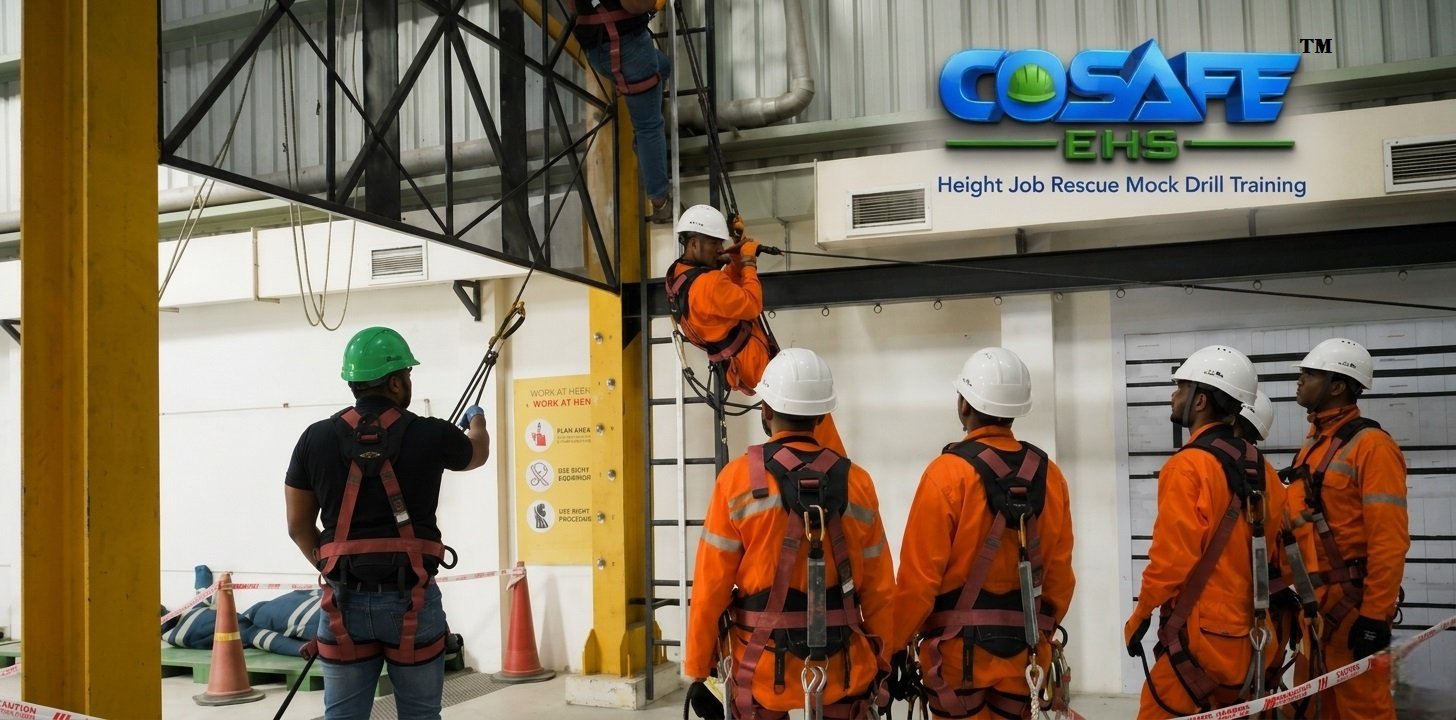
Height Job Rescue Mock Drill Training

Flexible Delivery Options

As per your organizational needs

On-SiteClassroomOnline

Practical & Scenario-Based

Real-life examples, live demonstrations and workplace scenarios

Certificate Provided

Issued to every participant after successful completion of the training

Height Job Rescue Mock Drill Training session

Overview

Height Job Rescue Mock Drill Training in Bangalore & Hyderabad

(Work at Height Emergency Rescue Training Program)

Professional Height Job Rescue Mock Drill Training by Cosafe EHS Bangalore & Hyderabad

Working at height is one of the highest-risk activities across industries such as construction, telecommunications, power transmission, oil & gas, manufacturing, infrastructure development, warehousing, and facility maintenance. Despite implementing fall protection systems and safe work procedures, accidents can still occur due to equipment failure, improper use of personal protective equipment (PPE), adverse weather conditions, human error, structural defects, or medical emergencies.

When a worker falls and remains suspended in a harness, immediate rescue becomes critical. Delayed rescue can lead to Suspension Trauma (Harness Hang Syndrome), restricted blood circulation, unconsciousness, organ damage, and potentially fatal consequences. Therefore, having a well-trained rescue team and conducting regular Height Job Rescue Mock Drills is essential for ensuring worker safety and emergency preparedness.

At Cosafe EHS Bangalore & Hyderabad, our Height Job Rescue Mock Drill Training Program is specifically designed to prepare Emergency Response Teams (ERT), safety personnel, supervisors, rescue teams, and workers for real-life fall rescue emergencies. The program focuses on rescue planning, emergency response coordination, rescue equipment usage, casualty management, fall protection systems, and realistic rescue simulations conducted under controlled conditions.

Our training enables organizations to develop competent rescue teams capable of responding quickly, safely, and effectively during work-at-height emergencies while minimizing injuries, downtime, and operational risks.

Why Height Job Rescue Mock Drill Training is Important

Many organizations focus heavily on fall prevention but overlook rescue preparedness. A fall arrest system may stop a worker from hitting the ground, but the worker can still be exposed to life-threatening suspension trauma if rescue is delayed.

A properly conducted Height Rescue Mock Drill helps organizations:

  • Test emergency rescue procedures

  • Improve rescue response time

  • Evaluate rescue equipment readiness

  • Strengthen rescue team competency

  • Improve communication and coordination

  • Reduce the risk of suspension trauma

  • Enhance emergency preparedness

  • Verify work-at-height rescue plans

  • Identify procedural gaps

Improve overall workplace safety culture

Industries That Require Height Rescue Preparedness

Height Job Rescue Mock Drill Training is highly beneficial for:

  • Construction Companies

  • Infrastructure Projects

  • Telecom Tower Operations

  • Wind Turbine Maintenance

  • Power Transmission Projects

  • Oil & Gas Facilities

  • Petrochemical Plants

  • Manufacturing Industries

  • Warehousing and Logistics Facilities

  • Steel Plants

  • Cement Industries

  • Facility Management Services

  • Industrial Maintenance Operations


Objectives of Height Job Rescue Mock Drills

The key objectives include:

  • Preparing workers for fall emergencies

  • Improving rescue team readiness

  • Practicing rescue techniques

  • Testing rescue equipment functionality

  • Enhancing emergency communication

  • Reducing rescue response time

  • Strengthening incident command systems

  • Preventing suspension trauma

  • Improving casualty recovery procedures

  • Building organizational resilience


Benefits of Height Rescue Mock Drill Training
Organizations conducting regular rescue drills achieve:

  • Faster emergency response
  • Improved worker confidence
  • Better rescue planning
  • Enhanced team coordination
  • Reduced workplace fatalities
  • Improved compliance performance
  • Increased emergency preparedness
  • Better equipment management
  • Reduced operational disruption
  • Stronger safety culture

Who Should Attend?

This training program is ideal for:

  • Emergency Response Team (ERT) Members
  • Work at Height Personnel
  • Safety Officers
  • EHS Professionals
  • Supervisors and Managers
  • Rescue Team Members
  • Construction Workers
  • Telecom Tower Technicians
  • Maintenance Personnel
  • Contractors
  • Project Engineers
  • Facility Management Teams

At Cosafe EHS Bangalore & Hyderabad, we customize Height Job Rescue Mock Drill Training according to industry requirements, work environments, structural configurations, and rescue challenges.

A fall arrest system protects a worker from hitting the ground, but only a well-planned and practiced rescue procedure can ensure the worker is safely recovered. Delayed rescue can result in suspension trauma, severe injuries, or fatalities. Organizations that regularly conduct Height Job Rescue Mock Drills are significantly better prepared to respond effectively during emergencies.

At Cosafe EHS Bangalore & Hyderabad, our Height Job Rescue Mock Drill Training Program equips rescue teams, safety professionals, supervisors, and work-at-height personnel with the practical knowledge, rescue skills, and confidence required to manage fall emergencies safely and efficiently. Through realistic rescue simulations, hands-on equipment training, and expert guidance, we help organizations strengthen emergency preparedness and protect their most valuable asset—their people.

Plan the Rescue. Practice the Response. Save Lives. Choose Cosafe EHS for Professional Height Job Rescue Mock Drill Training in Bangalore & Hyderabad.

Enquire Now

Get a customized Height Job Rescue Mock Drill Training proposal for your organization.

Who Should Attend?

All Employees
Managers & Team Leaders
Safety Officers & HR Professionals
Emergency Response Teams
New Joinees
Leadership Teams

Training Modules

Our Height Job Rescue Mock Drill Training program is structured to provide clear understanding, practical insights and real-world examples for better awareness and compliance.

01 Work at height hazards
02 Fall protection hierarchy
03 Common causes of fall incidents
04 Rescue challenges
05 Emergency preparedness requirements
06 Importance of rescue planning
07 Work at height safety requirements
08 Employer responsibilities
09 Worker responsibilities
10 Permit-to-work systems
11 Rescue plan requirements
12 Industry safety standards
13 Full-body harnesses
14 Shock-absorbing lanyards
15 Self-retracting lifelines
16 Anchorage systems
17 Horizontal lifelines
18 Vertical lifelines
19 Fall arrest systems
20 What is suspension trauma?
21 Physiological effects
22 Early warning signs
23 Medical complications
24 Prevention techniques
25 Rescue urgency requirements
26 Rescue planning principles
27 Hazard identification
28 Site-specific risk assessments
29 Rescue route planning
30 Resource allocation
31 Emergency preparedness reviews
32 Incident Commander responsibilities
33 Rescue Team Leader duties
34 Rescuer responsibilities
35 Safety Officer roles
36 Communication Coordinator duties
37 Medical response responsibilities
38 Rescue kits
39 Rope systems
40 Descenders
41 Ascenders
42 Pulleys
43 Rescue stretchers
44 Tripods and anchor systems
45 Mechanical advantage systems
46 Basic rope handling
47 Rope inspection
48 Knots and anchors
49 Belay systems
50 Load management
51 Rescue rigging principles
52 Casualty approach techniques
53 Stabilization procedures
54 Harness transfer methods
55 Assisted descent operations
56 Rescue communication
57 Casualty management
58 Self-rescue concepts
59 Controlled descent systems
60 Emergency escape methods
61 Coworker rescue awareness
62 Hazard assessment
63 Safe intervention principles
64 Initial casualty assessment
65 Trauma awareness
66 Suspension trauma management
67 First aid considerations
68 Patient packaging
69 Post-rescue care procedures
70 Emergency reporting procedures
71 Rescue communication systems
72 Incident command structure
73 Team coordination
74 Situation updates
75 Emergency escalation procedures
76 Simulated fall incidents
77 Suspended worker rescue
78 Rope rescue exercises
79 Equipment deployment drills
80 Rescue team coordination
81 Casualty recovery operations
82 Construction site rescues
83 Telecom tower rescue scenarios
84 Rooftop rescue exercises
85 Scaffold rescue operations
86 Industrial structure rescues
87 Maintenance platform emergencies
88 Rescue response time evaluation
89 Team performance analysis
90 Equipment effectiveness review
91 Communication assessment
92 Corrective action planning
93 Lessons learned documentation

Training Methodology

01
Multimedia presentations
02
Industry case studies
03
Incident investigation reviews
04
Safety discussions
05
Rescue planning workshops
06
Best-practice guidance
07
Work-at-height risk assessments
08
Rescue feasibility evaluations
09
Anchor point inspections
10
Hazard identification
11
Emergency preparedness reviews
12
Rescue equipment assessments
13
Harness systems
14
Rescue kits
15
Rope rescue equipment
16
Anchorage devices
17
Descent systems
18
Casualty recovery equipment
19
Rope handling drills
20
Anchor system setup
21
Rescue rigging exercises
22
Casualty recovery techniques
23
Team coordination activities
24
Emergency communication drills
25
Suspended worker rescue
26
Fall arrest recovery
27
Rope access emergencies
28
Scaffold rescue scenarios
29
Tower rescue exercises
30
Multi-rescuer coordination drills
31
Construction site incidents
32
Telecom tower emergencies
33
Rooftop rescue operations
34
Industrial maintenance scenarios
35
Restricted access rescues
36
Adverse condition simulations
37
Performance feedback
38
Response time analysis
39
Strength identification
40
Improvement recommendations
41
Corrective action guidance
42
Lessons learned discussions
43
Written assessments
44
Equipment operation evaluations
45
Rescue simulations
46
Team performance reviews
47
Emergency response assessments
48
Practical competency demonstrations
49
Experienced work-at-height rescue instructors
50
Practical and hands-on training methodology
51
Industry-specific rescue scenarios
52
Advanced rescue equipment demonstrations
53
Site-specific rescue planning support
54
Competency-based assessments
55
Emergency Response Team development programs
56
Comprehensive mock drill execution
57
Detailed performance evaluation reports
58
Customized corporate training solutions

Program Details

Training Duration

- 1 Day / 2 Days

Mode of Training

- Classroom + Practical

Certification

- Certificate Provided

Certificate Validity

- 1–2 Years

Training Location

- Onsite / Training Center

Languages Available

- Kannada / Hindi / English / Telugu

Details Information

Height Job Rescue Mock Drill Training program
Customizable for your organization

Industries We Serve

Our Height Job Rescue Mock Drill Training is relevant for organizations across all industries, including:

IT & ITES
Manufacturing
Healthcare
Education Institutions
Hospitality
Construction & Infrastructure
Logistics & Warehousing
Corporate Offices & All Other Sectors

Why Choose CoSafe EHS?

Experienced Trainers
Customized Training Programs
Practical & Interactive Approach
Flexible Delivery Modes
Industry-Focused Content

Frequently Asked Questions

View All FAQs
Height Job Rescue Mock Drill Training is a practical emergency rescue program designed to prepare workers, rescue teams, ERT members, safety professionals, and supervisors to respond effectively to work-at-height emergencies, including suspended-worker and fall-arrest incidents.
A fall arrest system can prevent a worker from hitting the ground, but a suspended worker may still face serious risks if rescue is delayed. Regular rescue mock drills help organizations test emergency procedures, improve rescue response time, evaluate equipment readiness, strengthen team coordination, and improve emergency preparedness.
The program is suitable for ERT members, work-at-height personnel, Safety Officers, EHS professionals, supervisors, managers, rescue team members, construction workers, telecom tower technicians, maintenance personnel, contractors, project engineers, and facility management teams.
The training covers work-at-height rescue, legal requirements, fall protection systems, suspension trauma awareness, rescue planning, risk assessment, rescue roles and responsibilities, rescue equipment, rope rescue techniques, assisted rescue, casualty handling, emergency communication, incident command, and post-drill evaluation.
Suspension trauma can occur when a worker remains suspended in a harness after a fall arrest. The training explains its physiological effects, warning signs, potential medical complications, prevention techniques, and the importance of timely rescue.
Yes. Participants receive practical demonstrations and hands-on training involving rescue kits, rope systems, descenders, ascenders, pulleys, rescue stretchers, tripods, anchor systems, and mechanical advantage systems.
Yes. Participants take part in realistic simulations such as suspended-worker rescue, fall-arrest recovery, rope rescue exercises, scaffold rescue, tower rescue, rooftop rescue, industrial structure rescue, and multi-rescuer coordination drills.
Yes. Cosafe EHS customizes the training according to industry requirements, work environments, structural configurations, site-specific hazards, rescue challenges, and organizational emergency response requirements. Site assessment and rescue planning can also be incorporated into the program.
Participants are evaluated through rescue response time analysis, team performance reviews, equipment effectiveness assessment, emergency communication evaluation, rescue simulations, practical competency demonstrations, and post-drill debriefing. Corrective actions and improvement recommendations are also discussed.
Yes. Participants undergo written assessments, equipment operation evaluations, rescue simulations, team performance reviews, emergency response assessments, and practical competency demonstrations. Certificates are issued upon successful completion of the training program.

Let's Create a Safer and More
Compliant Workplace Together

Contact us today to get a customized Height Job Rescue Mock Drill Training proposal for your organization.