Chat with us 1
Practical Training Certified Trainers Safer Workplaces

Fire & Evacuation Mock Drill Training

Corporate Training in Bangalore, Hyderabad & Pan-India

Fire emergencies can occur without warning and have the potential to cause serious injuries, fatalities, property damage, environmental impact, and business interruptions. While installing fire protection systems and developing em...
Fire & Evacuation Mock Drill Training

Flexible Delivery Options

As per your organizational needs

On-SiteClassroomOnline

Practical & Scenario-Based

Real-life examples, live demonstrations and workplace scenarios

Certificate Provided

Issued to every participant after successful completion of the training

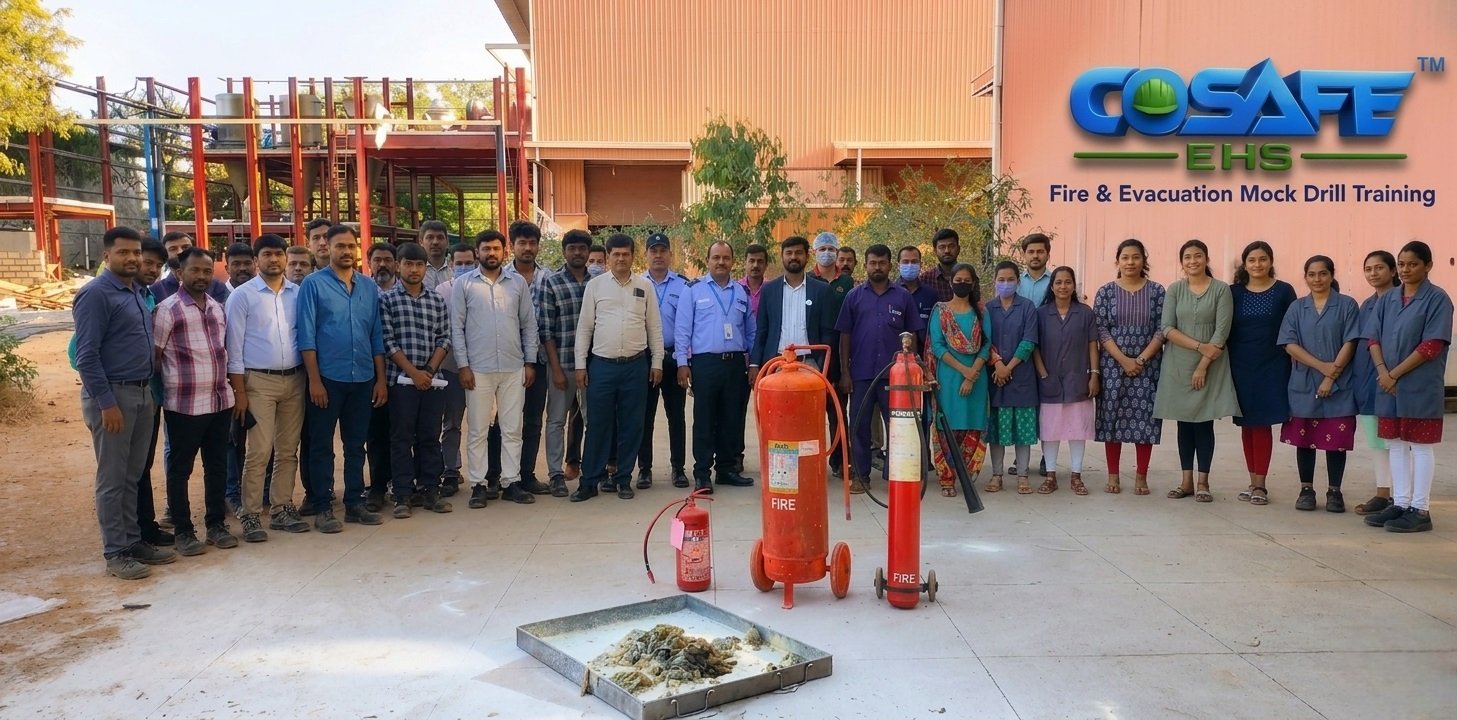
Fire & Evacuation Mock Drill Training session

Overview

Fire & Evacuation Mock Drill Training in Bangalore & Hyderabad

Introduction to the Fire & Evacuation Mock Drill Training Course

Fire emergencies can occur without warning and have the potential to cause serious injuries, fatalities, property damage, environmental impact, and business interruptions. While installing fire protection systems and developing emergency response plans are essential, these measures are only effective when employees know how to respond correctly during a real emergency. This is where Fire & Evacuation Mock Drill Training becomes a critical component of workplace safety and emergency preparedness.

A Fire & Evacuation Mock Drill is a structured simulation designed to test the effectiveness of an organization's emergency response plan, evacuation procedures, fire protection systems, communication channels, and employee readiness. The primary objective is to ensure that all occupants can evacuate safely, quickly, and calmly while designated emergency response personnel effectively perform their assigned roles. Fire drills help identify weaknesses in emergency plans, improve response times, reduce panic, and strengthen overall preparedness. Regular fire drills are widely recognized as a key element of workplace fire safety programs.

At Cosafe EHS Bangalore & Hyderabad, our Fire & Evacuation Mock Drill Training Program is designed to help organizations develop a proactive emergency preparedness culture. The training combines theoretical knowledge, practical demonstrations, emergency planning, fire warden responsibilities, evacuation management, and full-scale mock drill execution to prepare employees for real-life emergency situations.

Our expert trainers conduct customized fire and evacuation drills for offices, manufacturing facilities, warehouses, hospitals, educational institutions, commercial buildings, residential complexes, logistics centers, construction projects, and industrial plants.

Why Fire & Evacuation Mock Drill Training is Important

During a fire emergency, people often react based on what they have practiced rather than what they have read in procedures. Regular mock drills help employees become familiar with evacuation routes, assembly points, alarm systems, and emergency responsibilities, leading to faster and safer evacuations. Fire drills also help organizations evaluate alarm systems, communication effectiveness, emergency exits, and overall emergency preparedness.

Key Benefits of Fire & Evacuation Mock Drills

  • Improves emergency preparedness

  • Reduces panic during emergencies

  • Enhances employee confidence

  • Improves evacuation speed and efficiency

  • Tests emergency response plans

  • Strengthens fire warden effectiveness

  • Verifies emergency communication systems

  • Identifies gaps in evacuation procedures

  • Improves coordination with emergency services

  • Supports legal and regulatory compliance

  • Protects lives and property

  • Promotes a strong safety culture


Objectives of Fire & Evacuation Mock Drill Training

  • The primary objectives of the training include:

  • Familiarizing occupants with emergency procedures

  • Testing emergency evacuation plans

  • Improving emergency response coordination

  • Evaluating alarm and communication systems

  • Assessing evacuation routes and assembly points

  • Enhancing fire warden competency

  • Improving emergency decision-making

  • Strengthening Emergency Response Team (ERT) performance

  • Identifying corrective actions for improvement

  • Building organizational resilience


Who Should Attend?

This training program is suitable for:

  • Employees and Staff Members

  • Fire Wardens and Fire Marshals

  • Emergency Response Team (ERT) Members

  • Safety Officers

  • EHS Professionals

  • Facility Managers

  • Security Personnel

  • Supervisors and Managers

  • Maintenance Teams

  • Contractors

  • Building Occupants

  • Industrial Workers

At Cosafe EHS Bangalore & Hyderabad, we customize Fire & Evacuation Mock Drill Training according to the facility layout, occupancy type, fire risk level, workforce size, and emergency response requirements.

An emergency response plan is only effective when employees have practiced it. Fire & Evacuation Mock Drills transform written procedures into real-world actions by improving awareness, reducing panic, strengthening coordination, and ensuring rapid evacuation during emergencies. Organizations that conduct regular drills consistently achieve better preparedness, faster response times, and improved occupant safety.

At Cosafe EHS Bangalore & Hyderabad, our Fire & Evacuation Mock Drill Training Program equips employees, fire wardens, Emergency Response Teams, and management personnel with the skills, confidence, and practical experience needed to respond effectively during fire emergencies. Through realistic simulations, expert guidance, and detailed performance evaluations, we help organizations build a safer, more resilient workplace.

Practice Preparedness. Improve Response. Protect Lives. Choose Cosafe EHS for Professional Fire & Evacuation Mock Drill Training in Bangalore & Hyderabad.


Enquire Now

Get a customized Fire & Evacuation Mock Drill Training proposal for your organization.

Who Should Attend?

All Employees
Managers & Team Leaders
Safety Officers & HR Professionals
Emergency Response Teams
New Joinees
Leadership Teams

Training Modules

Our Fire & Evacuation Mock Drill Training program is structured to provide clear understanding, practical insights and real-world examples for better awareness and compliance.

01 Fire emergency awareness
02 Importance of mock drills
03 Fire prevention concepts
04 Workplace emergency preparedness
05 Fire safety responsibilities
06 Emergency response framework
07 Common causes of workplace fires
08 Fire triangle and fire tetrahedron
09 Fire growth and development
10 Smoke hazards
11 Fire spread mechanisms
12 Fire emergency scenarios
13 Emergency response procedures
14 Activation protocols
15 Evacuation strategy development
16 Emergency communication systems
17 Resource allocation
18 Incident command awareness
19 Fire alarm activation procedures
20 Emergency notification systems
21 Public address systems
22 Emergency announcements
23 Communication hierarchy
24 Incident reporting protocols
25 Fire warden duties
26 Area sweeping procedures
27 Accountability management
28 Occupant assistance
29 Evacuation coordination
30 Communication with incident commanders
31 Training includes:
32 Exit route identification
33 Evacuation route planning
34 Emergency exit usage
35 Stairwell safety
36 Occupant movement techniques
37 Safe evacuation practices
38 Designated assembly areas
39 Roll-call procedures
40 Headcount verification
41 Missing person reporting
42 Communication procedures
43 Re-entry authorization
44 Persons with disabilities
45 Visitors and contractors
46 Elderly occupants
47 Injured individuals
48 Special evacuation considerations
49 Emergency assistance procedures
50 Classes of fire
51 Fire extinguisher types
52 PASS technique awareness
53 Safe extinguisher usage principles
54 Fire response limitations
55 Evacuation versus firefighting decisions
56 ERT structure
57 Incident command coordination
58 Rescue support awareness
59 Emergency communication
60 Hazard assessment
61 Response prioritization
62 Drill objectives
63 Scenario development
64 Pre-drill briefing
65 Drill execution stages
66 Observation techniques
67 Post-drill analysis
68 Alarm activation
69 Emergency evacuation
70 Fire warden deployment
71 Assembly point coordination
72 Emergency communication
73 Accountability verification
74 Office fire scenarios
75 Industrial fire incidents
76 Warehouse emergencies
77 Electrical fire situations
78 Chemical-related fire awareness
79 Multi-floor evacuation exercises
80 Evacuation timing analysis
81 Route effectiveness evaluation
82 Communication review
83 Response gap identification
84 Corrective action planning
85 Continuous improvement strategies
86 Drill documentation
87 Attendance records
88 Observation reports
89 Corrective action tracking
90 Compliance documentation
91 Audit readiness

Training Methodology

01
Multimedia presentations
02
Fire safety awareness sessions
03
Emergency preparedness workshops
04
Incident case studies
05
Group discussions
06
Best-practice reviews
07
Facility inspections
08
Exit route evaluations
09
Assembly point verification
10
Hazard identification
11
Emergency response assessments
12
Fire risk reviews
13
Alarm activation procedures
14
Emergency communication methods
15
Fire extinguisher awareness
16
Evacuation coordination
17
Fire warden responsibilities
18
Accountability procedures
19
Simulated fire emergencies
20
Evacuation drills
21
ERT deployment
22
Fire warden operations
23
Occupant accountability exercises
24
Emergency communication testing
25
Multi-floor evacuations
26
Industrial emergency scenarios
27
Office fire drills
28
Shift-wise evacuation exercises
29
Restricted access situations
30
Special occupancy challenges
31
Performance feedback
32
Gap analysis
33
Response time reviews
34
Corrective action recommendations
35
Improvement planning
36
Lessons learned discussions
37
Observation-based assessments
38
Emergency response participation
39
Fire warden performance reviews
40
Evacuation effectiveness evaluations
41
Scenario-based assessments
42
Drill performance analysis
43
Experienced fire safety and emergency response trainers
44
Customized drill planning and execution
45
Industry-specific emergency scenarios
46
Practical and hands-on methodology
47
Comprehensive evacuation management training
48
Competency-based assessments
49
On-site drill execution support
50
Fire warden and ERT development programs
51
Detailed post-drill evaluation reports
52
Compliance-focused training solutions

Program Details

Duration

2–3 Hours (Including Drill)Certification: Participation Certificate (if required)Validity: As per company safety policyLanguages: Kannada / Hindi / English / Telugu

Fire & Evacuation Mock Drill Training program
Customizable for your organization

Industries We Serve

Our Fire & Evacuation Mock Drill Training is relevant for organizations across all industries, including:

IT & ITES
Manufacturing
Healthcare
Education Institutions
Hospitality
Construction & Infrastructure
Logistics & Warehousing
Corporate Offices & All Other Sectors

Why Choose CoSafe EHS?

Experienced Trainers
Customized Training Programs
Practical & Interactive Approach
Flexible Delivery Modes
Industry-Focused Content

Frequently Asked Questions

View All FAQs
Fire & Evacuation Mock Drill Training is a structured emergency simulation that tests an organization's evacuation procedures, emergency response plan, fire alarm systems, communication channels, and employee readiness. It helps occupants practice safe and orderly evacuation during a fire emergency.
Regular mock drills improve emergency preparedness, reduce panic, increase employee confidence, improve evacuation speed, test emergency response plans, strengthen fire warden effectiveness, and identify gaps in evacuation procedures before an actual emergency occurs.
The program is suitable for employees, fire wardens, fire marshals, Emergency Response Team (ERT) members, Safety Officers, EHS professionals, facility managers, security personnel, supervisors, maintenance teams, contractors, building occupants, and industrial workers.
Training covers fire emergency awareness, emergency response planning, fire alarm and communication systems, fire warden responsibilities, evacuation procedures, assembly point management, vulnerable occupant assistance, fire extinguisher awareness, ERT coordination, drill planning, full-scale simulations, evaluation, documentation, and compliance.
Yes. The program includes realistic simulations involving alarm activation, emergency evacuation, fire warden deployment, assembly point coordination, emergency communication, ERT deployment, and occupant accountability.
Before conducting the drill, experts can perform facility inspections, exit route evaluations, assembly point verification, hazard identification, emergency response assessments, and fire risk reviews to ensure the drill reflects actual workplace conditions.
Fire wardens are trained in duties such as area sweeping, accountability management, occupant assistance, evacuation coordination, and communication with incident commanders. ERT members learn coordination, hazard assessment, emergency communication, response prioritization, and related emergency response activities.
Post-drill evaluation can include evacuation timing analysis, route effectiveness, communication review, response-gap identification, performance feedback, gap analysis, corrective action recommendations, and improvement planning.
Yes. Cosafe EHS customizes drills according to facility layout, occupancy type, fire risk level, workforce size, and emergency response requirements. Scenarios can include offices, industrial facilities, warehouses, multi-floor buildings, and other workplace environments.
Yes. Participants are evaluated through observation-based assessments, emergency response participation, fire warden performance reviews, evacuation effectiveness evaluations, scenario-based assessments, and drill performance analysis. Certificates are issued upon successful completion of the training program.

Let's Create a Safer and More
Compliant Workplace Together

Contact us today to get a customized Fire & Evacuation Mock Drill Training proposal for your organization.