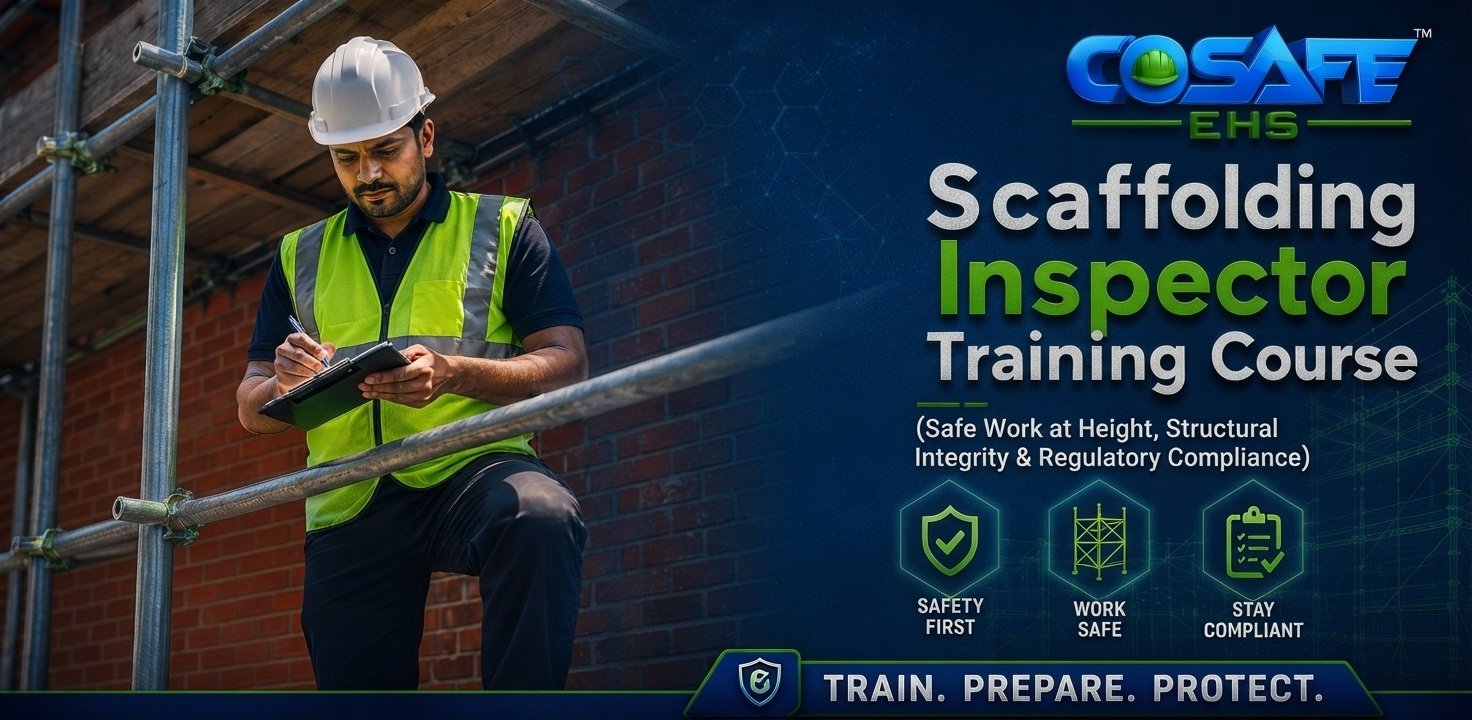
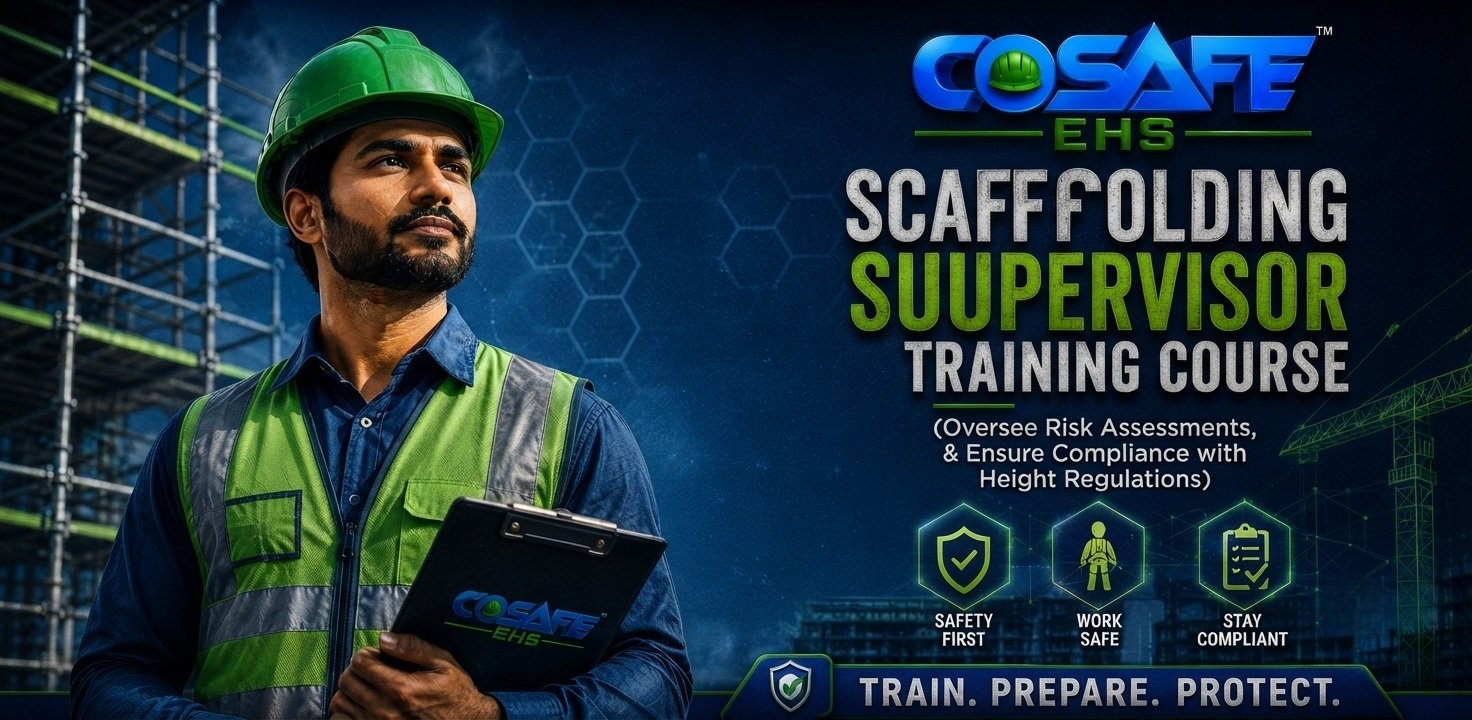
Scaffolding Inspector Course

Duration
3, 6, 12 months
Mode
Online/Offline
Placement
100% assistance
Language
Kannada/Hindi/English

Course Details

Scaffolding Inspector Course in Bangalore


Professional Scaffold Inspection Training for Safe Work at Height, Structural Integrity & Regulatory Compliance

Scaffolding is one of the most widely used temporary access systems in construction, oil & gas, petrochemical plants, power generation, manufacturing, shipbuilding, infrastructure, and industrial maintenance projects. However, improperly erected, damaged, overloaded, or poorly maintained scaffolds are a major cause of falls from height, structural collapses, dropped objects, and workplace fatalities. Regular scaffold inspections performed by competent personnel are essential to ensure scaffolds remain safe for use throughout their lifecycle.

The Scaffolding Inspector Course at Cosafe EHS Bangalore is a comprehensive, competency-based training program designed to develop skilled Scaffold Inspectors capable of inspecting, assessing, documenting, and approving scaffolding systems in accordance with internationally accepted scaffolding inspection practices.

The course combines detailed classroom instruction, scaffold component identification, practical inspection exercises, scaffold tagging demonstrations, defect identification workshops, structural stability assessments, load evaluation, hazard identification, inspection reporting, and real-world industrial case studies. Participants gain the knowledge and practical skills required to inspect scaffolds before first use, after modification, following adverse weather conditions, and during routine site inspections.

This training is suitable for professionals working across construction, oil & gas, petrochemical, power plants, marine, manufacturing, mining, infrastructure, logistics, and industrial shutdown projects, where competent scaffold inspection is essential for regulatory compliance and workplace safety.

What is a Scaffolding Inspector?

A Scaffolding Inspector is a competent professional responsible for inspecting scaffold structures to verify their structural integrity, stability, safe access, load capacity, fall protection systems, and compliance with applicable safety requirements before authorizing them for use. Inspectors also identify defects, recommend corrective actions, maintain inspection records, and implement scaffold tagging systems.

Why Scaffolding Inspection Training is Important

Professional scaffold inspection helps organizations:

  • Prevent scaffold collapses and falls from height

  • Detect unsafe scaffold conditions before incidents occur

  • Improve compliance with scaffold inspection procedures

  • Strengthen hazard identification and risk management

  • Ensure safe access for workers at height

  • Reduce equipment damage and operational downtime

  • Improve inspection documentation and traceability

  • Enhance workforce confidence and safety culture

  • Support contractor and client safety compliance


Who Should Attend?

This course is ideal for:

  • Scaffolding Inspectors

  • Scaffolding Supervisors

  • Scaffold Foremen

  • Scaffold Erectors

  • Construction Supervisors

  • Site Engineers

  • Civil Engineers

  • Safety Officers

  • HSE Engineers

  • Project Engineers

  • Maintenance Supervisors

  • Work at Height Supervisors

  • Shutdown & Turnaround Personnel

  • Contractors

  • Facility Management Professionals

  • Industrial Maintenance Personnel

  • Oil & Gas Professionals


Industries Covered

  • Construction

  • Oil & Gas

  • Petrochemical

  • Refineries

  • Power Plants

  • Manufacturing

  • Infrastructure Projects

  • Marine & Shipbuilding

  • Steel Plants

  • Cement Industries

  • Mining

  • Warehousing & Logistics

  • Renewable Energy

  • Telecommunications

  • Facility Management

  • Aviation

  • Industrial Maintenance


What you'll learn

  • Understand the roles, responsibilities, inspection frequency, and legal requirements of a competent Scaffolding Inspector for safe work-at-height operations.
  • Identify scaffold types, components, and structural elements, including standards, ledgers, transoms, braces, couplers, platforms, guardrails, and access systems.
  • Conduct effective Hazard Identification (HAZID), Risk Assessment (RA), and Job Safety Analysis (JSA) to recognize scaffold-related hazards before use.
  • Perform pre-use, daily, periodic, post-modification, and post-weather scaffold inspections using systematic inspection procedures and acceptance criteria.
  • Assess scaffold stability, foundations, tie systems, bracing arrangements, platform integrity, and Safe Working Load (SWL) requirements to verify structural safety.
  • Identify defects, classify unsafe conditions, recommend corrective actions, and determine whether a scaffold is safe, restricted, or unsafe for use.
  • Apply scaffold tagging systems correctly, including Green, Yellow, and Red tags, to communicate inspection status and site safety requirements.
  • Evaluate fall protection measures, safe access and egress arrangements, ladder safety, stair towers, edge protection, and other work-at-height controls during inspections.
  • Prepare accurate inspection reports, checklists, defect records, handover certificates, and audit documentation in accordance with organizational procedures and industry best practices.
  • Develop the practical competency and confidence to inspect, document, and authorize scaffolding systems safely, improving regulatory compliance, reducing workplace risks, and enhancing safety performance across construction, oil & gas, manufacturing, marine, infrastructure, and industrial maintenance sectors.