






Overview
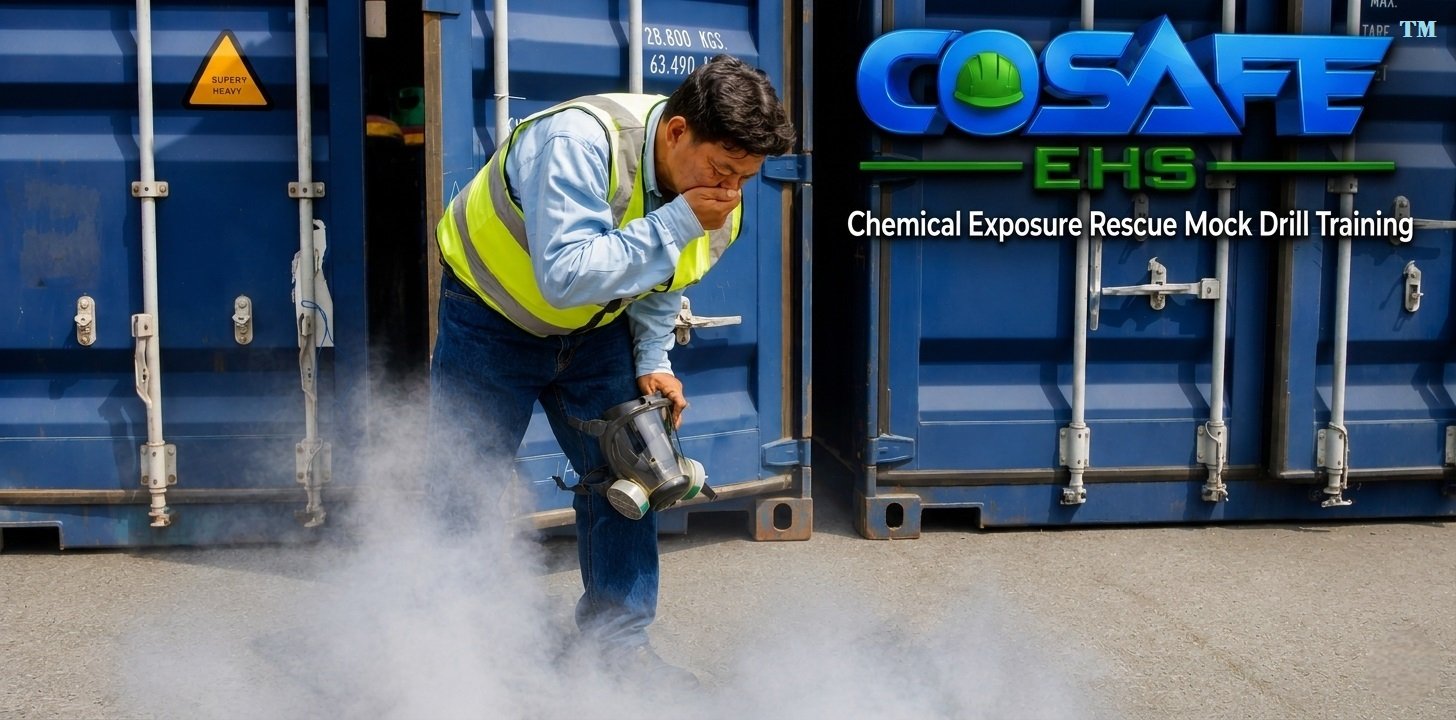
Chemical Exposure Rescue Mock Drill Training in Bangalore
Professional Chemical Exposure Rescue Mock Drill Training by Cosafe EHS Bangalore
Chemical exposure incidents are among the most complex workplace emergencies due to the wide variety of hazardous substances used across industries. Whether involving corrosive chemicals, toxic gases, solvents, acids, alkalis, reactive substances, or hazardous process chemicals, a single exposure incident can result in severe injuries, chemical burns, respiratory distress, poisoning, environmental contamination, equipment damage, and even multiple casualties.
Industries such as chemical manufacturing, pharmaceuticals, petrochemicals, oil & gas, laboratories, food processing, electronics manufacturing, paints and coatings, water treatment facilities, and research institutions routinely handle chemicals that require specialized emergency response capabilities.
A chemical exposure emergency demands far more than first aid. Effective response requires rapid hazard identification, emergency isolation, rescue planning, decontamination procedures, casualty handling, respiratory protection, incident command coordination, and safe evacuation practices. Rescue teams must be trained to protect themselves while assisting affected personnel, as secondary contamination of rescuers is a significant risk during chemical incidents. Chemical emergency guidance consistently emphasizes the use of proper PPE, respiratory protection, and decontamination procedures before rescue operations begin.
At Cosafe EHS Bangalore, our Chemical Exposure Rescue Mock Drill Training Program is designed to prepare Emergency Response Teams (ERT), Safety Officers, Supervisors, Rescue Teams, Plant Personnel, and Emergency Coordinators to effectively manage chemical exposure incidents. The program combines emergency preparedness, hazard recognition, spill response, rescue planning, decontamination techniques, casualty management, and realistic rescue simulations to ensure personnel can respond confidently during actual emergencies.
Why Chemical Exposure Rescue Mock Drill Training is Important
Many chemical incidents escalate because responders lack practical emergency response experience. Delayed response, improper PPE selection, inadequate decontamination, poor communication, or incorrect casualty handling can significantly increase the severity of an incident.
Regular Chemical Exposure Rescue Mock Drills help organizations:
Test emergency response procedures
Improve rescue team preparedness
Strengthen incident command capabilities
Evaluate decontamination effectiveness
Improve PPE competency
Enhance chemical hazard awareness
Reduce emergency response time
Improve medical emergency coordination
Identify procedural gaps
Strengthen overall workplace safety culture
Common Chemical Exposure Emergencies
Organizations may encounter:
Chemical spills and leaks
Toxic vapor releases
Corrosive chemical exposure
Acid and alkali splashes
Chemical inhalation incidents
Skin contamination emergencies
Eye exposure incidents
Laboratory accidents
Process chemical releases
Hazardous material transportation incidents
Objectives of Chemical Exposure Rescue Mock Drills
The primary objectives include:
Testing chemical emergency response plans
Evaluating rescue readiness
Practicing decontamination procedures
Improving hazard identification skills
Enhancing emergency communication
Improving casualty rescue operations
Strengthening emergency leadership
Testing rescue equipment readiness
Reducing responder risk
Building organizational resilience
Industries Requiring Chemical Exposure Rescue Preparedness
This training is highly beneficial for:
Chemical Manufacturing Industries
Petrochemical Plants
Oil & Gas Facilities
Pharmaceutical Companies
Paint and Coating Industries
Laboratories and Research Facilities
Fertilizer Plants
Water Treatment Facilities
Food Processing Industries
Electronics Manufacturing Units
Textile Industries
Industrial Manufacturing Plants
Benefits of Chemical Exposure Rescue Mock Drill Training
Organizations conducting regular rescue drills benefit from:
Faster emergency response
Improved worker protection
Enhanced rescue competency
Better emergency coordination
Reduced incident severity
Improved compliance readiness
Stronger emergency preparedness
Better decontamination capability
Increased workforce confidence
Improved business continuity
Who Should Attend?
This training program is ideal for:
Emergency Response Team (ERT) Members
Safety Officers
EHS Professionals
Plant Operators
Supervisors and Managers
Chemical Handlers
Laboratory Personnel
Fire & Rescue Teams
Maintenance Personnel
Contractors
Incident Commanders
Emergency Coordinators
At Cosafe EHS Bangalore, our Chemical Exposure Rescue Mock Drill Training is customized according to the specific chemicals handled, operational risks, industry requirements, and emergency response needs of each organization.
Chemical exposure emergencies can escalate rapidly and often involve multiple hazards including toxicity, corrosivity, inhalation risks, contamination, and environmental impact. Without proper planning, trained responders, effective PPE, and regular rescue drills, even minor incidents can become major emergencies. Regular Chemical Exposure Rescue Mock Drills provide organizations with the confidence, preparedness, and practical capability required to protect workers and respond effectively during chemical incidents.
At Cosafe EHS Bangalore, our Chemical Exposure Rescue Mock Drill Training Program equips Emergency Response Teams, safety professionals, plant operators, and rescue personnel with the knowledge, practical skills, and confidence needed to manage chemical emergencies safely and effectively. Through realistic simulations, expert instruction, and hands-on rescue exercises, we help organizations strengthen emergency preparedness, reduce risks, and protect lives.
Identify the Hazard. Execute the Rescue. Protect People. Choose Cosafe EHS Bangalore for Professional Chemical Exposure Rescue Mock Drill Training in Bangalore.
Training Modules
Module 1: Introduction to Chemical Emergency Response
Participants receive a comprehensive understanding of chemical exposure emergencies and rescue operations.
Topics include:
- Chemical emergency awareness
- Types of chemical incidents
- Consequences of chemical exposure
- Rescue challenges
- Emergency preparedness principles
- Importance of mock drills
Participants gain a strong foundation in chemical emergency management.
Module 2: Chemical Hazard Identification and Risk Assessment
Understanding hazards is critical for safe rescue operations.
Topics include:
- Hazard classification systems
- Chemical properties and behavior
- Toxicity awareness
- Corrosive hazards
- Reactive substances
- Flammable chemicals
- Exposure pathways
- Risk assessment techniques
Participants learn how to identify and evaluate chemical risks.
Module 3: Chemical Exposure Routes and Health Effects
Chemical exposure can occur through multiple pathways.
Training includes:
- Inhalation exposure
- Skin absorption
- Eye contact
- Ingestion hazards
- Acute health effects
- Chronic health effects
- Exposure symptom recognition
Participants learn how chemicals affect the human body.
Module 4: Safety Data Sheets (SDS) and Emergency Information
Safety Data Sheets provide critical emergency response information.
Topics include:
- SDS structure and interpretation
- Hazard identification sections
- First aid measures
- Spill response information
- PPE requirements
- Emergency contact details
Participants develop competency in accessing chemical emergency information.
Module 5: Personal Protective Equipment (PPE) for Chemical Emergencies
Appropriate PPE selection is critical for responder safety.
Training includes:
- Chemical-resistant gloves
- Protective suits
- Respiratory protection
- Face shields
- Chemical splash goggles
- PPE limitations
- PPE inspection procedures
Proper PPE selection and usage are essential because no single PPE system protects against every chemical hazard.
Module 6: Respiratory Protection and SCBA Awareness
Some chemical incidents require advanced respiratory protection.
Topics include:
- Respiratory hazards
- Air-purifying respirators
- SCBA systems
- Emergency breathing procedures
- Air management awareness
- Respiratory protection limitations
Participants understand respiratory protection requirements during rescue operations.
Module 7: Chemical Spill and Leak Response
Chemical spills often require immediate action.
Training includes:
- Spill classification
- Emergency isolation
- Spill containment techniques
- Hazard zone establishment
- Emergency notifications
- Spill response team activation
Large or highly toxic spills typically require specialized emergency response rather than worker cleanup.
Module 8: Emergency Rescue Planning
Every chemical facility should maintain a rescue plan.
Topics include:
- Rescue planning procedures
- Resource identification
- Emergency response activation
- Rescue route planning
- Equipment readiness
- Rescue team deployment
Participants learn how to develop effective rescue strategies.
Module 9: Casualty Rescue and Recovery Operations
Safe casualty recovery is essential during chemical emergencies.
Training includes:
- Casualty assessment
- Victim stabilization
- Rescue prioritization
- Safe extraction techniques
- Contaminated casualty handling
- Rescue team coordination
Participants develop practical rescue skills.
Module 10: Chemical Decontamination Procedures
Decontamination is a critical step in preventing secondary exposure.
Topics include:
- Emergency decontamination principles
- Gross decontamination
- Technical decontamination
- Clothing removal procedures
- Skin decontamination
- Eye wash procedures
- Emergency shower utilization
Rapid decontamination significantly reduces ongoing chemical exposure and prevents contamination spread.
Module 11: Medical Emergency Response
Prompt medical intervention improves survival outcomes.
Training includes:
- Chemical burn management
- Respiratory distress awareness
- Poisoning symptoms
- First aid procedures
- Emergency medical coordination
- Casualty transfer protocols
Participants understand emergency medical response requirements.
Module 12: Incident Command System (ICS) and Emergency Coordination
Effective leadership improves emergency response outcomes.
Topics include:
- Incident Commander responsibilities
- Emergency communication
- Resource allocation
- Team coordination
- External agency coordination
- Emergency reporting
Participants strengthen emergency leadership capabilities.
Module 13: Chemical Exposure Rescue Mock Drill Execution
Participants engage in realistic rescue simulations.
Activities include:
- Simulated chemical release scenarios
- Casualty rescue operations
- PPE deployment exercises
- Emergency response activation
- Decontamination procedures
- Evacuation exercises
Participants gain hands-on emergency response experience.
Module 14: Scenario-Based Emergency Simulations
Different emergency situations are introduced to improve competency.
Exercises include:
- Acid splash incidents
- Chemical inhalation emergencies
- Laboratory accidents
- Toxic vapor release scenarios
- Process plant chemical leaks
- Multi-casualty events
Participants improve adaptability and decision-making skills.
Module 15: Post-Drill Evaluation and Continuous Improvement
Continuous improvement strengthens emergency preparedness.
Topics include:
- Response time evaluation
- Rescue effectiveness review
- Equipment performance assessment
- Communication analysis
- Corrective action planning
- Lessons learned documentation
Participants learn how organizations improve emergency readiness through regular drills.
Training Methodology
At Cosafe EHS Bangalore, our Chemical Exposure Rescue Mock Drill Training follows a highly practical, hands-on, and competency-based learning approach designed to prepare participants for real-world chemical emergencies.
Interactive Classroom Sessions
Participants receive structured instruction through:
- Multimedia presentations
- Chemical incident case studies
- Emergency response workshops
- Hazard recognition exercises
- Group discussions
- Industry best-practice reviews
This creates a strong theoretical foundation.
Site Hazard Assessment
Before conducting practical drills, our experts perform:
- Chemical inventory reviews
- Hazard identification studies
- Emergency preparedness assessments
- Rescue capability evaluations
- Spill response reviews
- PPE assessments
This ensures realistic and site-specific training.
Practical Equipment Demonstrations
Participants receive demonstrations covering:
- Chemical PPE
- Spill response kits
- Emergency showers
- Eye wash stations
- Gas monitoring devices
- SCBA systems
- Rescue equipment
Hands-on demonstrations improve equipment competency.
Chemical Spill Response Exercises
Participants engage in:
- Spill containment drills
- Emergency isolation exercises
- Hazard zone establishment
- Incident communication activities
- PPE deployment practices
- Decontamination procedures
These exercises strengthen emergency response capability.
Full-Scale Chemical Exposure Rescue Mock Drills
The core of the training involves realistic rescue simulations.
Activities include:
- Chemical splash emergencies
- Toxic vapor exposure incidents
- Casualty rescue operations
- Decontamination procedures
- Emergency evacuation exercises
- Incident command activation
Participants practice under realistic emergency conditions.
Scenario-Based Emergency Learning
Real-world scenarios improve problem-solving abilities.
Exercises include:
- Laboratory chemical exposure incidents
- Chemical storage area leaks
- Process plant emergencies
- Hazardous material release events
- Multi-casualty rescue situations
- Decontamination challenges
This approach improves decision-making under pressure.
Post-Drill Debriefing and Evaluation
Following each exercise, participants receive:
- Performance feedback
- Response time analysis
- Improvement recommendations
- Equipment assessments
- Strength identification
- Lessons learned discussions
This process helps organizations continuously improve emergency preparedness.
Competency Assessment and Certification
Participants are evaluated through:
- Written assessments
- PPE competency evaluations
- Rescue simulations
- Decontamination exercises
- Emergency response assessments
- Team performance reviews
Certificates are issued upon successful completion of the training program.
Why Choose Cosafe EHS Bangalore for Chemical Exposure Rescue Mock Drill Training?
- Experienced chemical emergency response trainers
- Practical and hands-on training methodology
- Realistic rescue simulations
- Industry-specific emergency scenarios
- Advanced decontamination training
- Competency-based assessments
- Site-specific emergency planning support
- Emergency Response Team development programs
- Detailed post-drill evaluation reports
- Customized corporate training solutions
Program Details
Details Information
Training Duration:- 1 Day / 2 Days
Mode of Training:- Classroom + Practical
Certification:- Certificate Provided
Certificate Validity:- 1–2 Years
Training Location:- Onsite / Training Center
Languages Available:- Kannada / Hindi / English / Telugu