





Overview
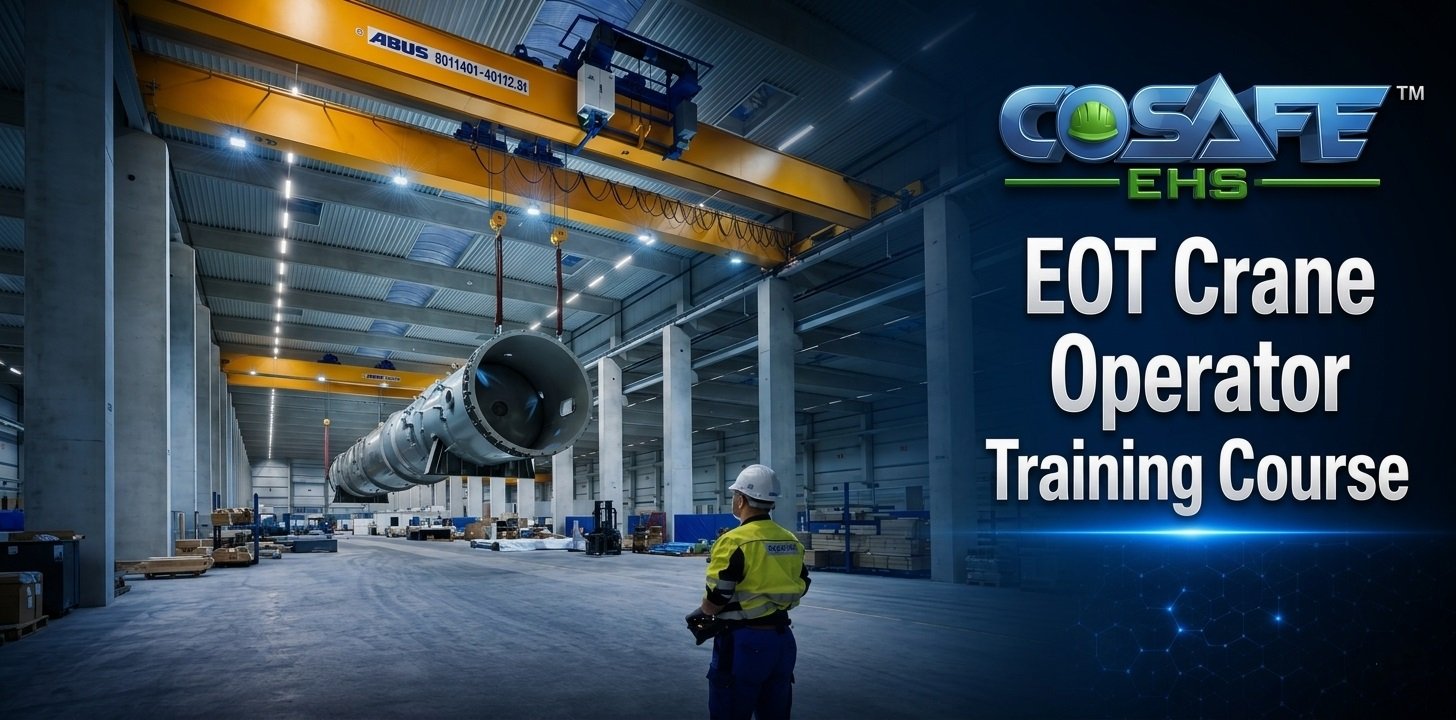
EOT Crane Operator Training Course in Bangalore
Professional EOT Crane Operator Training by Cosafe EHS Bangalore
Electric Overhead Traveling (EOT) Cranes are among the most important material handling systems used across manufacturing plants, steel industries, automotive facilities, fabrication units, engineering workshops, warehouses, ports, power plants, cement industries, shipyards, and heavy engineering sectors. These cranes are designed to lift, move, transport, and position heavy loads safely and efficiently within industrial environments.
Despite their operational advantages, EOT cranes present significant workplace hazards when operated by untrained or inexperienced personnel. Crane-related incidents can result in dropped loads, equipment damage, structural failures, struck-by accidents, electrical hazards, property losses, production downtime, and serious injuries. Most crane accidents occur due to improper load handling, overloading, poor communication, inadequate inspections, unsafe rigging practices, and lack of operator competency. Effective operator training significantly improves lifting safety, hazard awareness, and operational control.
At Cosafe EHS Bangalore, our EOT Crane Operator Training Program is designed to develop competent crane operators who can safely operate, inspect, monitor, and manage EOT crane operations in accordance with industrial safety standards and best practices. The training focuses on crane operation principles, load handling techniques, crane inspection procedures, rigging awareness, lifting safety, emergency response, and workplace compliance requirements.
The program combines theoretical learning with practical demonstrations and hands-on exercises to ensure operators develop the knowledge, confidence, and operational skills required for safe crane operation. Participants learn how to identify hazards, control risks, perform pre-use inspections, interpret load capacities, communicate effectively during lifting operations, and respond appropriately to emergencies.
Why EOT Crane Operator Training is Important
EOT cranes are used for lifting and transporting heavy materials that may weigh several tons. A single mistake during lifting operations can cause catastrophic consequences. Proper training helps operators:
Understand crane operating principles
Prevent overloading and load instability
Improve lifting accuracy and efficiency
Reduce crane-related accidents
Protect personnel working near lifting zones
Improve equipment reliability
Strengthen workplace compliance
Minimize production downtime
Enhance operational productivity
Promote a proactive safety culture
Benefits of EOT Crane Operator Training
Organizations that invest in professional EOT Crane Operator Training experience several benefits:
Reduced lifting and material handling incidents
Improved operator competence
Better load control and positioning
Enhanced workplace safety performance
Reduced equipment damage and maintenance costs
Improved communication during lifting operations
Increased productivity and operational efficiency
Better compliance with safety standards
Stronger risk management practices
Improved workforce confidence
Who Should Attend?
This training program is ideal for:
EOT crane operators
Overhead crane operators
Maintenance personnel
Production supervisors
Material handling personnel
Warehouse operators
Riggers and signalmen
Safety officers
Plant engineers
Mechanical maintenance teams
Workshop personnel
Industrial workers involved in lifting operations
EOT cranes are essential for industrial material handling, but they also introduce significant operational risks when handled improperly. Safe crane operation requires technical knowledge, practical skills, hazard awareness, effective communication, and strict adherence to safe lifting practices.
At Cosafe EHS Bangalore, our EOT Crane Operator Training Program equips operators, supervisors, and industrial personnel with the expertise required to safely inspect, operate, monitor, and manage EOT crane operations. Through practical training, real-world simulations, and industry-focused instruction, participants develop the competence needed to improve workplace safety, reduce lifting incidents, and enhance operational efficiency.
Lift Safely. Operate Confidently. Prevent Accidents. Choose Cosafe EHS Bangalore for Professional EOT Crane Operator Training.
Training Modules
Module 1: Introduction to EOT Cranes
This module provides participants with a comprehensive understanding of EOT cranes and their industrial applications.
Topics include:
- What is an EOT Crane?
- Types of EOT cranes
- Single girder and double girder cranes
- Industrial applications of EOT cranes
- Crane classifications
- Basic crane terminology
- Roles and responsibilities of crane operators
Participants develop a strong foundation in crane operations and workplace expectations.
Module 2: EOT Crane Components and Functions
Understanding crane components is essential for safe operation.
Topics include:
- Bridge structure
- Hoist mechanism
- Trolley system
- Wire ropes and chains
- Hook blocks
- End carriages
- Pendant controls
- Remote control systems
- Limit switches
- Safety devices
Participants learn the purpose and function of critical crane components.
Module 3: Hazard Identification and Risk Assessment
Lifting operations involve multiple workplace hazards that must be identified and controlled.
Topics include:
- Struck-by hazards
- Caught-between hazards
- Load drop hazards
- Electrical hazards
- Mechanical hazards
- Swinging load risks
- Environmental hazards
- Risk assessment techniques
- Control measures
Participants learn to proactively identify and manage lifting risks.
Module 4: Pre-Operational Inspection Procedures
Routine inspections help identify unsafe conditions before crane operation begins.
Training includes:
- Daily crane inspection checklists
- Structural inspection awareness
- Wire rope inspection
- Hook inspection
- Control system checks
- Safety device verification
- Limit switch testing awareness
- Reporting defects and abnormalities
Participants learn how inspections improve crane reliability and safety.
Module 5: Crane Controls and Safe Operation
Operators must understand how crane controls affect load movement.
Topics include:
- Pendant control operation
- Cabin-controlled cranes
- Remote-controlled crane operation
- Hoisting and lowering procedures
- Bridge travel operation
- Trolley movement
- Smooth load handling
- Safe stopping techniques
Participants gain knowledge of safe crane control practices.
Module 6: Load Handling and Lifting Techniques
Safe load handling is one of the most critical responsibilities of an EOT crane operator.
Training includes:
- Load weight estimation
- Understanding Safe Working Load (SWL)
- Center of gravity principles
- Load balancing techniques
- Proper lifting methods
- Load positioning
- Preventing load swing
- Safe lowering procedures
Participants learn techniques for safe and efficient load movement.
Module 7: Rigging Awareness and Lifting Accessories
Operators must understand how lifting accessories influence load safety.
Topics include:
- Slings and shackles
- Hooks and eyebolts
- Lifting beams
- Spreader bars
- Rigging inspection awareness
- Safe attachment methods
- Load securing practices
- Rigging hazards
Participants improve awareness of safe lifting systems.
Module 8: Crane Signals and Communication
Effective communication is essential during lifting operations.
Training includes:
- Standard hand signals
- Signalman responsibilities
- Radio communication procedures
- Emergency signals
- Operator-signalman coordination
- Communication failures and risks
Participants learn how clear communication prevents lifting accidents.
Module 9: Safe Working Practices During Lifting Operations
Participants learn critical operational safety requirements.
Topics include:
- Safe lifting zones
- Barricading work areas
- Pedestrian safety
- Traveling with suspended loads
- Avoiding side pulling
- Avoiding sudden movements
- Managing blind spots
- Maintaining operational awareness
This module reinforces safe crane operating behavior.
Module 10: Electrical and Mechanical Safety
EOT cranes involve both electrical and mechanical systems.
Topics include:
- Electrical hazard awareness
- Crane power systems
- Emergency isolation procedures
- Mechanical failures
- Maintenance awareness
- Lockout Tagout (LOTO) concepts
- Safe shutdown procedures
Participants learn how to recognize and respond to equipment-related hazards.
Module 11: Emergency Response Procedures
Operators must know how to respond during emergencies.
Training includes:
- Power failure response
- Mechanical breakdown response
- Load instability management
- Emergency shutdown procedures
- Incident reporting
- Evacuation awareness
- Communication during emergencies
Participants improve emergency preparedness and response capability.
Module 12: Legal Compliance and Industry Standards
Safe crane operations require adherence to workplace regulations and standards.
Topics include:
- Operator responsibilities
- Workplace compliance requirements
- Documentation and records
- Inspection requirements
- Safety audits
- Incident reporting obligations
- Industry best practices
Participants develop compliance awareness and accountability.
Module 13: Practical Demonstrations and Operator Skill Development
Practical learning is essential for effective crane operator competency.
Activities include:
- Crane familiarization exercises
- Inspection demonstrations
- Load lifting practice
- Load positioning exercises
- Signal communication drills
- Hazard identification activities
- Emergency response simulations
- Safe shutdown exercises
Hands-on training significantly improves operator confidence and skill development.
Training Methodology
At Cosafe EHS Bangalore, we follow a highly practical, competency-based, and industry-focused training methodology designed to develop safe, confident, and skilled EOT crane operators.
Interactive Classroom Sessions
Participants receive structured theoretical learning through:
- Multimedia presentations
- Industrial case studies
- Crane accident investigations
- Hazard awareness discussions
- Group learning activities
- Industry best-practice reviews
This creates a strong foundation of technical and safety knowledge.
Practical Demonstrations
Our instructors conduct live demonstrations covering:
- Crane controls and operation
- Pre-use inspections
- Load handling procedures
- Rigging awareness
- Signal communication
- Emergency shutdown practices
Participants gain direct exposure to real crane operating procedures.
Scenario-Based Learning
Realistic workplace scenarios help participants understand operational challenges.
Exercises include:
- Load swing control exercises
- Overload awareness scenarios
- Communication challenges
- Equipment defect identification
- Hazard recognition drills
- Emergency response simulations
This method improves decision-making and hazard management skills.
Hands-On Crane Operation Practice
Participants receive supervised practical exposure to:
- Crane startup procedures
- Hoisting and lowering loads
- Traveling loads safely
- Positioning loads accurately
- Managing lifting zones
- Shutdown procedures
Hands-on practice develops operational confidence and competence.
Team-Based Learning Activities
Participants engage in:
- Risk assessment workshops
- Lifting plan reviews
- Communication exercises
- Safety observation activities
- Incident analysis discussions
- Crane operation simulations
These activities strengthen teamwork and operational coordination.
Assessment and Competency Evaluation
Participants are evaluated through:
- Written examinations
- Practical crane operation assessments
- Inspection exercises
- Hazard identification activities
- Scenario-based evaluations
- Interactive questioning
Certificates are issued upon successful completion of the training program.
Why Choose Cosafe EHS Bangalore for EOT Crane Operator Training?
- Experienced crane safety trainers
- Industry-specific training modules
- Practical and hands-on learning approach
- Real-world lifting operation simulations
- Customized corporate training solutions
- Strong focus on accident prevention
- Compliance-oriented training methodology
- On-site and classroom delivery options
- Competency-based operator assessment
- Post-training support and guidance
Program Details
Duration: Half Day (3–4 Hours) / Full Day (5–6 Hours)
Certification: Certificate will be provided after successful completion
Validity: 1–2 Years
Languages: Kannada / Hindi / English / Telugu