






Overview
Organizing and Motivating for Safety Training in Bangalore
Professional Organizing and Motivating for Safety Training by Cosafe EHS Bangalore
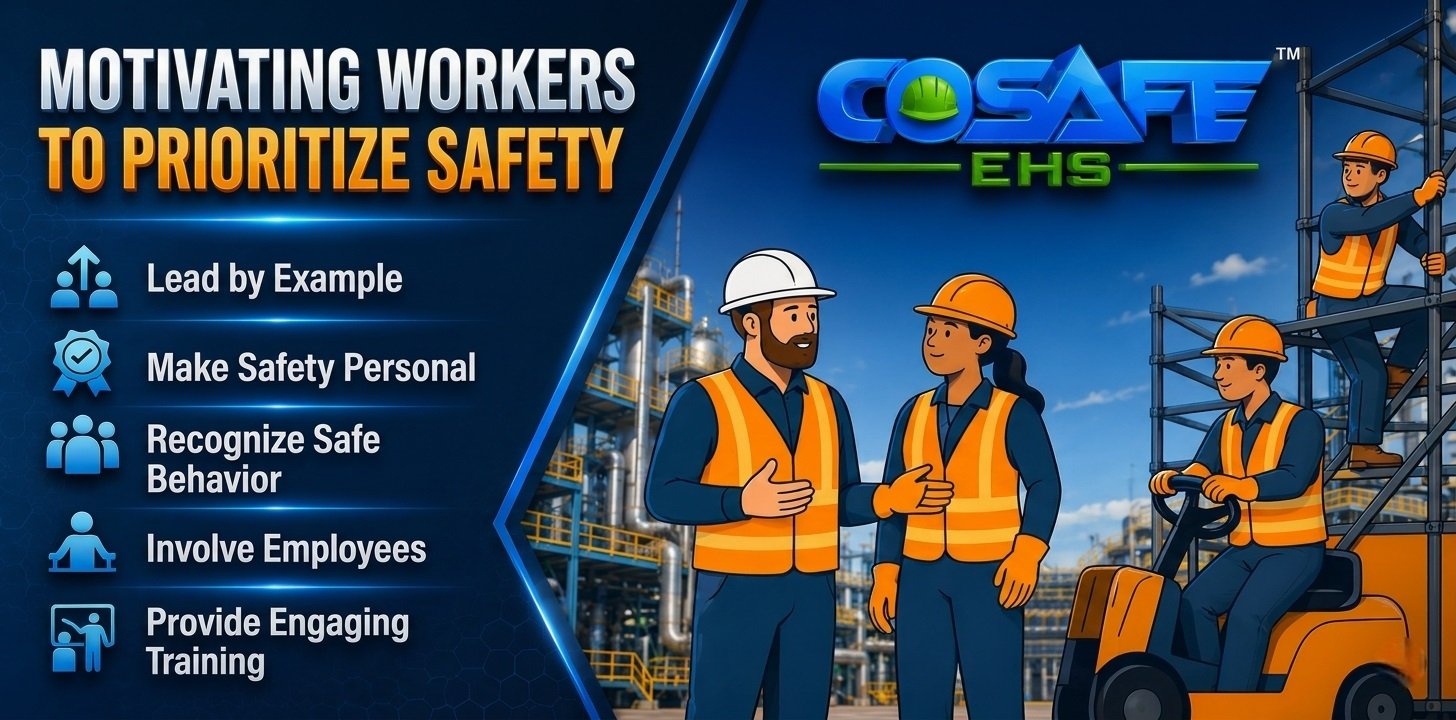
A safe workplace is not created by safety rules alone. While policies, procedures, PPE, and safety systems are essential, the true success of any Occupational Health and Safety Management System depends on people. Employees who are motivated, engaged, and committed to safety are far more likely to identify hazards, follow procedures, report unsafe conditions, and contribute to accident prevention.
Many workplace incidents occur not because employees lack knowledge, but because of poor safety attitudes, complacency, lack of motivation, weak supervision, ineffective communication, and inadequate leadership involvement. Building a strong safety culture requires organizations to effectively organize safety activities and motivate employees to actively participate in workplace safety initiatives.
At Cosafe EHS Bangalore, our Organizing and Motivating for Safety Training Program is designed to help organizations develop a positive safety culture where safety becomes a shared responsibility rather than a compliance requirement. The program focuses on safety leadership, employee engagement, behavioral safety, communication techniques, motivation strategies, and workforce participation to improve overall safety performance and organizational effectiveness.
What is Organizing and Motivating for Safety?
Organizing and Motivating for Safety refers to the systematic process of creating structures, responsibilities, communication channels, leadership practices, and motivational techniques that encourage employees to work safely and participate actively in safety improvement programs.
The objective is to create an environment where:
Employees value safety
Supervisors actively promote safe behavior
Management demonstrates commitment
Teams communicate openly about risks
Workers feel responsible for each other's safety
Safety becomes part of everyday decision-making
Why Organizing and Motivating for Safety is Important
Organizations with strong safety cultures consistently experience fewer accidents, higher productivity, improved employee morale, and better operational performance. Effective safety motivation helps bridge the gap between knowing safety procedures and actually following them. Research and industry experience consistently show that leadership engagement, communication, and behavioral reinforcement play a major role in developing sustainable safety cultures.
Key Objectives of the Training
The training aims to:
Develop positive safety attitudes
Improve employee engagement in safety
Strengthen safety leadership skills
Enhance workplace communication
Promote behavioral safety practices
Increase safety awareness
Improve workforce participation
Reduce unsafe acts and behaviors
Build accountability at all organizational levels
Create a sustainable safety culture
Importance of Safety Motivation in Organizations
Motivated employees are more likely to:
Follow safety procedures consistently
Report hazards and near misses
Participate in toolbox talks
Support workplace safety initiatives
Correct unsafe behaviors
Take ownership of safety responsibilities
Encourage peers to work safely
When employees are motivated, safety performance improves naturally rather than through enforcement alone.
Benefits of Organizing and Motivating for Safety Training
Organizations implementing effective safety motivation strategies benefit from:
Reduced workplace accidents
Improved safety culture
Enhanced employee morale
Better communication
Increased hazard reporting
Higher productivity
Stronger leadership involvement
Improved compliance performance
Reduced absenteeism
Greater employee retention
Industries Benefiting from This Training
This training is valuable for:
Manufacturing Industries
Construction Companies
Oil & Gas Facilities
Chemical Industries
Warehouses and Logistics
Healthcare Organizations
Educational Institutions
Power Generation Plants
Facility Management Companies
Infrastructure Projects
Corporate Offices
Engineering Organizations
Who Should Attend?
This program is ideal for:
Safety Officers
EHS Managers
Supervisors
Team Leaders
Plant Managers
HR Professionals
Project Managers
Department Heads
Operations Personnel
Safety Committee Members
Engineers
Senior Management Personnel
At Cosafe EHS Bangalore, our training is customized according to organizational culture, workforce demographics, industry requirements, and business objectives.
Creating a safe workplace requires more than rules, procedures, and compliance programs. Sustainable safety performance is achieved when employees are organized, motivated, engaged, and committed to working safely every day. Strong leadership, effective communication, positive reinforcement, and active workforce participation are the foundations of a successful safety culture.
At Cosafe EHS Bangalore, our Organizing and Motivating for Safety Training Program equips leaders, supervisors, safety professionals, and employees with the knowledge, skills, and motivation needed to build a proactive safety culture. Through practical exercises, leadership development, behavioral safety principles, and employee engagement strategies, we help organizations transform safety from a compliance requirement into a shared organizational value.
Organize for Safety. Motivate for Excellence. Build a Culture Where Everyone Goes Home Safe. Choose Cosafe EHS Bangalore for Professional Organizing and Motivating for Safety Training in Bangalore.
Training Modules
Module 1: Fundamentals of Safety Culture
Participants gain an understanding of how organizational culture influences workplace safety.
Topics include:
- What is safety culture?
- Safety culture vs safety climate
- Characteristics of strong safety cultures
- Safety culture maturity models
- Building a proactive safety environment
- Safety culture assessment
Participants learn how culture influences workplace behavior and decision-making.
Module 2: Organizing Safety within the Workplace
This module focuses on establishing effective safety structures.
Training includes:
- Safety organization systems
- Roles and responsibilities
- Safety committees
- Safety management structures
- Accountability systems
- Safety performance monitoring
Participants learn how to organize workplace safety effectively.
Module 3: Leadership and Safety Excellence
Strong leadership is the foundation of safety success.
Topics include:
- Leadership versus supervision
- Safety leadership behaviors
- Visible safety leadership
- Leading by example
- Building trust
- Safety accountability
Participants understand how leaders influence workplace safety performance.
Module 4: Employee Motivation for Safety
This module explores motivational principles applied to workplace safety.
Training includes:
- Motivation fundamentals
- Intrinsic and extrinsic motivation
- Safety engagement techniques
- Positive reinforcement
- Recognition systems
- Behavioral encouragement
Participants learn how to motivate employees to adopt safe work practices.
Module 5: Behavioral Safety Concepts
Behavior plays a critical role in accident prevention.
Topics include:
- Human behavior and safety
- Unsafe acts and unsafe conditions
- Behavioral observation techniques
- Safety interventions
- Risk perception
- Habit formation
Participants understand how behavior influences workplace safety.
Module 6: Communication for Safety Success
Effective communication is essential for safety performance.
Training includes:
- Safety communication principles
- Active listening techniques
- Safety meetings
- Toolbox talks
- Feedback mechanisms
- Communication barriers
Participants improve their ability to communicate safety expectations clearly.
Module 7: Employee Participation and Engagement
An engaged workforce contributes significantly to safety improvement.
Topics include:
- Employee involvement programs
- Safety suggestion schemes
- Participation strategies
- Safety observation programs
- Near miss reporting systems
- Workforce ownership
Participants learn how to encourage active participation in safety initiatives.
Module 8: Building Positive Safety Attitudes
Attitudes influence workplace behaviors and decision-making.
Training includes:
- Safety mindset development
- Personal responsibility
- Risk awareness
- Safety values
- Attitude transformation
- Overcoming complacency
Participants learn techniques for creating positive safety attitudes.
Module 9: Safety Recognition and Reward Systems
Recognition reinforces positive behavior.
Topics include:
- Reward program design
- Recognition strategies
- Positive reinforcement
- Team-based rewards
- Performance incentives
- Sustainable motivation systems
Participants learn how to encourage long-term safety engagement.
Module 10: Managing Resistance to Safety Initiatives
Resistance can hinder safety improvement efforts.
Training includes:
- Understanding resistance
- Sources of resistance
- Change management principles
- Influencing techniques
- Building acceptance
- Managing objections
Participants develop strategies for overcoming barriers to safety.
Module 11: Safety Leadership Coaching Skills
Leaders must coach employees toward safer behaviors.
Topics include:
- Coaching techniques
- Constructive feedback
- Safety conversations
- Performance improvement
- Mentoring employees
- Continuous development
Participants strengthen leadership and coaching competencies.
Module 12: Team Building for Safety Excellence
Teamwork enhances safety performance.
Training includes:
- Team dynamics
- Collaboration strategies
- Shared responsibility
- Trust building
- Conflict resolution
- Safety teamwork exercises
Participants learn how to build high-performing safety teams.
Module 13: Learning from Incidents and Near Misses
Organizations improve by learning from experience.
Topics include:
- Incident reporting culture
- Near miss analysis
- Lessons learned programs
- Root cause awareness
- Preventive action planning
- Continuous improvement
Participants learn how organizational learning supports safety excellence.
Module 14: Safety Campaigns and Awareness Programs
Safety campaigns help sustain engagement.
Training includes:
- Awareness initiatives
- Safety theme campaigns
- Promotional activities
- Safety competitions
- Employee involvement events
- Communication strategies
Participants learn how to maintain safety enthusiasm across the workforce.
Module 15: Building a Sustainable Safety Culture
The final module focuses on long-term success.
Topics include:
- Safety culture roadmaps
- Leadership commitment
- Continuous improvement
- Measurement and evaluation
- Organizational alignment
- Future safety strategies
Participants learn how to sustain safety motivation and engagement over time.
Training Methodology
At Cosafe EHS Bangalore, our Organizing and Motivating for Safety Training follows a highly interactive, practical, and behavior-focused methodology designed to create lasting improvements in workplace safety culture.
Interactive Classroom Sessions
Participants receive structured learning through:
- Multimedia presentations
- Safety leadership discussions
- Behavioral safety workshops
- Group activities
- Workplace examples
- Industry best practices
This establishes a strong theoretical foundation.
Real-Life Incident Case Studies
Participants analyze actual workplace incidents to understand:
- Human factors
- Leadership failures
- Communication gaps
- Behavioral causes
- Organizational influences
- Prevention opportunities
Case studies improve practical understanding and retention.
Group Discussions and Team Activities
Collaborative learning includes:
- Safety culture assessments
- Team problem-solving exercises
- Safety communication activities
- Leadership simulations
- Motivation workshops
- Group presentations
These activities strengthen engagement and participation.
Role Plays and Safety Leadership Exercises
Participants practice:
- Safety conversations
- Coaching techniques
- Feedback delivery
- Employee engagement methods
- Leadership behaviors
- Conflict resolution
Practical exercises improve confidence and workplace application.
Behavioral Observation Workshops
Participants learn through:
- Workplace behavior analysis
- Observation exercises
- Hazard recognition activities
- Safety intervention simulations
- Risk perception exercises
- Behavioral coaching demonstrations
These workshops strengthen behavioral safety competencies.
Scenario-Based Learning
Participants evaluate realistic workplace situations involving:
- Employee resistance
- Unsafe behavior
- Leadership challenges
- Communication failures
- Safety performance issues
- Organizational change
Scenario-based learning improves decision-making skills.
Safety Communication Practice Sessions
Participants develop skills through:
- Toolbox talk presentations
- Safety briefings
- Team communication exercises
- Listening activities
- Feedback sessions
- Group discussions
These activities enhance workplace communication effectiveness.
Competency Assessment and Certification
Participants are evaluated through:
- Written assessments
- Group exercises
- Leadership activities
- Behavioral observations
- Case study analysis
- Participation reviews
Certificates are awarded upon successful completion of the training program.
Why Choose Cosafe EHS Bangalore for Organizing and Motivating for Safety Training?
- Experienced EHS and safety leadership trainers
- Practical and interactive learning approach
- Industry-specific training customization
- Real-world case studies and examples
- Behavioral safety integration
- Leadership development focus
- Employee engagement strategies
- Safety culture improvement framework
- Competency-based assessments
- Corporate and industrial training expertise