






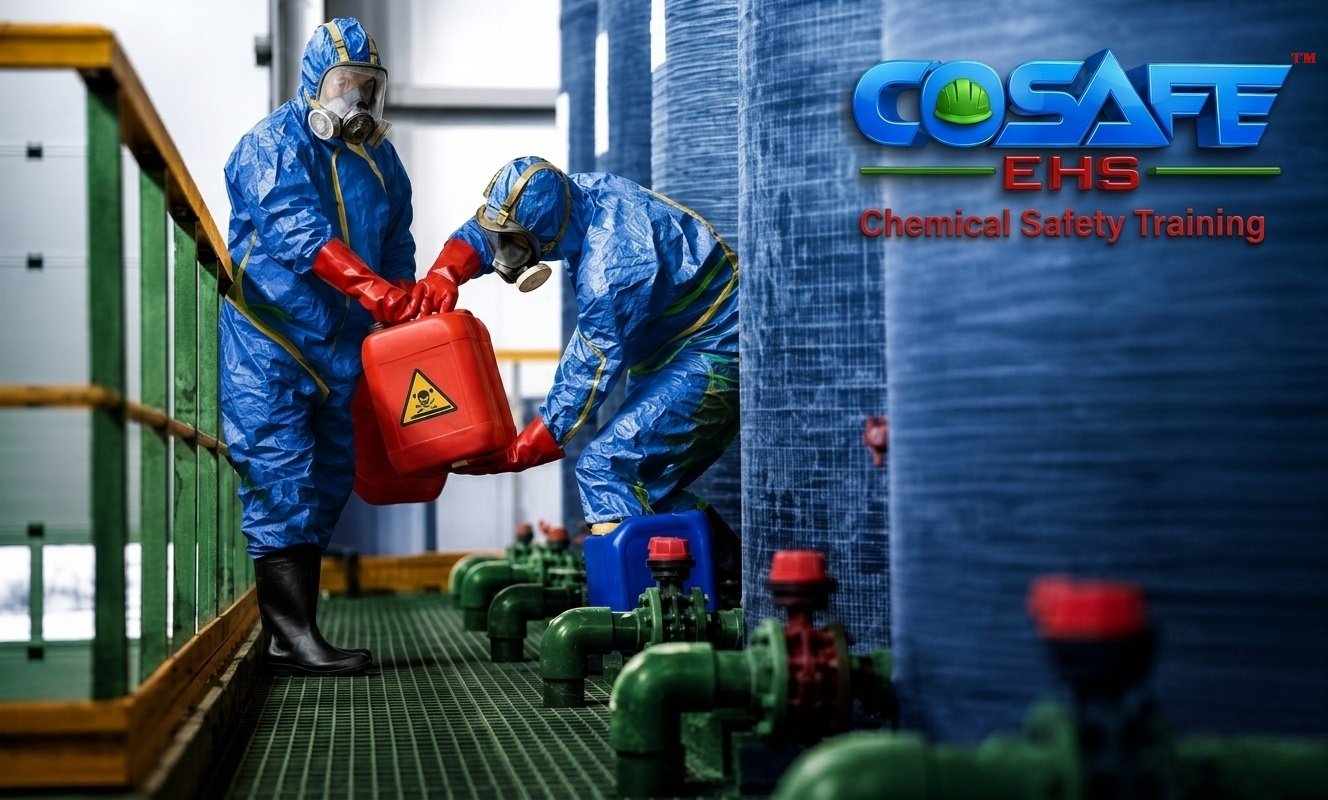
Overview
Chemical Safety Training in Bangalore
Chemical handling and hazardous substance management are critical aspects of workplace safety across industries such as manufacturing, pharmaceuticals, laboratories, petrochemicals, oil & gas, food processing, construction, paint and coatings, warehousing, healthcare, water treatment, and industrial operations. Improper chemical storage, unsafe handling practices, accidental spills, toxic exposure, incompatible chemical reactions, poor ventilation, and lack of hazard awareness can lead to severe injuries, occupational illnesses, fires, explosions, environmental damage, regulatory violations, and operational shutdowns.
At Cosafe EHS Bangalore, we provide comprehensive and industry-focused Chemical Safety Training programs designed to help organizations and employees safely identify, handle, store, transport, use, and dispose of hazardous chemicals while complying with workplace safety regulations and industry best practices. (cosafe.in)
Chemical Safety Training is a vital component of occupational health, environmental protection, industrial hygiene, and risk management systems. Organizations that work with hazardous chemicals must ensure employees understand chemical hazards, exposure risks, emergency response procedures, safe handling methods, and preventive safety measures to reduce workplace incidents and protect both personnel and the environment.
Industrial safety experts consistently emphasize that most chemical-related incidents occur because of inadequate training, improper labeling, lack of personal protective equipment (PPE), unsafe storage practices, poor spill response planning, and insufficient awareness about Safety Data Sheets (SDS). Effective chemical safety training significantly reduces workplace accidents, improves operational discipline, and strengthens emergency preparedness. (osha.gov)
At Cosafe EHS Bangalore, our Chemical Safety Training programs combine theoretical learning, practical demonstrations, chemical hazard awareness, spill response exercises, emergency preparedness training, PPE usage, and real-world industrial safety scenarios to help organizations create safer workplaces and improve compliance performance. (cosafe.in)
Cosafe EHS Chemical Safety Training programs are ideal for:
Manufacturing industries
Pharmaceutical companies
Chemical processing plants
Laboratories and research facilities
Oil & gas industries
Paint and coating industries
Warehousing and logistics operations
Water treatment facilities
Food processing industries
Healthcare and hospital facilities
Construction and maintenance teams
EHS and safety professionals
Organizations that invest in structured Chemical Safety Training programs often experience reduced workplace incidents, improved hazard awareness, stronger regulatory compliance, safer operational environments, and enhanced workforce competency.
Chemical hazards can lead to severe workplace accidents, occupational illnesses, environmental damage, operational disruption, and legal liabilities if not properly managed. Organizations that invest in structured Chemical Safety Training improve hazard awareness, strengthen operational discipline, reduce workplace incidents, and create safer industrial environments.
At Cosafe EHS Bangalore, our Chemical Safety Training programs empower organizations and employees with practical chemical handling knowledge, spill response capability, hazard identification skills, emergency preparedness awareness, and operational safety practices required to safely manage hazardous substances in modern workplaces. (cosafe.in)
Prevent Chemical Hazards. Improve Workplace Safety. Build Safer Operations with Cosafe EHS Bangalore.
Training Modules
1. Introduction to Chemical Safety
This foundational module introduces participants to workplace chemical hazards, risk management principles, and industrial chemical safety awareness.
Topics covered include:
Importance of chemical safety in workplaces
Types of hazardous chemicals
Common chemical accident causes
Occupational exposure risks
Impact of chemical incidents on health and environment
Roles and responsibilities in chemical safety management
Participants gain awareness about how unsafe chemical practices can lead to serious workplace accidents and health hazards.
2. Chemical Hazard Identification & Classification
Understanding chemical hazards is essential for safe workplace operations.
This module includes:
Physical, health, and environmental hazards
Flammable, corrosive, toxic, reactive, and oxidizing chemicals
Hazard communication systems
Chemical labeling awareness
Understanding hazard pictograms and warning symbols
Introduction to Globally Harmonized System (GHS) basics
Participants learn how to identify chemical hazards and interpret safety information effectively.
3. Safety Data Sheets (SDS/MSDS) Awareness
Safety Data Sheets provide critical information about hazardous substances.
Training includes:
Understanding SDS structure and sections
Identifying chemical hazards through SDS
Safe handling and storage information
Exposure control measures
First aid and emergency response guidance
Spill response and disposal awareness
Participants learn how SDS documents help improve chemical safety and emergency preparedness.
4. Safe Chemical Handling Practices
Improper chemical handling can result in severe exposure incidents and operational hazards.
Topics covered:
Safe transfer and handling procedures
Chemical mixing precautions
Preventing cross-contamination
Ventilation and exposure control awareness
Safe use of chemical containers and equipment
Good housekeeping practices in chemical areas
This module improves operational safety awareness and chemical handling discipline.
5. Chemical Storage & Segregation Safety
Improper chemical storage is one of the leading causes of industrial incidents.
Participants are trained in:
Safe chemical storage principles
Chemical compatibility awareness
Segregation of incompatible chemicals
Temperature and ventilation considerations
Labeling and inventory management awareness
Safe cylinder and container storage practices
Participants learn how proper storage systems reduce fire, explosion, and exposure risks.
6. Personal Protective Equipment (PPE) for Chemical Safety
Proper PPE usage is critical for protecting workers from chemical exposure.
Training includes:
Chemical-resistant gloves and clothing
Respiratory protection awareness
Eye and face protection
PPE selection based on chemical hazards
Inspection and maintenance of PPE
Limitations of protective equipment
Industrial safety experts consistently highlight that correct PPE usage significantly reduces occupational exposure risks. (osha.gov)
7. Chemical Spill Response & Emergency Management
Chemical spills require immediate and organized response to prevent escalation.
Topics include:
Types of chemical spills
Spill containment techniques
Emergency isolation procedures
Spill kit usage awareness
Evacuation and emergency communication
Coordination with emergency responders
Participants improve their ability to respond safely during chemical emergencies.
8. Fire & Explosion Hazards in Chemical Workplaces
Many chemicals present serious fire and explosion risks if improperly managed.
Participants learn:
Flammable and combustible materials awareness
Ignition source control
Static electricity hazards
Fire prevention strategies
Chemical firefighting basics
Emergency shutdown procedures
This module strengthens workplace fire prevention and operational safety awareness.
9. Toxic Exposure & Occupational Health Awareness
Chemical exposure can cause serious short-term and long-term health effects.
Training includes:
Routes of chemical exposure
Acute and chronic health effects
Toxicity awareness
Exposure monitoring basics
Occupational hygiene principles
Health surveillance awareness
Participants gain awareness about preventing occupational illness and maintaining workplace health standards.
10. Hazardous Waste Management & Environmental Protection
Improper disposal of hazardous chemicals can create environmental and legal risks.
Topics covered:
Hazardous waste identification
Safe disposal procedures
Environmental contamination awareness
Waste segregation practices
Spill prevention strategies
Environmental compliance basics
This module improves environmental responsibility and workplace sustainability awareness.
11. Emergency Preparedness & Evacuation Procedures
Preparedness is essential for reducing the impact of chemical emergencies.
Participants learn:
Chemical emergency response planning
Alarm and notification systems
Emergency evacuation procedures
Assembly point coordination
First aid during chemical exposure
Incident reporting awareness
Practical preparedness improves organizational resilience and emergency response capability.
12. Legal Compliance & Chemical Safety Standards
Organizations handling chemicals must comply with workplace safety and environmental regulations.
Training includes:
Chemical safety compliance awareness
Workplace labeling and documentation basics
Inspection and audit awareness
Employee safety responsibilities
Reporting and record-keeping basics
Industry best practices for chemical safety management
This module strengthens compliance awareness and operational accountability.
13. Practical Demonstrations & Mock Drills
Practical learning is one of the most important components of effective Chemical Safety Training.
Activities include:
PPE usage demonstrations
Spill response exercises
Chemical labeling identification activities
Emergency evacuation drills
Fire extinguisher practice sessions
Chemical storage inspection demonstrations
Hazard identification simulations
Hands-on practical exercises improve participant confidence, workplace readiness, and emergency response capability.
Training Methodology
At Cosafe EHS Bangalore, we follow a highly practical, industry-oriented, and interactive training methodology designed to maximize hazard awareness, chemical handling competency, emergency preparedness, and workplace compliance performance. Our programs are delivered by experienced EHS professionals, industrial safety trainers, chemical safety experts, and occupational health specialists with extensive field experience. (cosafe.in)
Interactive Classroom Sessions
Participants receive structured theoretical learning through:
Visual presentations
- Chemical accident case studies
- Hazard awareness workshops
- Safety discussions and industrial examples
- Compliance-focused learning sessions
- Group-based safety activities
This helps participants clearly understand chemical hazards, workplace risks, and preventive safety practices.
Practical Chemical Safety Demonstrations
Practical learning is a core component of our Chemical Safety Training methodology.
Participants receive demonstrations on:
- Safe chemical handling procedures
- PPE inspection and usage
- Spill kit handling awareness
- Chemical labeling identification
- Safe storage and segregation practices
- Emergency response techniques
Hands-on demonstrations improve participant confidence and workplace operational readiness.
Scenario-Based Emergency Simulations
We conduct realistic simulations based on actual chemical workplace hazards and emergency situations.
Simulation activities include:
- Chemical spill response exercises
- Toxic exposure emergency scenarios
- Fire and evacuation drills
- Hazard communication exercises
- Unsafe condition reporting activities
- Spill containment simulations
This practical approach improves decision-making, hazard recognition, and emergency response capability.
Team-Based Safety Coordination Exercises
Effective chemical safety requires strong communication and operational coordination.
Our methodology includes:
- Team hazard assessment activities
- Emergency communication exercises
- Safety committee discussions
- Spill response teamwork simulations
- Workplace inspection activities
- Leadership and accountability exercises
Participants learn how collaborative safety practices improve workplace operational safety.
Mock Drills & Real-Time Emergency Practice
Practical emergency drills are conducted to strengthen workplace preparedness and operational awareness.
Exercises include:
- Spill response drills
- Fire emergency simulations
- Chemical exposure response practice
- PPE emergency usage exercises
- Evacuation coordination drills
- First aid response awareness activities
Detailed feedback sessions help participants improve workplace application capability and operational safety performance.
Assessment & Competency Evaluation
Participants are evaluated through:
- Practical safety demonstrations
- Hazard identification exercises
- Spill response participation
- Written assessments and quizzes
- Scenario-based evaluations
- Interactive Q&A sessions
Certificates are issued upon successful completion of the training program.
Why Choose Cosafe EHS Bangalore for Chemical Safety Training?
- Industry-focused practical chemical safety training
- Experienced chemical safety and EHS trainers
- Realistic spill response and emergency simulations
- Hands-on PPE and hazard management demonstrations
- Customized training based on workplace chemical risks
- Strong emphasis on occupational health and accident prevention
- Multi-industry expertise in industrial safety management
- On-site and classroom training options
- Interactive and compliance-focused learning methodology
Cosafe EHS Bangalore is committed to helping organizations reduce chemical hazards, improve operational safety performance, strengthen emergency preparedness, and create safer workplaces through professional Chemical Safety Training solutions. (cosafe.in)
Industries We Serve
Our Chemical Safety Training programs are suitable for:
- Manufacturing Industries
- Pharmaceutical Companies
- Chemical Processing Plants
- Oil & Gas Industries
- Laboratories & Research Facilities
- Warehousing & Logistics Operations
- Paint & Coating Industries
- Food Processing Industries
- Healthcare & Hospital Facilities
- Water Treatment Plants
- Construction & Maintenance Operations
Program Details
Duration: 2–3 Hours (Including Drill)
Certification: Participation Certificate (if required)
Validity: As per company safety policy
Languages: Kannada / Hindi / English / Telugu