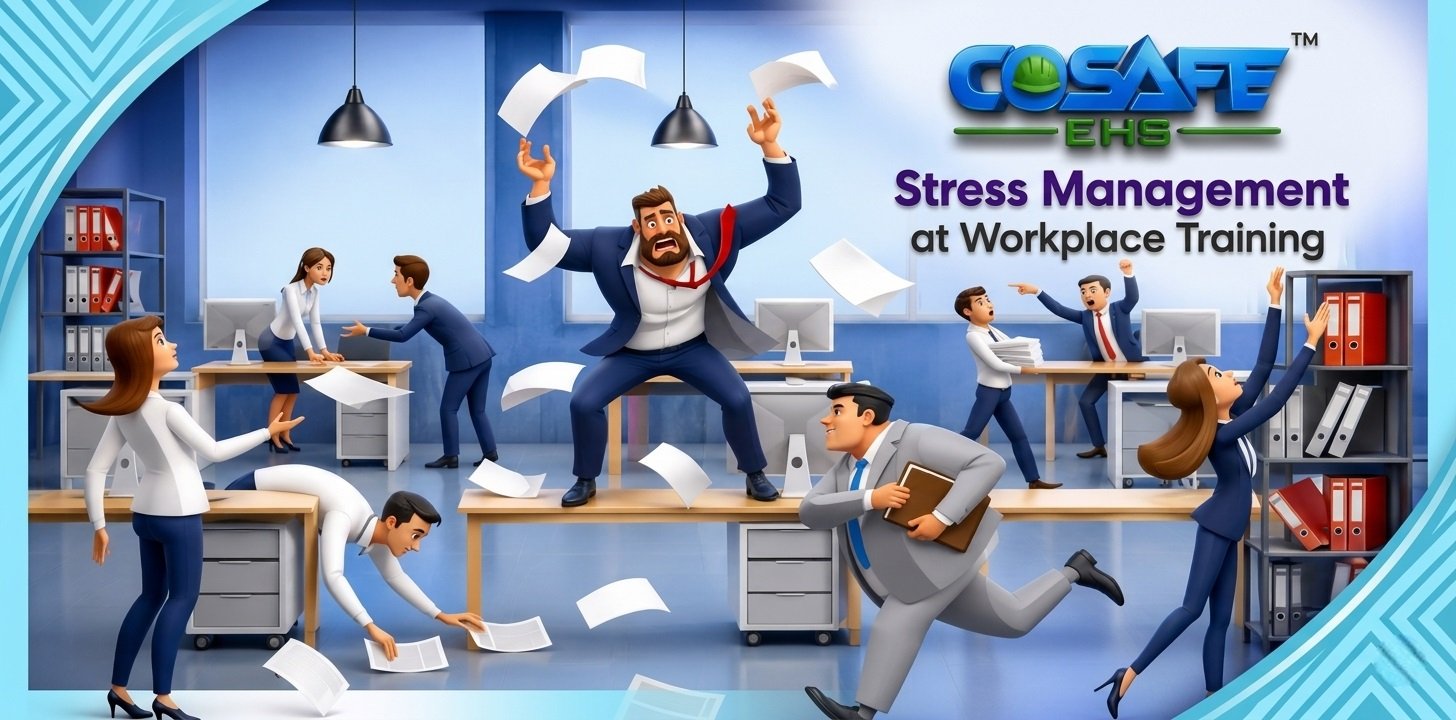
Workplace Stress Management  Training

Overview

Stress Management at Workplace Training in Bangalore

Professional Workplace Stress Management Training by Cosafe EHS Bangalore


In today's fast-paced and highly competitive work environment, employees are constantly exposed to deadlines, performance expectations, workload pressures, organizational changes, technological advancements, interpersonal conflicts, and work-life balance challenges. While a certain level of stress can motivate individuals to perform effectively, prolonged or unmanaged workplace stress can negatively impact employee health, productivity, morale, engagement, safety, and overall organizational performance.

According to global occupational health studies, workplace stress is one of the leading contributors to absenteeism, reduced productivity, burnout, mental fatigue, workplace incidents, employee turnover, and decreased job satisfaction. Organizations that proactively address workplace stress create healthier work environments, improve employee well-being, enhance retention, and strengthen overall business performance.

At Cosafe EHS Bangalore, our Workplace Stress Management Training Program is designed to help employees, supervisors, managers, and organizational leaders recognize stressors, understand the effects of stress, develop resilience, improve emotional well-being, and adopt practical coping strategies for managing workplace pressures effectively.

Our training combines occupational health principles, psychological well-being practices, behavioral science techniques, communication skills, and stress reduction strategies to create healthier, safer, and more productive workplaces.

What is Workplace Stress Management?

Workplace Stress Management is the process of identifying, understanding, controlling, and reducing physical, emotional, mental, and behavioral stress caused by workplace demands and environmental factors. It involves developing skills, strategies, and support systems that help employees manage challenges effectively while maintaining health, performance, and job satisfaction.

Stress management focuses on:

  • Identifying workplace stressors

  • Recognizing early warning signs of stress

  • Managing emotional responses

  • Building resilience and adaptability

  • Improving work-life balance

  • Enhancing communication and relationships

  • Preventing burnout and fatigue

  • Promoting mental well-being

  • Improving focus and productivity

  • Creating a positive workplace culture

Why Workplace Stress Management is Important

Unmanaged workplace stress can lead to numerous organizational and individual consequences, including:

  • Reduced employee productivity

  • Increased absenteeism

  • Higher employee turnover

  • Increased workplace conflicts

  • Reduced concentration and focus

  • Poor decision-making

  • Increased workplace accidents and incidents

  • Burnout and emotional exhaustion

  • Lower employee engagement

  • Negative impacts on organizational culture

By implementing effective stress management programs, organizations can significantly improve employee wellness, performance, and workplace satisfaction.

Objectives of Workplace Stress Management Training

The primary objectives of this training include:

  • Understanding workplace stress and its causes

  • Identifying personal and organizational stressors

  • Recognizing signs and symptoms of stress

  • Learning effective stress management techniques

  • Building resilience and emotional intelligence

  • Improving communication and conflict resolution skills

  • Enhancing work-life balance

  • Managing workplace pressure effectively

  • Preventing burnout and mental fatigue

  • Promoting overall employee well-being

Key Benefits of Workplace Stress Management Training

Organizations that invest in stress management training can achieve:

  • Improved employee productivity

  • Enhanced job satisfaction

  • Better employee engagement

  • Reduced absenteeism

  • Lower turnover rates

  • Improved workplace relationships

  • Increased resilience and adaptability

  • Better mental and emotional health

  • Enhanced organizational culture

  • Stronger team performance

Common Workplace Stressors

Participants learn how to identify common stress triggers such as:

  • Excessive workload

  • Tight deadlines

  • Job insecurity

  • Organizational changes

  • Role ambiguity

  • Workplace conflicts

  • Lack of communication

  • Poor management practices

  • Long working hours

  • Work-life imbalance

Understanding these stressors is the first step toward effective management.

Who Should Attend?

This training is ideal for:

  • Employees at all levels

  • Team Leaders

  • Supervisors

  • Managers

  • HR Professionals

  • EHS Managers

  • Corporate Trainers

  • Department Heads

  • Project Managers

  • Customer Service Teams

  • Healthcare Professionals

  • Organizational Leaders

At Cosafe EHS Bangalore, our Workplace Stress Management Training is customized to address industry-specific challenges and organizational wellness objectives.

Workplace stress is one of the most significant challenges affecting employee well-being, productivity, safety, and organizational success. When left unmanaged, stress can lead to burnout, absenteeism, reduced performance, workplace conflicts, and diminished morale. However, with the right knowledge, skills, and support systems, employees can effectively manage workplace pressures, build resilience, and maintain a healthy work-life balance.

At Cosafe EHS Bangalore, our Workplace Stress Management Training Program equips employees, supervisors, and leaders with practical tools to identify stressors, improve emotional well-being, enhance resilience, and foster a positive workplace culture. Through interactive learning, real-world case studies, and practical stress management techniques, we help organizations create healthier, happier, and more productive work environments.

Manage Stress. Improve Well-Being. Enhance Workplace Performance. Choose Cosafe EHS Bangalore for Professional Workplace Stress Management Training in Bangalore.

Training Modules

Module 1: Introduction to Workplace Stress

Participants gain a foundational understanding of stress and its impact.

Topics include:

  • Definition of stress
  • Types of stress
  • Positive vs negative stress
  • Workplace stress statistics
  • Occupational stress factors
  • Impact of stress on organizations

This module establishes awareness of workplace stress management.


Module 2: Understanding the Causes of Workplace Stress

Participants learn to identify workplace stressors.

Training includes:

  • Workload pressures
  • Organizational changes
  • Interpersonal conflicts
  • Communication challenges
  • Leadership issues
  • Environmental stress factors

Participants learn how workplace conditions influence stress levels.


Module 3: Recognizing Signs and Symptoms of Stress

Early identification helps prevent long-term consequences.

Topics include:

Physical Symptoms

  • Fatigue
  • Headaches
  • Sleep disturbances
  • Muscle tension
  • Digestive issues

Emotional Symptoms

  • Anxiety
  • Irritability
  • Mood swings
  • Frustration
  • Emotional exhaustion

Behavioral Symptoms

  • Reduced productivity
  • Withdrawal
  • Increased absenteeism
  • Poor concentration
  • Workplace conflicts

Participants learn to recognize stress indicators in themselves and others.


Module 4: Stress and Mental Well-being

This module explores the relationship between stress and mental health.

Training includes:

  • Psychological effects of stress
  • Emotional resilience
  • Mental wellness strategies
  • Self-awareness techniques
  • Positive mindset development
  • Mental health awareness

Participants gain practical tools for maintaining emotional well-being.


Module 5: Building Personal Resilience

Resilience helps employees adapt to workplace challenges.

Topics include:

  • Understanding resilience
  • Growth mindset development
  • Adaptability skills
  • Emotional regulation
  • Self-confidence building
  • Coping mechanisms

Participants learn strategies for overcoming adversity effectively.


Module 6: Time Management and Work Prioritization

Poor time management often contributes to workplace stress.

Training includes:

  • Goal setting
  • Prioritization techniques
  • Task planning
  • Productivity improvement methods
  • Managing competing demands
  • Avoiding procrastination

Participants learn practical approaches to reducing workload-related stress.


Module 7: Communication Skills for Stress Reduction

Effective communication reduces misunderstandings and workplace tensions.

Topics include:

  • Active listening
  • Assertive communication
  • Providing feedback
  • Managing difficult conversations
  • Conflict prevention
  • Building trust

Participants improve workplace communication skills.


Module 8: Conflict Management and Emotional Intelligence

Conflict is a significant source of workplace stress.

Training includes:

  • Understanding workplace conflicts
  • Conflict resolution techniques
  • Emotional intelligence principles
  • Managing emotions under pressure
  • Empathy development
  • Relationship management

Participants learn strategies for maintaining positive workplace relationships.


Module 9: Work-Life Balance Strategies

Maintaining balance is critical for long-term well-being.

Topics include:

  • Setting boundaries
  • Managing personal and professional responsibilities
  • Flexible work practices
  • Lifestyle management
  • Family and social support systems
  • Personal wellness planning

Participants learn sustainable work-life balance practices.


Module 10: Stress Reduction Techniques

Participants gain practical tools for managing stress.

Training includes:

  • Relaxation techniques
  • Breathing exercises
  • Mindfulness practices
  • Guided relaxation methods
  • Positive thinking techniques
  • Focus and concentration exercises

These techniques help participants manage stress effectively.


Module 11: Managing Stress During Organizational Change

Change can significantly impact employee well-being.

Topics include:

  • Understanding change-related stress
  • Coping with uncertainty
  • Adaptability strategies
  • Managing transitions
  • Maintaining motivation
  • Building confidence during change

Participants learn to navigate workplace change successfully.


Module 12: Leadership and Stress Management

Managers play a critical role in employee well-being.

Training includes:

  • Supportive leadership practices
  • Identifying employee stress
  • Creating psychologically safe workplaces
  • Employee engagement strategies
  • Recognition and appreciation
  • Promoting wellness culture

Leaders learn how to support employee mental well-being.


Module 13: Workplace Wellness Programs

Organizations benefit from structured wellness initiatives.

Topics include:

  • Wellness program design
  • Employee assistance programs
  • Health promotion initiatives
  • Mental wellness campaigns
  • Stress prevention strategies
  • Continuous improvement practices

Participants understand organizational approaches to stress management.


Module 14: Case Studies and Workplace Scenarios

Participants analyze real-world situations involving:

  • High-pressure work environments
  • Workplace conflicts
  • Employee burnout
  • Organizational change challenges
  • Team stress management
  • Leadership interventions

Case studies provide practical learning opportunities.


Module 15: Personal Stress Management Action Plan

Participants develop individualized strategies for stress management.

Activities include:

  • Self-assessment exercises
  • Goal setting
  • Wellness planning
  • Resilience development planning
  • Personal improvement strategies
  • Action plan creation

This module ensures practical application beyond the training program.


Training Methodology

At Cosafe EHS Bangalore, our Workplace Stress Management Training Program follows a highly interactive, practical, and employee-centered learning approach that combines occupational health principles with real-world workplace applications.

Interactive Classroom Sessions

Participants receive expert-led instruction through:

  • Professional presentations
  • Wellness discussions
  • Interactive learning activities
  • Occupational health workshops
  • Industry-specific examples
  • Question-and-answer sessions

This establishes a strong understanding of workplace stress management principles.


Self-Assessment and Reflection Exercises

Participants engage in:

  • Stress self-evaluations
  • Personal resilience assessments
  • Behavioral analysis exercises
  • Emotional intelligence evaluations
  • Wellness planning activities
  • Goal-setting exercises

These activities help participants identify personal stress patterns.


Case Study Analysis

Participants analyze workplace scenarios involving:

  • Employee burnout
  • Work overload
  • Team conflicts
  • Organizational change
  • Leadership challenges
  • Workplace wellness interventions

Case studies demonstrate practical stress management solutions.


Group Discussions and Team Activities

Collaborative learning includes:

  • Stress management workshops
  • Team-building exercises
  • Problem-solving activities
  • Communication exercises
  • Experience sharing
  • Peer learning sessions

This encourages engagement and knowledge sharing.


Role-Playing and Scenario-Based Learning

Participants practice:

  • Conflict resolution
  • Difficult conversations
  • Stressful workplace situations
  • Leadership interventions
  • Employee support strategies
  • Communication under pressure

These activities strengthen practical workplace skills.


Mindfulness and Relaxation Demonstrations

Participants learn through guided sessions involving:

  • Deep breathing techniques
  • Relaxation exercises
  • Focus and concentration methods
  • Stress reduction activities
  • Mindfulness practices
  • Mental wellness techniques

These practical exercises can be applied immediately in the workplace.


Workplace Wellness Planning Workshops

Participants develop:

  • Personal stress management plans
  • Work-life balance strategies
  • Wellness improvement goals
  • Productivity enhancement plans
  • Resilience-building action plans
  • Long-term well-being strategies

This ensures sustained benefits after training completion.


Competency Assessment and Certification

Participants are evaluated through:

  • Knowledge assessments
  • Interactive exercises
  • Case study participation
  • Group activities
  • Scenario analysis
  • Personal action plan development

Certificates are awarded upon successful completion of the training program.


Why Choose Cosafe EHS Bangalore for Workplace Stress Management Training?

  • Experienced workplace wellness and EHS trainers
  • Practical and interactive learning approach
  • Industry-specific stress management solutions
  • Real-world workplace case studies
  • Focus on employee well-being and productivity
  • Customized corporate wellness programs
  • Interactive workshops and exercises
  • Leadership-focused stress management modules
  • Competency-based assessments
  • Commitment to healthier and safer workplaces

Program Details