






Overview
Self-Contained Breathing Apparatus (SCBA) Training in Bangalore
Professional SCBA Confidence Training by Cosafe EHS Bangalore
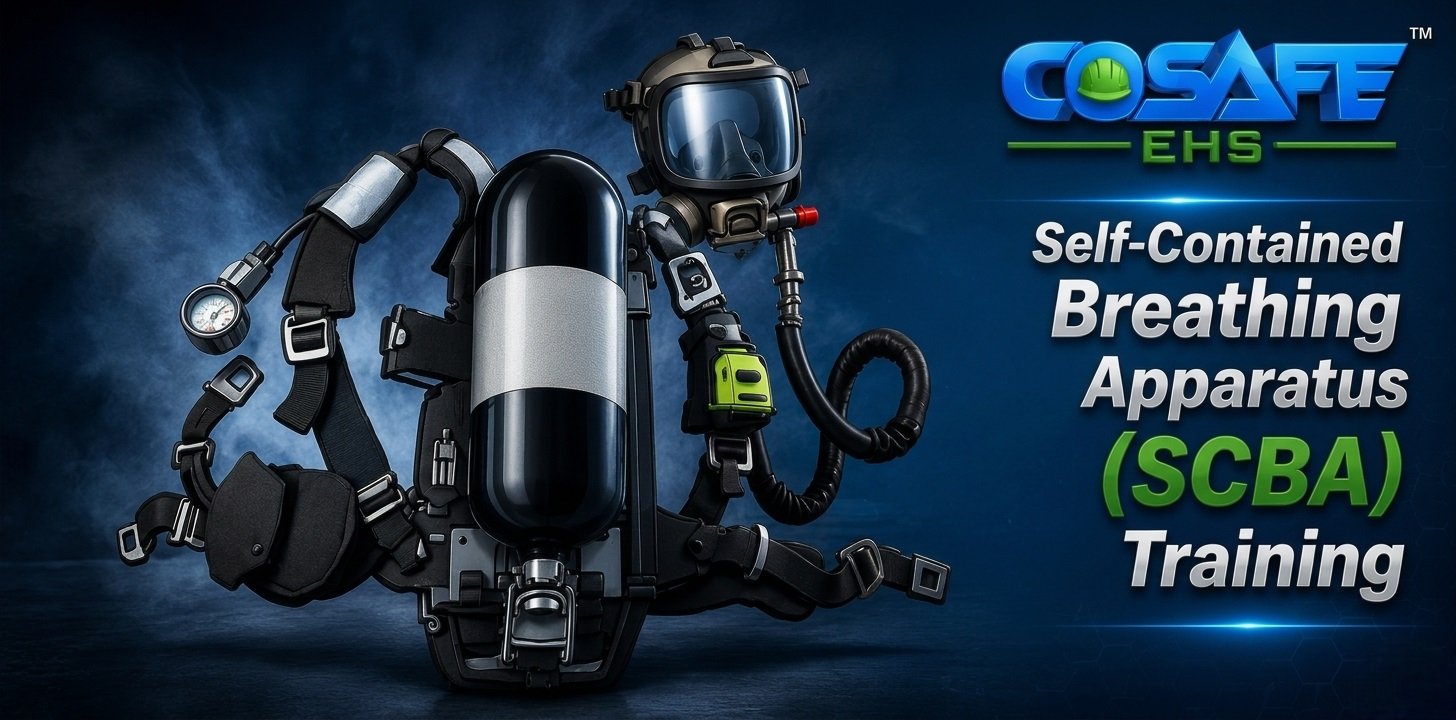
In hazardous industrial environments, emergency response personnel often encounter atmospheres that are Immediately Dangerous to Life and Health (IDLH), including toxic gas releases, oxygen-deficient areas, confined spaces, smoke-filled environments, chemical leaks, and fire emergencies. In such situations, the ability to safely use a Self-Contained Breathing Apparatus (SCBA) becomes critical for survival and effective emergency response.
SCBA is a specialized respiratory protection system designed to provide breathable air to the wearer while operating in hazardous atmospheres where ambient air cannot be safely inhaled. It is widely used in industries such as oil & gas, petrochemicals, chemical manufacturing, pharmaceuticals, mining, power plants, refineries, fire services, emergency response teams (ERT), confined space operations, wastewater treatment facilities, and hazardous material response operations.
However, simply wearing an SCBA is not enough. Emergency responders must develop confidence, competence, and physical readiness to operate effectively while wearing breathing apparatus under stressful and demanding conditions. Poor SCBA handling, panic reactions, inadequate air management, or lack of familiarity can significantly increase risks during emergency situations.
At Cosafe EHS Bangalore, our SCBA Confidence Training Program is designed to help participants build practical confidence, operational competence, and emergency preparedness while using Self-Contained Breathing Apparatus. The training combines classroom instruction, practical exercises, simulated emergency scenarios, confidence-building drills, obstacle navigation, confined space exercises, and breathing apparatus management techniques.
This comprehensive program ensures participants can safely inspect, wear, operate, maintain, and perform emergency tasks while using SCBA equipment in real-world hazardous environments.
Why SCBA Confidence Training is Important
Many workplace emergencies involve hazardous atmospheres that cannot be entered without respiratory protection. Even experienced workers may experience anxiety, restricted vision, reduced mobility, communication challenges, and increased physical stress when wearing SCBA equipment.
SCBA Confidence Training helps organizations:
Improve emergency response effectiveness
Increase confidence in hazardous environments
Reduce panic and stress during emergencies
Improve breathing apparatus competency
Strengthen confined space rescue readiness
Enhance fire emergency response capability
Improve hazardous gas response preparedness
Support Emergency Response Team (ERT) performance
Reduce responder injuries
Strengthen overall workplace emergency preparedness
Industries Requiring SCBA Competency
SCBA training is particularly important for:
Oil & Gas Facilities
Petrochemical Plants
Chemical Manufacturing Industries
Pharmaceutical Facilities
Refineries
Power Generation Plants
Mining Operations
Wastewater Treatment Facilities
Fire & Rescue Services
Emergency Response Teams
Hazardous Material Response Units
Confined Space Operations
Benefits of SCBA Confidence Training
Organizations investing in SCBA competency development benefit from:
Enhanced emergency response readiness
Improved responder confidence
Reduced operational risk
Better respiratory protection awareness
Improved rescue capability
Increased workforce competency
Enhanced compliance with safety requirements
Improved emergency team coordination
Reduced response time during incidents
Stronger safety culture
Who Should Attend?
This training program is ideal for:
Emergency Response Team (ERT) Members
Firefighters
Safety Officers
EHS Professionals
Rescue Personnel
Confined Space Entry Teams
Industrial Emergency Responders
Maintenance Personnel
Chemical Plant Operators
Oil & Gas Workers
Supervisors and Managers
Hazardous Material Response Teams
At Cosafe EHS Bangalore, our SCBA Confidence Training is specifically designed to develop both technical competency and psychological confidence for operating in hazardous environments.
Self-Contained Breathing Apparatus is one of the most critical pieces of life-saving equipment used in hazardous environments. However, effective use requires more than technical knowledge—it requires confidence, practical experience, and the ability to remain calm under pressure.
At Cosafe EHS Bangalore, our SCBA Confidence Training Program equips emergency responders, ERT members, safety professionals, and industrial personnel with the skills, confidence, and operational readiness needed to safely perform in hazardous atmospheres. Through comprehensive instruction, intensive practical exercises, and realistic emergency simulations, participants develop the competence necessary to protect themselves and others during critical incidents.
Build Confidence. Strengthen Response Capability. Protect Lives. Choose Cosafe EHS Bangalore for Professional SCBA Confidence Training in Bangalore.
Training Modules
Module 1: Introduction to SCBA and Respiratory Protection
Participants receive a comprehensive understanding of respiratory hazards and SCBA applications.
Topics include:
- What is SCBA?
- Purpose of respiratory protection
- Types of respiratory protection equipment
- Applications of SCBA
- Limitations of breathing apparatus
- Importance of confidence training
Participants gain a strong foundation in respiratory protection principles.
Module 2: Understanding Hazardous Atmospheres
Workers must understand the environments where SCBA is required.
Topics include:
- Oxygen-deficient atmospheres
- Toxic gas environments
- Smoke-filled areas
- Chemical release incidents
- Confined space hazards
- IDLH (Immediately Dangerous to Life and Health) conditions
Participants learn how hazardous atmospheres impact worker safety.
Module 3: Components of Self-Contained Breathing Apparatus
This module focuses on SCBA design and functionality.
Topics include:
- Air cylinder
- Pressure regulator
- Face mask
- Harness assembly
- Demand valve
- Pressure gauges
- Warning alarms
- Communication accessories
Participants become familiar with SCBA equipment and operating systems.
Module 4: SCBA Inspection and Pre-Use Checks
Equipment inspections are critical for safe operation.
Training includes:
- Visual inspection procedures
- Air cylinder checks
- Face mask inspection
- Pressure verification
- Leak testing
- Functional testing
- Defect identification
Participants learn systematic inspection procedures before equipment use.
Module 5: Donning and Doffing Procedures
Correct wearing techniques improve safety and comfort.
Topics include:
- Proper donning procedures
- Face seal verification
- Harness adjustments
- Emergency donning techniques
- Doffing procedures
- Equipment handling practices
Participants develop proficiency in wearing and removing SCBA equipment efficiently.
Module 6: Air Management and Breathing Techniques
Effective air management is essential during emergency operations.
Training includes:
- Air consumption awareness
- Breathing control techniques
- Cylinder duration calculations
- Workload management
- Emergency air conservation methods
- Monitoring remaining air supply
Participants learn how to maximize breathing apparatus performance.
Module 7: SCBA Confidence Building Exercise
This module focuses specifically on overcoming psychological barriers.
Topics include:
- Claustrophobia management
- Stress control techniques
- Restricted visibility adaptation
- Confidence-building drills
- Equipment familiarization exercises
- Emergency readiness development
Participants gain confidence operating while fully equipped with SCBA.
Module 8: Movement and Navigation Techniques
Emergency responders must safely move in challenging environments.
Training includes:
- Walking techniques while wearing SCBA
- Crawling procedures
- Stair climbing exercises
- Obstacle negotiation
- Restricted access navigation
- Low-visibility movement techniques
Participants improve mobility and situational awareness.
Module 9: Confined Space Entry Awareness
Many SCBA users operate within confined spaces.
Topics include:
- Confined space hazards
- Entry procedures
- Atmospheric monitoring awareness
- Communication systems
- Emergency evacuation procedures
- Rescue preparedness
Participants learn how SCBA supports confined space safety.
Module 10: Emergency Procedures and Distress Situations
Responders must be prepared for unexpected events.
Training includes:
- Emergency evacuation techniques
- Low-air alarm response
- Equipment malfunction procedures
- Lost firefighter/responder techniques
- Emergency communication methods
- Distress signal procedures
Participants improve emergency decision-making capability.
Module 11: Search and Rescue Operations
SCBA users often support rescue activities.
Topics include:
- Search techniques
- Victim location procedures
- Rescue team coordination
- Casualty evacuation awareness
- Team communication
- Safe rescue principles
Participants understand SCBA applications during rescue operations.
Module 12: Teamwork and Communication While Wearing SCBA
Communication becomes more challenging while using breathing apparatus.
Training includes:
- Hand signals
- Voice communication techniques
- Radio communication awareness
- Team coordination methods
- Leadership during emergencies
- Situational awareness practices
Participants improve teamwork and operational effectiveness.
Module 13: SCBA Maintenance and Storage
Proper maintenance ensures equipment reliability.
Topics include:
- Cleaning procedures
- Post-use inspections
- Cylinder management
- Storage requirements
- Maintenance schedules
- Documentation practices
Participants learn how to maintain SCBA equipment safely.
Module 14: Practical Emergency Response Scenarios
Realistic simulations strengthen operational competence.
Exercises include:
- Fire emergency response
- Chemical release scenarios
- Toxic gas incidents
- Confined space emergencies
- Search and rescue simulations
- Evacuation exercises
Participants gain practical experience in realistic emergency situations.
Module 15: Confidence Challenge Course and Final Assessment
This module evaluates participant competency and confidence.
- Activities include:
- Obstacle courses
- Low-visibility navigation
- Restricted movement exercises
- Emergency response simulations
- Practical evaluations
- Instructor competency assessments
Participants demonstrate their ability to operate safely while wearing SCBA.
Training Methodology
At Cosafe EHS Bangalore, our SCBA Confidence Training follows a highly practical, hands-on, and competency-based learning approach designed to prepare participants for real emergency situations.
Interactive Classroom Sessions
Participants receive structured instruction through:
- Multimedia presentations
- Industry case studies
- Respiratory hazard discussions
- Emergency response reviews
- Equipment familiarization sessions
- Best-practice guidance
This establishes a strong theoretical foundation.
Live Equipment Demonstrations
Our instructors conduct practical demonstrations covering:
- SCBA components
- Inspection procedures
- Donning and doffing techniques
- Air management methods
- Emergency procedures
- Maintenance practices
Participants observe proper SCBA operation and handling.
Hands-On Practical Training
Participants receive extensive practical experience through:
- Equipment inspections
- Face mask fitting exercises
- Air management drills
- Confidence-building activities
- Obstacle navigation exercises
- Emergency response simulations
This develops real-world operational competence.
Confidence Development Exercises
Specialized confidence-building activities include:
- Reduced visibility exercises
- Restricted space navigation
- Physical endurance activities
- Stress management drills
- Communication challenges
- Team coordination exercises
Participants gradually build confidence operating in demanding environments.
Scenario-Based Emergency Simulations
Realistic emergency scenarios help participants apply their knowledge.
Exercises include:
- Fire emergency response
- Toxic gas release situations
- Rescue operations
- Emergency evacuations
- Confined space incidents
- Hazardous atmosphere response
This approach strengthens decision-making and problem-solving abilities.
Competency Assessment and Certification
Participants are evaluated through:
- Written examinations
- Equipment inspections
- Practical demonstrations
- Air management exercises
- Confidence challenge courses
- Emergency response assessments
Certificates are awarded upon successful completion of the training program.
Why Choose Cosafe EHS Bangalore for SCBA Confidence Training?
- Experienced emergency response instructors
- Practical, hands-on training methodology
- Specialized confidence-building exercises
- Realistic emergency simulations
- Industry-specific training modules
- Competency-based assessments
- Customized corporate training solutions
- On-site and classroom delivery options
- rong focus on responder safety
- Post-training guidance and support
Program Details
Duration: Half Day (3–4 Hours) / Full Day (5–6 Hours)
Certification: Certificate will be provided after successful completion
Validity: 1–2 Years
Languages: Kannada / Hindi / English / Telugu