






Overview
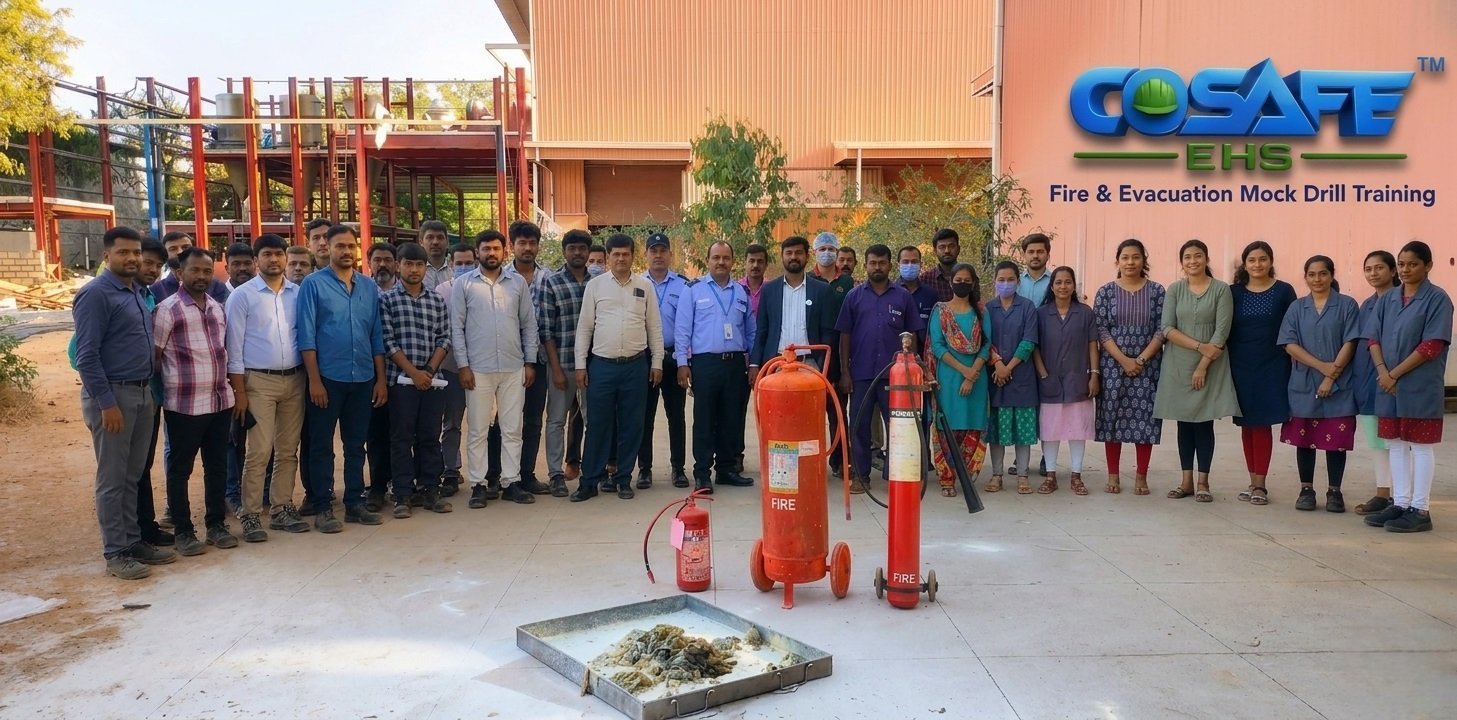
Fire & Evacuation Mock Drill Training in Bangalore
Introduction to the Fire & Evacuation Mock Drill Training Course
Fire emergencies can occur without warning and have the potential to cause serious injuries, fatalities, property damage, environmental impact, and business interruptions. While installing fire protection systems and developing emergency response plans are essential, these measures are only effective when employees know how to respond correctly during a real emergency. This is where Fire & Evacuation Mock Drill Training becomes a critical component of workplace safety and emergency preparedness.
A Fire & Evacuation Mock Drill is a structured simulation designed to test the effectiveness of an organization's emergency response plan, evacuation procedures, fire protection systems, communication channels, and employee readiness. The primary objective is to ensure that all occupants can evacuate safely, quickly, and calmly while designated emergency response personnel effectively perform their assigned roles. Fire drills help identify weaknesses in emergency plans, improve response times, reduce panic, and strengthen overall preparedness. Regular fire drills are widely recognized as a key element of workplace fire safety programs.
At Cosafe EHS Bangalore, our Fire & Evacuation Mock Drill Training Program is designed to help organizations develop a proactive emergency preparedness culture. The training combines theoretical knowledge, practical demonstrations, emergency planning, fire warden responsibilities, evacuation management, and full-scale mock drill execution to prepare employees for real-life emergency situations.
Our expert trainers conduct customized fire and evacuation drills for offices, manufacturing facilities, warehouses, hospitals, educational institutions, commercial buildings, residential complexes, logistics centers, construction projects, and industrial plants.
Why Fire & Evacuation Mock Drill Training is Important
During a fire emergency, people often react based on what they have practiced rather than what they have read in procedures. Regular mock drills help employees become familiar with evacuation routes, assembly points, alarm systems, and emergency responsibilities, leading to faster and safer evacuations. Fire drills also help organizations evaluate alarm systems, communication effectiveness, emergency exits, and overall emergency preparedness.
Key Benefits of Fire & Evacuation Mock Drills
-
Improves emergency preparedness
Reduces panic during emergencies
Enhances employee confidence
Improves evacuation speed and efficiency
Tests emergency response plans
Strengthens fire warden effectiveness
Verifies emergency communication systems
Identifies gaps in evacuation procedures
Improves coordination with emergency services
Supports legal and regulatory compliance
Protects lives and property
Promotes a strong safety culture
Objectives of Fire & Evacuation Mock Drill Training
The primary objectives of the training include:
Familiarizing occupants with emergency procedures
Testing emergency evacuation plans
Improving emergency response coordination
Evaluating alarm and communication systems
Assessing evacuation routes and assembly points
Enhancing fire warden competency
Improving emergency decision-making
Strengthening Emergency Response Team (ERT) performance
Identifying corrective actions for improvement
Building organizational resilience
Who Should Attend?
This training program is suitable for:
Employees and Staff Members
Fire Wardens and Fire Marshals
Emergency Response Team (ERT) Members
Safety Officers
EHS Professionals
Facility Managers
Security Personnel
Supervisors and Managers
Maintenance Teams
Contractors
Building Occupants
Industrial Workers
At Cosafe EHS Bangalore, we customize Fire & Evacuation Mock Drill Training according to the facility layout, occupancy type, fire risk level, workforce size, and emergency response requirements.
An emergency response plan is only effective when employees have practiced it. Fire & Evacuation Mock Drills transform written procedures into real-world actions by improving awareness, reducing panic, strengthening coordination, and ensuring rapid evacuation during emergencies. Organizations that conduct regular drills consistently achieve better preparedness, faster response times, and improved occupant safety.
At Cosafe EHS Bangalore, our Fire & Evacuation Mock Drill Training Program equips employees, fire wardens, Emergency Response Teams, and management personnel with the skills, confidence, and practical experience needed to respond effectively during fire emergencies. Through realistic simulations, expert guidance, and detailed performance evaluations, we help organizations build a safer, more resilient workplace.
Practice Preparedness. Improve Response. Protect Lives. Choose Cosafe EHS Bangalore for Professional Fire & Evacuation Mock Drill Training in Bangalore.
Training Modules
Module 1: Introduction to Fire Safety and Emergency Preparedness
Participants receive an overview of fire emergencies and emergency preparedness principles.
Topics include:
- Fire emergency awareness
- Importance of mock drills
- Fire prevention concepts
- Workplace emergency preparedness
- Fire safety responsibilities
- Emergency response framework
Participants understand why fire drills are essential for life safety.
Module 2: Understanding Fire Emergencies
This module focuses on fire hazards and emergency situations.
Topics include:
- Common causes of workplace fires
- Fire triangle and fire tetrahedron
- Fire growth and development
- Smoke hazards
- Fire spread mechanisms
- Fire emergency scenarios
Participants gain awareness of fire-related risks.
Module 3: Emergency Response Planning
An effective emergency response plan forms the foundation of successful evacuation.
Topics include:
- Emergency response procedures
- Activation protocols
- Evacuation strategy development
- Emergency communication systems
- Resource allocation
- Incident command awareness
Participants understand how emergency plans are structured and implemented.
Module 4: Fire Alarm Systems and Emergency Communication
Prompt communication is critical during emergencies.
Training includes:
- Fire alarm activation procedures
- Emergency notification systems
- Public address systems
- Emergency announcements
- Communication hierarchy
- Incident reporting protocols
Participants learn how communication supports emergency response.
Module 5: Fire Warden and Emergency Team Responsibilities
Fire wardens play a vital role during evacuations.
Topics include:
- Fire warden duties
- Area sweeping procedures
- Accountability management
- Occupant assistance
- Evacuation coordination
- Communication with incident commanders
Participants understand emergency leadership responsibilities. Regular drills help clarify emergency roles and responsibilities within organizations.
Module 6: Evacuation Procedures and Escape Routes
Safe evacuation is the primary objective during emergencies.
- Training includes:
- Exit route identification
- Evacuation route planning
- Emergency exit usage
- Stairwell safety
- Occupant movement techniques
- Safe evacuation practices
Participants learn how to evacuate safely and efficiently.
Module 7: Assembly Point Management
Proper assembly point management ensures accountability after evacuation.
Topics include:
- Designated assembly areas
- Roll-call procedures
- Headcount verification
- Missing person reporting
- Communication procedures
- Re-entry authorization
Participants understand post-evacuation accountability processes.
Module 8: Assisting Vulnerable Occupants
Some individuals may require additional assistance during emergencies.
Topics include:
- Persons with disabilities
- Visitors and contractors
- Elderly occupants
- Injured individuals
- Special evacuation considerations
- Emergency assistance procedures
Participants learn inclusive evacuation practices.
Module 9: Fire Extinguisher Awareness and Initial Response
Employees receive awareness regarding initial fire response.
Training includes:
- Classes of fire
- Fire extinguisher types
- PASS technique awareness
- Safe extinguisher usage principles
- Fire response limitations
- Evacuation versus firefighting decisions
Participants understand when evacuation is the safest option.
Module 10: Emergency Response Team (ERT) Coordination
Effective teamwork improves emergency outcomes.
Topics include:
- ERT structure
- Incident command coordination
- Rescue support awareness
- Emergency communication
- Hazard assessment
- Response prioritization
Participants learn coordinated emergency response techniques.
Module 11: Mock Drill Planning and Execution
Participants learn how professional fire drills are planned and conducted.
Training includes:
- Drill objectives
- Scenario development
- Pre-drill briefing
- Drill execution stages
- Observation techniques
- Post-drill analysis
Participants gain practical understanding of drill management.
Module 12: Full-Scale Fire & Evacuation Mock Drill
This module provides realistic emergency simulation exercises.
Activities include:
- Alarm activation
- Emergency evacuation
- Fire warden deployment
- Assembly point coordination
- Emergency communication
- Accountability verification
Participants experience real-world emergency response conditions.
Module 13: Emergency Scenario-Based Simulations
Different emergency scenarios are introduced to improve preparedness.
Exercises include:
- Office fire scenarios
- Industrial fire incidents
- Warehouse emergencies
- Electrical fire situations
- Chemical-related fire awareness
- Multi-floor evacuation exercises
Participants learn to adapt to varying emergency situations.
Module 14: Drill Evaluation and Performance Analysis
Continuous improvement is essential for emergency preparedness.
Topics include:
- Evacuation timing analysis
- Route effectiveness evaluation
- Communication review
- Response gap identification
- Corrective action planning
- Continuous improvement strategies
Participants learn how organizations improve emergency performance through regular drills. Fire drills are valuable because they reveal weaknesses in emergency plans and evacuation procedures before real emergencies occur.
Module 15: Documentation, Reporting, and Compliance
Accurate records help organizations demonstrate preparedness and improvement.
Training includes:
- Drill documentation
- Attendance records
- Observation reports
- Corrective action tracking
- Compliance documentation
- Audit readiness
Participants understand the importance of maintaining emergency preparedness records. Fire drill results should be recorded and retained as part of a fire safety and evacuation plan.
Training Methodology
At Cosafe EHS Bangalore, our Fire & Evacuation Mock Drill Training follows a practical, realistic, and competency-based learning approach designed to prepare employees and emergency teams for actual emergencies.
Interactive Classroom Sessions
Participants receive structured instruction through:
- Multimedia presentations
- Fire safety awareness sessions
- Emergency preparedness workshops
- Incident case studies
- Group discussions
- Best-practice reviews
This creates a strong foundation in fire emergency management.
Site Assessment and Emergency Planning
Before conducting drills, our experts perform:
- Facility inspections
- Exit route evaluations
- Assembly point verification
- Hazard identification
- Emergency response assessments
- Fire risk reviews
This ensures drills reflect actual workplace conditions.
Practical Demonstrations
Participants observe demonstrations covering:
- Alarm activation procedures
- Emergency communication methods
- Fire extinguisher awareness
- Evacuation coordination
- Fire warden responsibilities
- Accountability procedures
Practical learning improves retention and preparedness.
Full-Scale Mock Drill Simulations
The core of the training involves realistic emergency exercises.
Activities include:
- Simulated fire emergencies
- Evacuation drills
- ERT deployment
- Fire warden operations
- Occupant accountability exercises
- Emergency communication testing
These simulations closely replicate real emergency conditions.
Scenario-Based Emergency Exercises
Participants engage in:
- Multi-floor evacuations
- Industrial emergency scenarios
- Office fire drills
- Shift-wise evacuation exercises
- Restricted access situations
- Special occupancy challenges
This approach develops practical emergency response skills.
Post-Drill Debriefing and Evaluation
After each drill, participants receive:
- Performance feedback
- Gap analysis
- Response time reviews
- Corrective action recommendations
- Improvement planning
- Lessons learned discussions
This process helps organizations continuously improve emergency preparedness.
Competency Assessment
Participants are evaluated through:
- Observation-based assessments
- Emergency response participation
- Fire warden performance reviews
- Evacuation effectiveness evaluations
- Scenario-based assessments
- Drill performance analysis
Certificates are issued upon successful completion of the training program.
Why Choose Cosafe EHS Bangalore for Fire & Evacuation Mock Drill Training?
- Experienced fire safety and emergency response trainers
- Customized drill planning and execution
- Industry-specific emergency scenarios
- Practical and hands-on methodology
- Comprehensive evacuation management training
- Competency-based assessments
- On-site drill execution support
- Fire warden and ERT development programs
- Detailed post-drill evaluation reports
- Compliance-focused training solutions
Program Details
Duration: 2–3 Hours (Including Drill)
Certification: Participation Certificate (if required)
Validity: As per company safety policy
Languages: Kannada / Hindi / English / Telugu