





Overview
Reach Stacker / Kalmar Operator Training in Bangalore
Professional Reach Stacker & Kalmar Operator Training by Cosafe EHS Bangalore
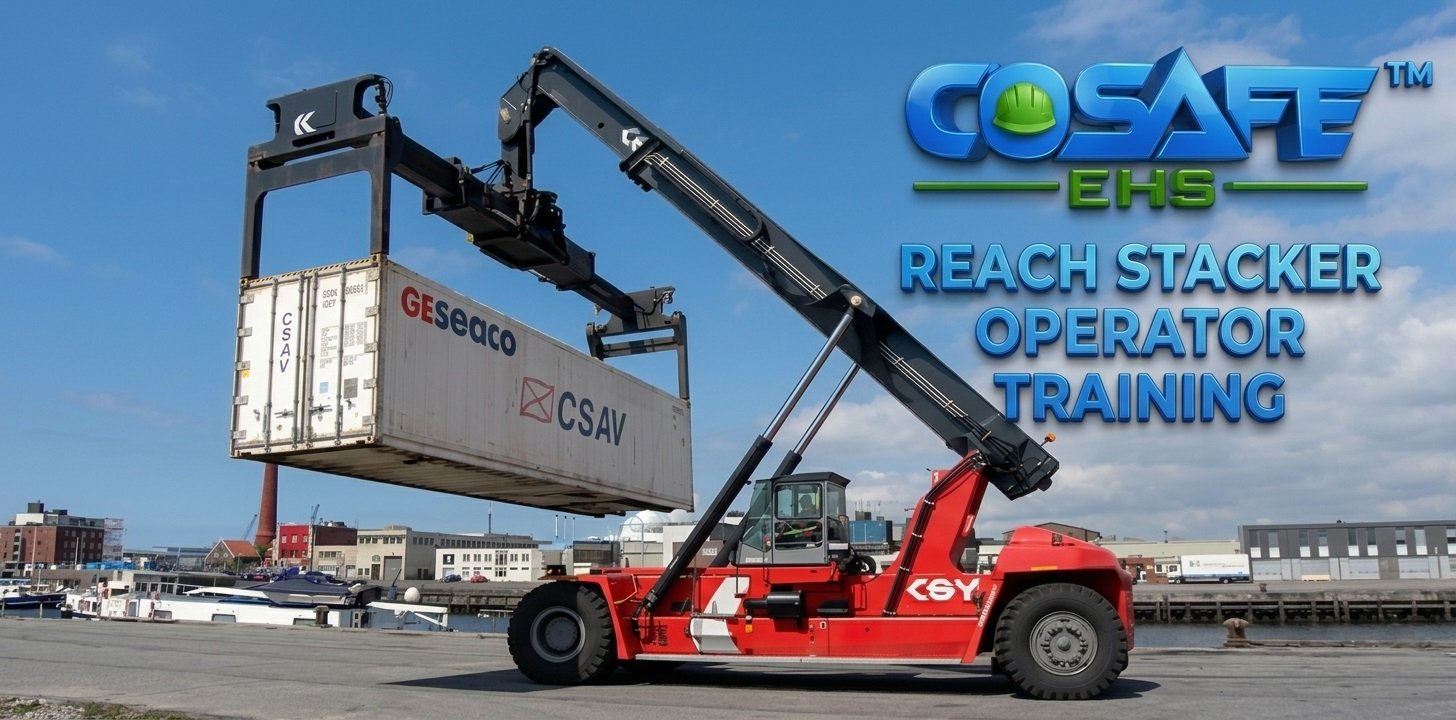
Reach Stackers and Kalmar Container Handlers are among the most powerful material handling machines used in ports, container terminals, inland container depots (ICDs), logistics hubs, freight stations, shipping yards, rail terminals, steel industries, heavy engineering facilities, and large-scale warehousing operations. These machines are specifically designed for lifting, transporting, stacking, and handling heavy containers and cargo efficiently within demanding industrial environments.
Due to the enormous loads handled by Reach Stackers, operator competency becomes a critical factor in workplace safety. Improper operation can lead to load instability, equipment overturning, container collapse, struck-by incidents, property damage, operational downtime, and severe injuries. Many incidents occur because operators lack adequate understanding of load charts, machine stability, blind spots, safe maneuvering practices, and emergency response procedures.
At Cosafe EHS Bangalore, our Reach Stacker / Kalmar Operator Training Program is designed to develop skilled, confident, and safety-conscious operators capable of performing container handling operations safely and efficiently. The program combines theoretical knowledge, practical demonstrations, equipment familiarization, hazard awareness, load handling techniques, and operational best practices to ensure operators can manage heavy lifting operations with maximum safety and productivity.
Our training is specifically developed for organizations involved in container handling, logistics operations, transportation, shipping, cargo management, heavy material movement, and industrial warehousing.
Why Reach Stacker Operator Training is Important
Reach Stackers operate in dynamic environments where visibility restrictions, heavy loads, pedestrian movement, vehicle traffic, uneven surfaces, and environmental conditions can significantly increase operational risks.
Proper operator training helps organizations:
Reduce container handling accidents
Prevent equipment damage and load losses
Improve lifting efficiency and productivity
Strengthen operator competency
Enhance workplace safety culture
Minimize downtime and maintenance costs
Improve fleet utilization
Ensure compliance with safety procedures
Reduce human error during lifting operations
Improve overall logistics and cargo handling performance
Benefits of Reach Stacker / Kalmar Operator Training
Organizations implementing structured operator training programs benefit from:
Reduced workplace incidents
Improved equipment handling skills
Better load control and stability
Increased operational efficiency
Lower repair and maintenance costs
Enhanced operator confidence
Improved productivity and cargo movement
Better communication during operations
Stronger safety compliance
Reduced insurance and liability risks
Who Should Attend?
This training program is ideal for:
Reach Stacker Operators
Kalmar Operators
Container Yard Operators
Port and Terminal Personnel
Logistics and Supply Chain Teams
Warehouse Operators
Material Handling Personnel
Shipping Yard Workers
Fleet Supervisors
Transport Coordinators
Safety Officers
Maintenance Personnel
At Cosafe EHS Bangalore, our operator training focuses on practical competency development to ensure participants are fully prepared for real-world container handling operations.
Reach Stackers and Kalmar container handling equipment are critical assets in modern logistics and cargo operations. However, safe and efficient operation requires technical knowledge, practical skills, hazard awareness, and disciplined operating practices.
At Cosafe EHS Bangalore, our Reach Stacker / Kalmar Operator Training Program equips operators, supervisors, and logistics personnel with the expertise needed to safely inspect, operate, maneuver, and manage heavy container handling equipment. Through comprehensive instruction, practical demonstrations, and real-world operational scenarios, participants develop the competency required to improve safety, productivity, and operational reliability.
Operate Safely. Lift Responsibly. Improve Productivity. Choose Cosafe EHS Bangalore for Professional Reach Stacker / Kalmar Operator Training.
Training Modules
Module 1: Introduction to Reach Stacker Operations
Participants receive a comprehensive understanding of Reach Stackers and Kalmar equipment.
Topics include:
- Introduction to container handling equipment
- Types of Reach Stackers
- Kalmar equipment overview
- Applications in ports and logistics industries
- Operator responsibilities
- Safety expectations and workplace requirements
Module 2: Equipment Components and Controls
Understanding machine systems is essential for safe operation.
Topics include:
- Chassis and frame structure
- Boom assembly
- Spreader systems
- Hydraulic systems
- Steering systems
- Braking systems
- Operator cabin controls
- Safety devices and indicators
Participants gain familiarity with machine functionality and operational controls.
Module 3: Hazard Identification and Risk Assessment
Safe operation begins with recognizing workplace hazards.
Topics include:
- Load-related hazards
- Vehicle interaction risks
- Pedestrian safety
- Blind spot awareness
- Environmental hazards
- Surface and terrain risks
- Weather-related considerations
- Risk control strategies
Participants learn to identify and mitigate operational hazards before work begins.
Module 4: Pre-Operational Inspection Procedures
Daily inspections are critical for equipment safety and reliability.
Training includes:
- Walk-around inspections
- Hydraulic system checks
- Tire inspections
- Brake testing
- Steering system verification
- Spreader inspection
- Fluid level checks
- Safety device inspections
Participants learn systematic inspection procedures before equipment use.
Module 5: Stability Principles and Load Dynamics
Understanding stability is one of the most important skills for operators.
Topics include:
- Machine stability principles
- Center of gravity
- Load balance concepts
- Dynamic stability factors
- Impact of boom extension
- Ground condition effects
- Safe operating limits
Participants develop awareness of factors that influence equipment stability.
Module 6: Load Chart Interpretation
Load chart knowledge is essential for safe lifting operations.
Topics include:
- Reading load charts
- Capacity limitations
- Load radius effects
- Lift height considerations
- Boom positioning
- Container weight assessment
- Safe operating capacities
Participants learn how to prevent overload incidents through proper load chart interpretation.
Module 7: Safe Container Handling Techniques
Operators learn proper methods for handling containers safely.
Training includes:
- Container identification
- Approaching containers safely
- Spreader engagement procedures
- Lifting operations
- Transporting containers
- Stacking and de-stacking methods
- Positioning and placement techniques
Participants gain practical knowledge of safe container movement.
Module 8: Yard Traffic Management and Operational Safety
Busy logistics environments require strong situational awareness.
Topics include:
- Traffic management principles
- Speed control
- Pedestrian interaction
- Communication systems
- Designated travel routes
- Reversing procedures
- Blind corner management
Participants learn how to operate safely in high-traffic environments.
Module 9: Communication and Signaling
Effective communication prevents accidents during lifting operations.
Topics include:
- Standard hand signals
- Radio communication procedures
- Signalman responsibilities
- Operator-signalman coordination
- Emergency communication protocols
Participants improve operational coordination and safety.
Module 10: Safe Operating Practices
This module reinforces critical operator behaviors.
Topics include:
- Starting and stopping procedures
- Safe maneuvering techniques
- Cornering awareness
- Speed management
- Parking procedures
- Safe shutdown procedures
- Preventing unsafe shortcuts
Participants develop safe operating habits that reduce incident risks.
Module 11: Emergency Response Procedures
Operators must know how to react during emergencies.
Training includes:
- Equipment malfunction response
- Hydraulic failure awareness
- Container instability response
- Fire emergency awareness
- Emergency shutdown procedures
- Incident reporting requirements
Participants improve emergency preparedness and response capability.
Module 12: Maintenance Awareness for Operators
Operators play an important role in equipment reliability.
Topics include:
- Operator maintenance responsibilities
- Defect reporting procedures
- Preventive maintenance awareness
- Equipment care practices
- Identifying abnormal conditions
Participants learn how daily attention improves equipment performance.
Module 13: Legal Compliance and Safety Responsibilities
Safe operation requires adherence to workplace safety standards.
Topics include:
- Operator accountability
- Workplace safety procedures
- Documentation requirements
- Inspection records
- Reporting obligations
- Company safety policies
Participants develop a strong understanding of operational compliance.
Module 14: Practical Equipment Demonstrations
Practical training reinforces theoretical concepts.
Activities include:
- Equipment familiarization
- Control operation exercises
- Inspection demonstrations
- Load handling practice
- Stability awareness exercises
- Communication drills
- Parking procedures
- Emergency response simulations
Module 15: Competency Evaluation and Certification
Participants undergo assessments to verify competency.
- Evaluation includes:
- Written assessments
- Equipment inspection exercises
- Load handling demonstrations
- Operational assessments
- Hazard identification activities
- Practical skill evaluations
Successful participants receive certification upon completion.
Training Methodology
At Cosafe EHS Bangalore, our Reach Stacker and Kalmar Operator Training follows a practical, competency-based methodology designed to develop confident and skilled operators capable of handling real-world operational challenges.
Interactive Classroom Sessions
Participants receive structured instruction through:
- Multimedia presentations
- Industrial case studies
- Incident investigations
- Equipment operation discussions
- Group learning activities
- Industry best-practice reviews
This provides a strong theoretical foundation.
Scenario-Based Learning
Realistic operational scenarios include:
- Container yard activities
- Traffic management situations
- Stability awareness exercises
- Emergency response scenarios
- Hazard recognition drills
- Communication challenges
This improves decision-making under operational conditions.
Hands-On Operator Practice
Participants receive supervised practical training in:
- Equipment familiarization
- Safe maneuvering
- Container lifting
- Stacking and de-stacking
- Travel operations
- Equipment parking
- Shutdown procedures
Practical experience builds confidence and competence.
Group Workshops and Team Exercises
Activities include:
- Risk assessment workshops
- Operational planning exercises
- Communication drills
- Incident analysis sessions
- Safety observation exercises
These activities strengthen teamwork and operational awareness.
Competency Assessment
Participants are evaluated through:
- Written examinations
- Practical operation assessments
- Inspection exercises
- Hazard identification tasks
- Scenario-based evaluations
- Instructor observations
Certificates are awarded after successful completion of training.
Why Choose Cosafe EHS Bangalore for Reach Stacker Operator Training?
- Experienced material handling equipment trainers
- Practical, hands-on learning approach
- Industry-specific container handling modules
- Real-world operational simulations
- Competency-based assessments
- Customized corporate training programs
- On-site and classroom delivery options
- Strong focus on accident prevention
- Compliance-oriented training methodology
- Post-training technical support
Program Details
Duration: Half Day (3–4 Hours) / Full Day (5–6 Hours)
Certification: Certificate will be provided after successful completion
Validity: 1–2 Years
Languages: Kannada / Hindi / English / Telugu