






Overview
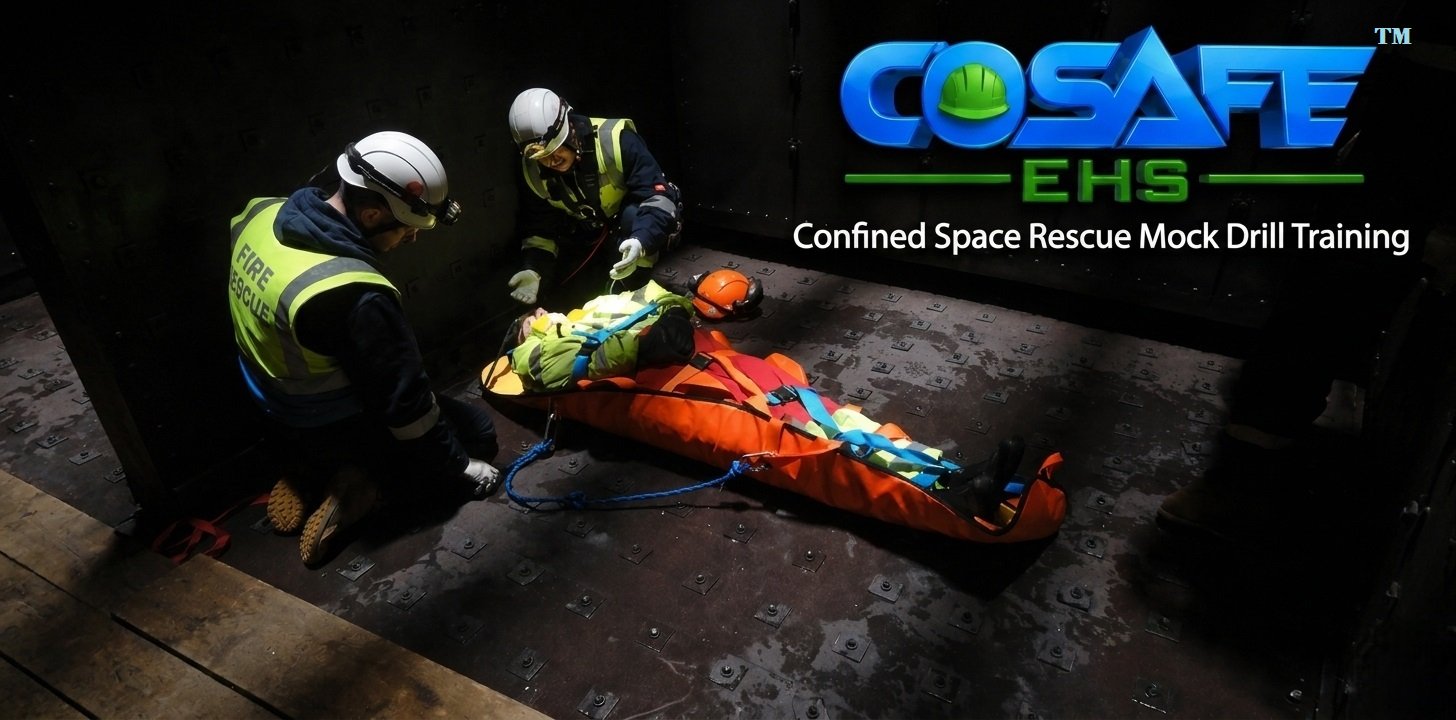
Confined Space Rescue Mock Drill Training in Bangalore
Professional Confined Space Rescue Mock Drill Training by Cosafe EHS Bangalore
Confined spaces are among the most hazardous work environments found in industrial operations. Tanks, vessels, silos, pits, manholes, tunnels, sewers, boilers, storage tanks, pipelines, underground vaults, and process equipment often contain life-threatening hazards such as oxygen deficiency, toxic gases, flammable atmospheres, engulfment risks, mechanical hazards, and restricted entry or exit points. Due to these unique challenges, confined space incidents frequently become complex rescue situations requiring specialized planning, equipment, and trained personnel. Studies have shown that many confined space fatalities involve rescuers attempting emergency rescue without adequate training or preparation.
At Cosafe EHS Bangalore, our Confined Space Rescue Mock Drill Training Program is designed to prepare Emergency Response Teams (ERT), rescue personnel, safety professionals, supervisors, and confined space workers to respond effectively during confined space emergencies. The training combines rescue planning, hazard assessment, emergency response procedures, rescue equipment operation, casualty recovery techniques, and full-scale rescue simulations that replicate real workplace emergencies.
Our training program focuses on developing practical rescue competencies while ensuring compliance with workplace safety requirements, confined space entry procedures, permit-to-work systems, emergency preparedness programs, and industry best practices.
Why Confined Space Rescue Mock Drill Training is Important
A confined space emergency can escalate within seconds. Toxic atmospheres, oxygen-deficient environments, hydrogen sulfide exposure, engulfment hazards, equipment entrapment, heat stress, and sudden medical emergencies can quickly incapacitate workers. Rescue operations are often difficult because of limited access, poor visibility, restricted movement, and hazardous atmospheric conditions. Proper rescue planning and regular mock drills significantly improve emergency preparedness and response effectiveness.
Objectives of Confined Space Rescue Mock Drills
The primary objectives include:
Testing confined space rescue plans
Evaluating emergency response readiness
Improving rescue team competency
Enhancing hazard recognition capabilities
Testing communication systems
Improving casualty recovery procedures
Strengthening emergency coordination
Evaluating rescue equipment effectiveness
Identifying response gaps
Building responder confidence
Industries Requiring Confined Space Rescue Preparedness
Confined space rescue training is highly relevant for:
Oil & Gas Industries
Petrochemical Plants
Refineries
Chemical Manufacturing Facilities
Pharmaceutical Industries
Power Plants
Water Treatment Facilities
Wastewater Treatment Plants
Food Processing Industries
Steel and Cement Plants
Construction Projects
Mining Operations
Manufacturing Facilities
Benefits of Confined Space Rescue Mock Drill Training
Organizations that conduct regular rescue drills benefit from:
-
Improved emergency preparedness
Faster rescue response times
Reduced workplace fatalities
Better team coordination
Increased responder confidence
Improved hazard awareness
Enhanced rescue planning
Stronger compliance culture
Better equipment readiness
Improved workplace safety performance
Who Should Attend?
This training program is ideal for:
Emergency Response Team (ERT) Members
Confined Space Entrants
Attendants and Standby Personnel
Safety Officers
EHS Professionals
Supervisors and Managers
Rescue Team Members
Fire & Rescue Personnel
Maintenance Personnel
Contractors
Plant Emergency Coordinators
Operations Personnel
At Cosafe EHS Bangalore, our Confined Space Rescue Mock Drill Training is customized according to industry hazards, confined space configurations, rescue challenges, and organizational emergency response requirements.
Confined space emergencies are among the most challenging workplace incidents due to hazardous atmospheres, restricted access, limited visibility, and complex rescue requirements. Without proper planning, training, and regular rescue drills, even minor incidents can quickly escalate into life-threatening situations. Many confined space fatalities involve unplanned rescue attempts by untrained personnel, highlighting the importance of structured rescue preparedness.
At Cosafe EHS Bangalore, our Confined Space Rescue Mock Drill Training Program equips Emergency Response Teams, confined space workers, safety professionals, and rescue personnel with the knowledge, practical skills, and confidence needed to conduct safe and effective rescue operations. Through realistic simulations, specialized equipment training, and scenario-based exercises, we help organizations strengthen emergency preparedness, protect workers, and save lives.
Prepare for Emergencies. Strengthen Rescue Capability. Protect Lives. Choose Cosafe EHS Bangalore for Professional Confined Space Rescue Mock Drill Training in Bangalore.
Training Modules
Module 1: Introduction to Confined Space Rescue
Participants receive a comprehensive understanding of confined space emergencies and rescue operations.
Topics include:
- Definition of confined spaces
- Permit-required confined spaces
- Confined space incident statistics
- Rescue challenges
- Emergency response requirements
- Importance of rescue planning
Participants gain a strong foundation in confined space rescue awareness.
Module 2: Confined Space Hazard Identification
Understanding hazards is essential before initiating rescue operations.
Topics include:
- Atmospheric Hazards
- Oxygen deficiency
- Oxygen enrichment
- Toxic gases
- Hydrogen Sulfide (H₂S)
- Carbon Monoxide (CO)
- Flammable atmospheres
- Physical Hazards
- Engulfment risks
- Mechanical hazards
- Electrical hazards
- Structural hazards
- Heat stress
Participants learn how to identify and evaluate confined space hazards.
Module 3: Confined Space Entry and Permit Systems
Safe rescue begins with proper confined space management.
Topics include:
- Permit-to-work systems
- Entry authorization
- Isolation procedures
- Lockout Tagout (LOTO)
- Atmospheric testing
- Ventilation requirements
Participants understand the relationship between entry controls and rescue readiness.
Module 4: Roles and Responsibilities During Rescue Operations
Clear role definition improves rescue effectiveness.
Training includes:
- Incident Commander responsibilities
- Entry Supervisor duties
- Authorized Entrant roles
- Attendant responsibilities
- Rescue Team functions
- Medical response coordination
Participants learn how emergency response teams operate during confined space incidents.
Module 5: Atmospheric Monitoring and Gas Detection
Atmospheric hazards remain the leading cause of confined space fatalities.
Topics include:
- Multi-gas detector operation
- Oxygen monitoring
- Toxic gas monitoring
- Explosive atmosphere detection
- Continuous atmospheric testing
- Alarm interpretation
Participants learn how to monitor and control atmospheric risks.
Module 6: Rescue Equipment Familiarization
Rescue operations depend on specialized equipment.
Training includes:
- Tripods
- Davit arms
- Rescue winches
- Retrieval systems
- Stretchers
- Rescue ropes
- Harnesses
- Communication systems
Participants develop familiarity with rescue equipment and applications.
Module 7: Non-Entry Rescue Techniques
Non-entry rescue is often the safest rescue option.
Topics include:
- Retrieval systems
- Winch operations
- Casualty extraction
- Mechanical advantage systems
- Rescue line management
- Rescue planning
Participants learn techniques for recovering victims without entering the confined space.
Module 8: Entry Rescue Operations
Some emergencies require trained rescuers to enter confined spaces.
Topics include:
- Rescue entry procedures
- Hazard control measures
- Rescue team deployment
- Victim access techniques
- Patient stabilization
- Safe extraction methods
Participants understand the complexities of entry rescue operations.
Module 9: SCBA and Respiratory Protection Awareness
Rescue teams must be prepared for hazardous atmospheres.
Training includes:
- SCBA familiarization
- Respiratory protection principles
- Emergency air management
- Respiratory limitations
- Equipment inspections
- Hazardous atmosphere awareness
Participants gain awareness of respiratory protection requirements.
Module 10: Casualty Handling and Patient Packaging
Proper casualty management improves survival outcomes.
Topics include:
- Casualty assessment
- Patient stabilization
- Spine protection awareness
- Rescue stretchers
- Vertical rescue packaging
- Horizontal rescue packaging
Participants learn safe casualty handling techniques.
Module 11: Emergency Communication and Incident Command
Effective communication is critical during rescue operations.
Training includes:
- Communication systems
- Emergency notifications
- Incident command structure
- Team coordination
- Rescue briefings
- Situation reporting
Participants strengthen emergency coordination skills.
Module 12: Rescue Planning and Pre-Incident Preparation
Every confined space requires a rescue strategy.
Topics include:
- Rescue planning requirements
- Site-specific rescue plans
- Resource identification
- Equipment staging
- Rescue route planning
- Emergency coordination
Participants learn how effective rescue planning supports successful emergency response. Rescue plans should be documented, clearly communicated, and regularly practiced through drills.
Module 13: Full-Scale Confined Space Rescue Mock Drill
Participants engage in realistic rescue simulations.
Activities include:
- Simulated worker collapse
- Atmospheric hazard emergencies
- Entrapment scenarios
- Non-entry rescue drills
- Rescue team deployment
- Casualty extraction exercises
Participants experience realistic emergency conditions.
Module 14: Scenario-Based Rescue Simulations
Different rescue challenges are introduced.
Exercises include:
- Tank rescue scenarios
- Manhole rescue drills
- Pit rescue exercises
- Vessel entry emergencies
- H₂S exposure incidents
- Oxygen-deficient atmosphere simulations
Participants develop adaptive rescue capabilities.
Module 15: Post-Drill Evaluation and Continuous Improvement
Learning from drills strengthens future performance.
Topics include:
- Response time evaluation
- Rescue effectiveness analysis
- Equipment performance review
- Communication assessment
- Corrective action planning
- Continuous improvement strategies
Participants understand how organizations improve rescue preparedness through ongoing evaluation.
Training Methodology
Training Methodology
Our training methodology ensures maximum practical exposure:
Interactive classroom sessions
Live rescue demonstrations
Real-time confined space mock drills
Use of actual rescue equipment
Scenario-based emergency simulations
Group participation and feedback sessions
Pre- and post-training assessment
Legal Methodology
Our training aligns with the following Indian Standards and safety guidelines:
IS 14682 – Safety in Confined Spaces
IS 3786 – Guidelines for Industrial Safety
IS 9620 – Code of Practice for Occupational Safety
Factories Act, 1948
OSHA Confined Space Guidelines (Reference)
Program Details
Details Information
Training Duration:- 1 Day / 2 Days
Mode of Training:- Classroom + Practical
Certification:- Certificate Provided
Certificate Validity:- 1–2 Years
Training Location:- Onsite / Training Center
Languages Available:- Kannada / Hindi / English / Telugu