






Overview
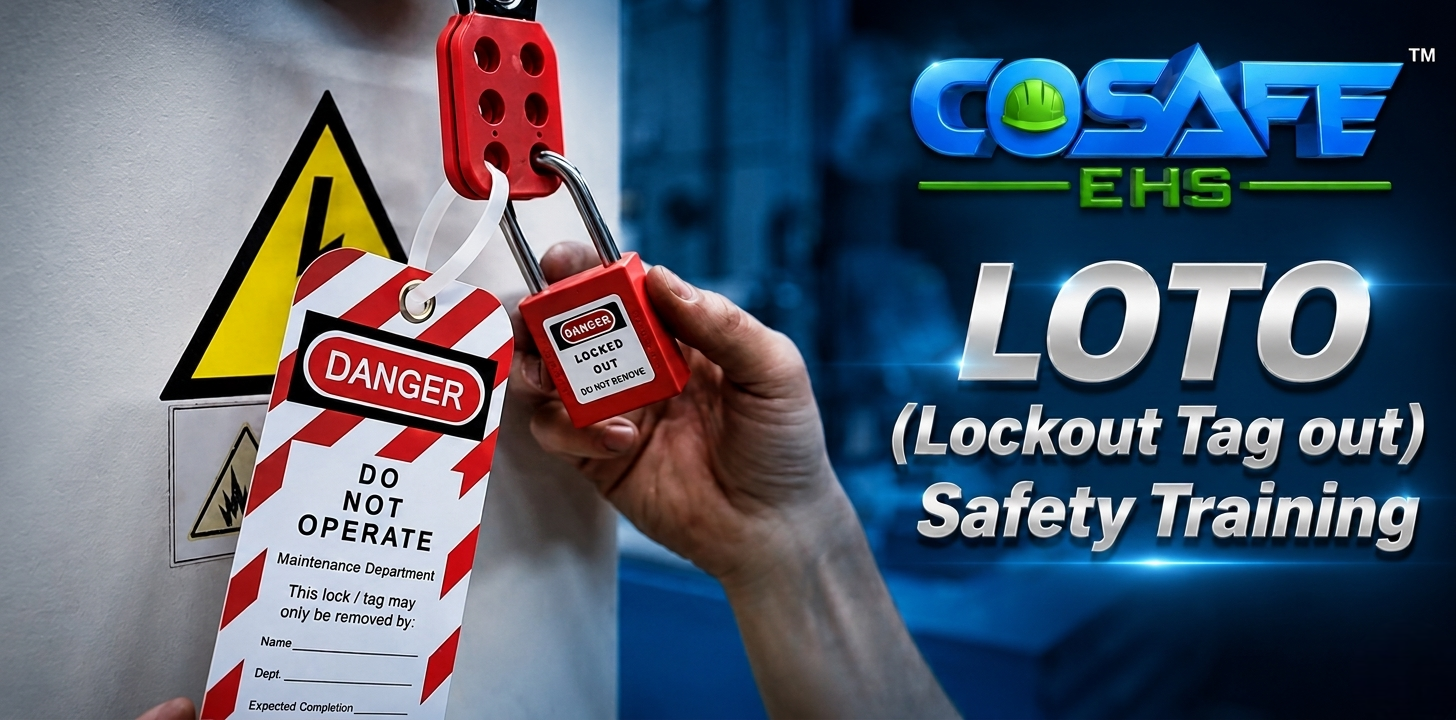
LOTO (Lockout Tag out) Safety Training in Bangalore
Professional LOTO (Lockout Tagout) Safety Training by Cosafe EHS Bangalore
Unexpected machine startup and the uncontrolled release of hazardous energy are among the leading causes of serious workplace injuries and fatalities in industrial environments. During maintenance, servicing, cleaning, troubleshooting, installation, repair, or inspection activities, workers can be exposed to dangerous energy sources such as electrical, mechanical, hydraulic, pneumatic, thermal, chemical, gravitational, and stored energy. If these energy sources are not properly isolated and controlled, workers may suffer electrocution, burns, crushing injuries, amputations, fractures, or even fatalities.
At Cosafe EHS Bangalore, our LOTO (Lockout Tagout) Safety Training Program is designed to provide employees, maintenance personnel, engineers, supervisors, contractors, and safety professionals with the knowledge and practical skills required to safely isolate hazardous energy sources before performing maintenance or servicing activities. The training focuses on hazardous energy control, lockout procedures, tagout systems, energy isolation methods, verification techniques, legal compliance, and best industry practices.
LOTO is not simply a safety procedure—it is a critical risk-control system that protects workers from unexpected equipment energization and hazardous energy release. Effective LOTO programs significantly reduce workplace accidents, improve compliance, enhance maintenance safety, and create a stronger safety culture throughout the organization. Proper lockout/tagout practices are recognized globally as one of the most effective methods for controlling hazardous energy during servicing and maintenance operations.
Why LOTO Safety Training is Important
Many workplace accidents occur when machinery is unintentionally energized while workers are performing maintenance activities. Hazardous energy can remain stored even after equipment has been shut down, creating hidden dangers that may not be immediately visible.
LOTO Safety Training helps organizations:
Prevent unexpected machine startup incidents
Reduce fatalities and serious injuries
Protect maintenance and servicing personnel
Improve hazardous energy control practices
Strengthen workplace safety culture
Reduce downtime and operational disruptions
Improve equipment maintenance safety
Enhance legal and regulatory compliance
Improve workforce competency
Support proactive risk management programs
Industry studies indicate that effective lockout/tagout programs help prevent thousands of workplace injuries annually by ensuring hazardous energy sources are properly isolated and verified before work begins.
Benefits of LOTO Safety Training
Organizations implementing comprehensive LOTO training programs benefit from:
Reduced workplace accidents
Improved employee safety awareness
Better maintenance safety performance
Enhanced compliance with safety requirements
Reduced equipment-related incidents
Increased employee confidence
Improved operational reliability
Stronger contractor safety management
Reduced liability and insurance costs
Enhanced organizational reputation
Who Should Attend?
This training program is ideal for:
Maintenance Technicians
Electricians
Mechanical Engineers
Plant Operators
Machine Operators
Production Personnel
EHS Professionals
Safety Officers
Supervisors and Managers
Contractors
Facility Maintenance Teams
Engineering Personnel
At Cosafe EHS Bangalore, our LOTO Safety Training is designed to provide practical workplace applications that help participants safely manage hazardous energy sources in real industrial environments.
Hazardous energy remains one of the most significant risks in industrial workplaces. Without proper isolation, verification, and control procedures, maintenance and servicing activities can result in catastrophic injuries and operational losses.
At Cosafe EHS Bangalore, our LOTO (Lockout Tagout) Safety Training Program equips employees, supervisors, engineers, and maintenance personnel with the knowledge, practical skills, and confidence needed to safely control hazardous energy sources. Through comprehensive instruction, hands-on demonstrations, and realistic workplace simulations, participants develop the competencies required to prevent accidents, improve compliance, and create safer workplaces.
Isolate Energy. Prevent Accidents. Protect Lives. Choose Cosafe EHS Bangalore for Professional LOTO (Lockout Tagout) Safety Training in Bangalore.
Training Modules
Module 1: Introduction to Lockout Tagout (LOTO)
This module introduces participants to the fundamentals of hazardous energy control.
Topics include:
- What is Lockout Tagout?
- Purpose of LOTO systems
- Importance of hazardous energy control
- Consequences of LOTO failures
- Industry accident case studies
- Benefits of implementing LOTO programs
Participants gain a strong understanding of why LOTO is critical for workplace safety.
Module 2: Understanding Hazardous Energy Sources
Before controlling hazardous energy, workers must understand the different forms it can take.
Topics include:
- Electrical energy
- Mechanical energy
- Hydraulic energy
- Pneumatic energy
- Thermal energy
- Chemical energy
- Gravitational energy
Stored and residual energy
Participants learn how hazardous energy exists in various workplace systems and equipment.
Module 3: Hazard Identification and Risk Assessment
Proper hazard identification forms the foundation of an effective LOTO program.
Training includes:
- Hazard recognition techniques
- Equipment risk assessment
- Energy source identification
- Stored energy hazards
- Maintenance-related risks
- Risk control measures
Participants learn how to identify and evaluate hazardous energy sources before work begins.
Module 4: LOTO Regulations, Standards, and Compliance
Understanding compliance requirements is essential for implementing effective LOTO systems.
Topics include:
- Hazardous energy control requirements
- Employer responsibilities
- Employee responsibilities
- Documentation requirements
- Inspection and audit requirements
- Compliance best practices
Participants develop awareness of workplace obligations and industry expectations.
Module 5: Energy Isolation Devices and Equipment
This module focuses on devices used for energy isolation.
Training includes:
- Circuit breakers
- Disconnect switches
- Valves
- Line blinds
- Mechanical blocks
- Isolation devices
- Locking mechanisms
Participants learn how energy isolation devices function within LOTO systems.
Module 6: Lockout Devices and Tagout Systems
Workers must understand the proper use of lockout and tagout equipment.
Topics include:
- Lockout devices
- Padlocks and hasps
- Group lockout systems
- Lock boxes
- Warning tags
- Tagout requirements
- Device inspection and maintenance
Participants learn the differences between lockout and tagout systems and when each should be used.
Module 7: Standard LOTO Procedures
This module covers the step-by-step lockout process.
Training includes:
- Preparation for shutdown
- Equipment shutdown procedures
- Energy isolation
- Application of locks and tags
- Stored energy release
- Verification of isolation
- Safe return to service
Participants learn systematic procedures for controlling hazardous energy.
Module 8: Verification of Zero Energy State
Verification is one of the most critical stages of LOTO.
Topics include:
- Testing procedures
- Verification methods
- Electrical verification
- Mechanical verification
- Stored energy checks
- Zero energy confirmation
Participants learn how to confirm that equipment is safe before maintenance begins.
Module 9: Group Lockout and Multi-Person Operations
Many maintenance activities involve multiple workers.
Training includes:
- Group lockout procedures
- Lock box systems
- Shared responsibilities
- Shift change procedures
- Transfer of lockout responsibilities
- Contractor coordination
Participants learn how to safely manage complex maintenance activities. Community discussions among safety professionals frequently identify group lockout management as a major area requiring strong procedures and training.
Module 10: Authorized, Affected, and Other Employees
Different employees have different roles within a LOTO program.
Topics include:
- Authorized employees
- Affected employees
- Other employees
- Training requirements
- Role-specific responsibilities
- Communication requirements
Participants understand the responsibilities associated with each role.
Module 11: Stored Energy Management
Stored energy can remain hazardous even after isolation.
Training includes:
- Hydraulic pressure release
- Pneumatic energy release
- Spring tension control
- Capacitor discharge
- Thermal energy hazards
- Gravity-related hazards
Participants learn methods for controlling residual energy hazards.
Module 12: Contractor and Vendor LOTO Coordination
Contractor activities often involve shared equipment and systems.
Topics include:
- Contractor safety management
- Coordination procedures
- Communication requirements
- Shared responsibilities
- Documentation controls
Participants learn how to maintain safe contractor interactions.
Module 13: Incident Investigation and Lessons Learned
Learning from incidents strengthens safety performance.
Training includes:
- Root cause analysis
- Incident reporting
- Near-miss investigations
- Corrective actions
- Preventive measures
- Continuous improvement strategies
Participants learn how to improve LOTO effectiveness through incident analysis.
Module 14: LOTO Program Development and Auditing
Effective programs require continuous monitoring and improvement.
Topics include:
- Program development
- Written procedures
- Equipment-specific procedures
- Periodic inspections
- Program audits
- Performance evaluation
Participants learn how organizations maintain robust LOTO systems. Safety practitioners consistently emphasize equipment-specific procedures, annual reviews, and documented inspections as critical elements of an effective LOTO program.
Module 15: Practical Demonstrations and Hands-On Exercises
Practical application reinforces theoretical learning.
Activities include:
- Lockout device application
- Tagout procedures
- Energy isolation exercises
- Verification demonstrations
- Group lockout simulations
- Hazard identification workshops
- Maintenance safety scenarios
Participants develop practical competency through realistic workplace exercises.
Training Methodology
At Cosafe EHS Bangalore, our LOTO Safety Training follows a practical, interactive, and competency-based learning approach designed to ensure participants can confidently implement hazardous energy control procedures in real-world industrial environments.
Interactive Classroom Sessions
Participants receive structured instruction through:
- Multimedia presentations
- Industry case studies
- Hazardous energy analyses
- Group discussions
- Regulatory awareness sessions
- Best-practice reviews
This establishes a strong theoretical foundation.
Practical Demonstrations
Our trainers conduct hands-on demonstrations covering:
- Lockout device installation
- Tagout procedures
- Energy isolation techniques
- Verification methods
- Group lockout systems
- Stored energy control
Participants observe and practice safe hazardous energy control methods.
Scenario-Based Learning
Realistic workplace scenarios improve hazard recognition and decision-making.
Exercises include:
- Maintenance shutdown situations
- Electrical isolation exercises
- Mechanical equipment servicing scenarios
- Contractor coordination activities
- Emergency response situations
This approach develops practical problem-solving skills.
Group Workshops and Team Exercises
Participants engage in:
- Hazard identification workshops
- Risk assessment exercises
- Procedure development activities
- Incident investigation discussions
- Safety communication exercises
These activities strengthen teamwork and safety awareness.
Competency Assessment and Evaluation
Participants are assessed through:
- Written examinations
- Practical demonstrations
- Hazard identification exercises
- LOTO procedure evaluations
- Scenario-based assessments
- Instructor observations
Certificates are awarded upon successful completion of the training program.
Why Choose Cosafe EHS Bangalore for LOTO Safety Training?
- Experienced industrial safety trainers
- Practical and hands-on learning methodology
- Industry-specific hazardous energy control modules
- Real-world maintenance safety scenarios
- Customized corporate training programs
- On-site and classroom training options
- Competency-based assessments
- Compliance-focused training approach
- Interactive workshops and demonstrations
- Post-training guidance and support
Program Details
Duration: Half Day (3–4 Hours) / Full Day (5–6 Hours)
Certification: Certificate will be provided after successful completion
Validity: 1–2 Years
Languages: Kannada / Hindi / English / Telugu