






Overview
School Safety Training Program in Bangalore
Professional School Safety Training Program by Cosafe EHS Bangalore
Schools are entrusted with the responsibility of providing a safe, secure, and healthy learning environment for students, teachers, administrative staff, visitors, and support personnel. With increasing concerns related to fire emergencies, natural disasters, accidents, medical emergencies, transportation safety, violence prevention, laboratory hazards, and emergency preparedness, educational institutions must adopt a proactive approach toward safety management and risk reduction.
A comprehensive School Safety Training Program is essential for creating awareness, strengthening emergency preparedness, reducing risks, and ensuring that all stakeholders understand their roles and responsibilities during routine operations and emergency situations. Effective school safety programs not only protect lives but also ensure educational continuity, regulatory compliance, and a positive learning environment.
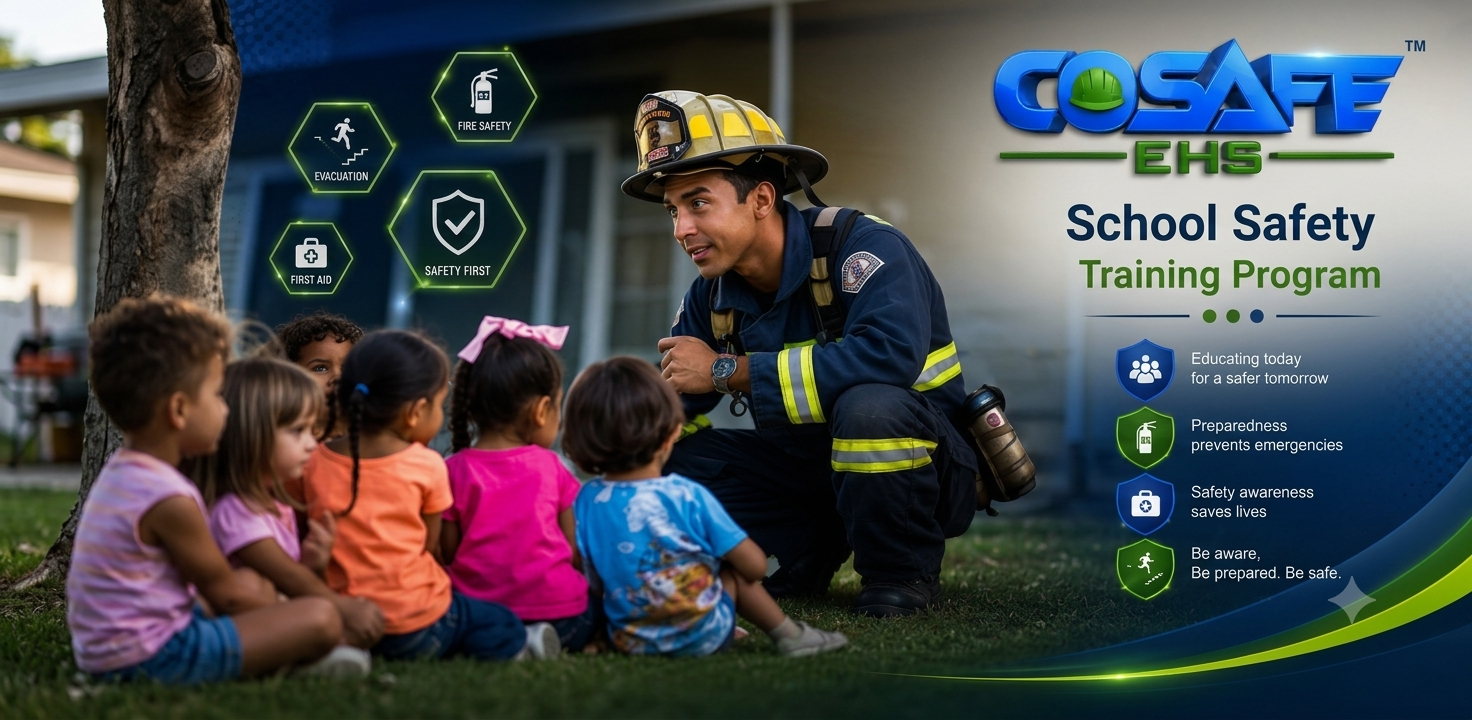
At Cosafe EHS Bangalore, our School Safety Training Program is designed to equip school management, teachers, administrative staff, transport personnel, support staff, and students with the knowledge, skills, and confidence required to prevent incidents, respond effectively during emergencies, and foster a strong culture of safety across the institution.
Our training program aligns with global best practices in educational safety, emergency preparedness, disaster management, child protection, occupational health and safety, fire safety, and risk management. Through practical learning, interactive activities, emergency drills, and scenario-based exercises, participants gain hands-on experience in managing various school-related safety challenges.
What is School Safety Training?
School Safety Training is a structured educational program that prepares school stakeholders to identify hazards, assess risks, implement preventive measures, and respond effectively to emergencies that may occur within educational institutions.
The program focuses on:
Student safety and protection
Emergency preparedness and response
Fire safety awareness
Disaster management planning
Medical emergency response
Evacuation procedures
School transport safety
Child protection measures
Hazard identification and risk assessment
Safe learning environments
The objective is to create a resilient educational institution capable of protecting lives while maintaining uninterrupted educational activities.
Why School Safety Training is Important
Educational institutions face numerous safety risks that can affect students, staff, and visitors, including:
Fire emergencies
Earthquakes and natural disasters
Medical emergencies
School transportation accidents
Laboratory incidents
Electrical hazards
Playground injuries
Structural failures
Chemical spills
Security threats
Without proper training and preparedness, these incidents can result in injuries, panic, property damage, and disruption of educational activities.
School Safety Training helps institutions:
Reduce accidents and injuries
Improve emergency preparedness
Strengthen crisis response capabilities
Protect students and staff
Enhance safety awareness
Improve evacuation efficiency
Support regulatory compliance
Promote a culture of safety
Build stakeholder confidence
Ensure educational continuity
Objectives of School Safety Training
The primary objectives include:
Creating safety awareness among staff and students
Understanding school-specific hazards and risks
Developing emergency preparedness capabilities
Improving evacuation and emergency response skills
Strengthening fire safety awareness
Enhancing disaster management readiness
Promoting child safety and protection
Improving first aid response capabilities
Developing crisis management competencies
Establishing a proactive safety culture
Key Benefits of School Safety Training
Schools implementing structured safety programs benefit through:
Reduced accident rates
Enhanced student protection
Improved emergency response times
Better staff preparedness
Stronger disaster resilience
Improved regulatory compliance
Increased parent confidence
Better risk management practices
Reduced operational disruptions
Enhanced institutional reputation
Who Should Attend?
This training program is suitable for:
School Principals
School Administrators
Teachers
Non-Teaching Staff
School Safety Coordinators
Transport Coordinators
Laboratory Personnel
Security Personnel
Maintenance Teams
Hostel Wardens
School Nurses
Emergency Response Teams
Student awareness sessions can also be customized according to age groups and educational levels.
Training Modules
Module 1: Introduction to School Safety Management
Participants gain a comprehensive understanding of school safety principles.
Topics include:
- Fundamentals of school safety
- Importance of safety culture
- Roles and responsibilities
- Risk-based safety management
- School safety policies
- Safety leadership in education
Module 2: Hazard Identification and Risk Assessment
Participants learn how to identify and evaluate potential risks.
Training includes:
- Classroom hazards
- Playground risks
- Laboratory hazards
- Electrical hazards
- Structural risks
- Environmental hazards
Participants learn practical risk assessment techniques applicable to school environments.
Module 3: Fire Safety Awareness and Emergency Response
Fire emergencies require immediate and coordinated action.
Topics include:
- Causes of school fires
- Fire prevention measures
- Fire classes and extinguishers
- Fire alarm systems
- Emergency reporting procedures
- Initial firefighting response
Practical demonstrations improve fire safety awareness and preparedness.
Module 4: School Emergency Evacuation Procedures
Participants learn safe evacuation practices.
Training includes:
- Evacuation planning
- Emergency exits
- Assembly points
- Roll call procedures
- Evacuation leadership
- Special needs evacuation considerations
Participants practice structured evacuation techniques.
Module 5: Disaster Management and Emergency Preparedness
Schools must be prepared for natural and man-made emergencies.
Topics include:
- Earthquake preparedness
- Flood response
- Cyclone safety
- Severe weather response
- Disaster recovery planning
- Community emergency coordination
Participants learn how to respond effectively during disasters.
Module 6: First Aid and Medical Emergency Response
Immediate response can save lives during emergencies.
Training includes:
- Basic first aid principles
- CPR awareness
- Bleeding control
- Fracture management
- Choking response
- Medical emergency procedures
Participants gain confidence in handling common school medical emergencies.
Module 7: Child Safety and Protection
Protecting children is a critical responsibility for educational institutions.
Topics include:
- Child protection policies
- Safe school environments
- Abuse prevention awareness
- Reporting mechanisms
- Student supervision
- Safeguarding practices
Participants learn best practices for ensuring student safety.
Module 8: School Transport Safety
Transportation safety plays a significant role in overall student protection.
Training includes:
- School bus safety
- Driver responsibilities
- Student transportation procedures
- Emergency response during transit
- Vehicle evacuation procedures
- Road safety awareness
Participants understand safe transportation practices.
Module 9: Laboratory and Chemical Safety
Schools with laboratories require specialized safety awareness.
Topics include:
- Chemical hazard identification
- Safe chemical handling
- Laboratory emergency procedures
- Personal protective equipment (PPE)
- Spill response
- Waste management practices
Participants learn how to maintain safe laboratory environments.
Module 10: Electrical Safety Awareness
Electrical incidents can cause serious injuries and fires.
Training includes:
- Electrical hazard recognition
- Safe equipment usage
- Electrical emergency procedures
- Inspection practices
- Preventive maintenance awareness
- Reporting unsafe conditions
Participants gain practical electrical safety knowledge.
Module 11: Security Awareness and Threat Management
Security preparedness is essential for modern educational institutions.
Topics include:
- Visitor management
- Access control procedures
- Threat identification
- Suspicious activity reporting
- Emergency lockdown procedures
- Crisis communication
Participants learn proactive security practices.
Module 12: Crisis Management and Incident Command
School leaders must be prepared to manage emergencies effectively.
Training includes:
- Emergency leadership
- Incident command structures
- Decision-making during crises
- Resource management
- Stakeholder communication
- Recovery planning
Participants develop crisis management competencies.
Module 13: Psychological Safety and Student Well-Being
Safety includes emotional and psychological well-being.
Topics include:
- Student mental health awareness
- Stress management
- Bullying prevention
- Emotional support strategies
- Positive learning environments
- Psychological first aid awareness
Participants learn to support student well-being effectively.
Module 14: School Safety Committees and Safety Audits
Participants learn how to sustain school safety initiatives.
Training includes:
- Safety committee formation
- School safety inspections
- Audit procedures
- Corrective actions
- Continuous improvement
- Safety reporting systems
These measures strengthen long-term safety performance.
Module 15: Emergency Mock Drills and Practical Exercises
Participants engage in realistic emergency scenarios involving:
- Fire evacuation drills
- Earthquake drills
- Medical emergency simulations
- Transport emergency exercises
- Security incident scenarios
- Disaster response exercises
Mock drills help validate emergency preparedness and response capabilities.
Training Methodology
At Cosafe EHS Bangalore, our School Safety Training Program follows a practical, interactive, and competency-based approach designed to ensure participants can apply safety principles effectively within educational environments.
Interactive Classroom Training
Participants receive structured instruction through:
- Expert-led presentations
- Educational workshops
- Safety awareness sessions
- Interactive discussions
- School-specific case studies
- Question-and-answer sessions
This establishes a strong theoretical foundation.
Hazard Identification Exercises
Participants engage in:
- School safety inspections
- Hazard recognition activities
- Risk assessment exercises
- Safety observation techniques
- Corrective action planning
- School environment evaluations
These activities improve proactive safety management skills.
Practical Demonstrations
Hands-on demonstrations include:
- Fire extinguisher operation
- Emergency alarm systems
- First aid techniques
- Safe evacuation procedures
- Emergency communication systems
- Safety equipment usage
Participants gain confidence through practical learning.
Scenario-Based Learning
Realistic school-related scenarios are used to develop decision-making skills.
Examples include:
- Classroom emergencies
- Playground accidents
- Fire incidents
- Medical emergencies
- Security threats
- Natural disaster situations
Participants learn effective response strategies through practical simulations.
Group Activities and Team Exercises
Collaborative learning includes:
- Emergency planning workshops
- Safety committee exercises
- Communication activities
- Team coordination exercises
- Problem-solving challenges
- Leadership development activities
These exercises strengthen teamwork and coordination.
Emergency Mock Drills
Participants actively perform:
- Fire evacuation drills
- Disaster preparedness drills
- Medical response simulations
- Security emergency exercises
- School transport emergency drills
- Incident command exercises
Mock drills provide valuable real-world experience.
Assessment and Performance Evaluation
Participants are evaluated through:
- Knowledge assessments
- Practical demonstrations
- Group participation
- Emergency response exercises
- Scenario-based evaluations
- Drill performance reviews
This ensures learning objectives are achieved effectively.
Certification
Upon successful completion of the program, participants receive certification recognizing their competence in school safety awareness, emergency preparedness, and incident response.
Why Choose Cosafe EHS Bangalore for School Safety Training?
- Experienced EHS and emergency preparedness professionals
- School-specific safety training solutions
- Practical and interactive training methodology
- Comprehensive emergency preparedness programs
- Customized training for educational institutions
- Real-world case studies and simulations
- Expert-led mock drills and emergency exercises
- Focus on student and staff safety
- Regulatory and compliance-oriented approach
- Commitment to building safer learning environments