






Overview
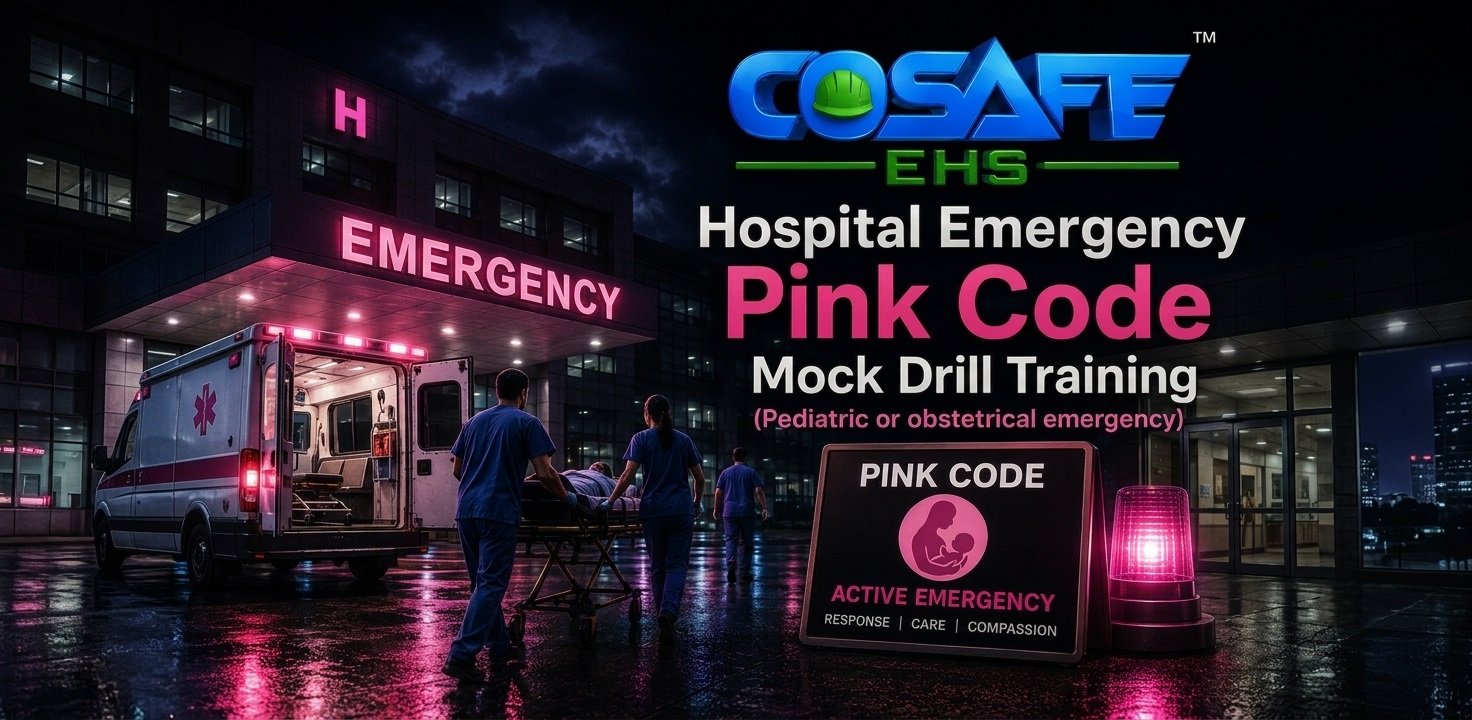
Hospital Emergency Pink Code Mock Drill Training (Pediatric or Obstetrical Emergency) in Bangalore
Professional Hospital Emergency Pink Code Mock Drill Training by Cosafe EHS Bangalore
Healthcare facilities caring for newborns, infants, children, pregnant women, and maternity patients must be prepared to respond immediately to life-threatening pediatric and obstetrical emergencies. These emergencies require specialized equipment, rapid decision-making, multidisciplinary coordination, and highly trained healthcare professionals to protect some of the most vulnerable patients within a hospital environment.
At Cosafe EHS Bangalore, our Hospital Emergency Pink Code Mock Drill Training Program is specifically designed to strengthen preparedness, emergency response capabilities, multidisciplinary coordination, patient safety, and crisis management for pediatric and obstetrical emergencies. The program enables hospitals to test emergency response systems, validate emergency protocols, improve team performance, and enhance patient outcomes through realistic simulations and mock drills.
It is important to note that Hospital Emergency Code Pink is not universally standardized worldwide. In some healthcare systems, Code Pink refers to infant abduction, while in others it may indicate pediatric emergencies, neonatal emergencies, or obstetrical emergencies. Therefore, every hospital must train staff according to its own approved emergency code policy and emergency response procedures.
What is Hospital Emergency Pink Code?
In many healthcare organizations, Hospital Emergency Pink Code is activated for:
Pediatric medical emergencies
Neonatal emergencies
Infant resuscitation
Pediatric cardiac arrest
Pediatric respiratory arrest
Obstetrical emergencies
Maternal complications
Emergency childbirth situations
High-risk maternity incidents
Critical newborn emergencies
Certain healthcare systems also use Code Pink for infant security incidents or child abduction alerts. Because emergency color codes vary between hospitals and countries, organizations must follow their internal emergency code protocols and staff training requirements.
Countries Where Hospital Pink Code Systems Are Commonly Used
Hospital color-coded emergency systems are widely utilized across:
-
India
United States
Canada
Australia
New Zealand
United Kingdom
Ireland
Singapore
Malaysia
United Arab Emirates (UAE)
Saudi Arabia
Qatar
Oman
South Africa
Hong Kong
The specific meaning of Pink Code may differ between healthcare facilities. In some hospitals it is associated with pediatric or neonatal emergencies, while others may use it for infant security alerts or obstetrical emergencies. Hospitals must therefore ensure staff are trained on their facility-specific emergency code system.
Why Hospital Pink Code Mock Drills are Important
Pediatric and obstetrical emergencies often require rapid intervention within the first few minutes to prevent severe complications or loss of life.
Challenges include:
Limited response time
Specialized pediatric equipment requirements
Neonatal resuscitation needs
Maternal emergency management
Complex clinical decision-making
Multidisciplinary coordination
Communication challenges
High emotional stress
Family management
Resource mobilization
Regular Pink Code Mock Drills help healthcare facilities:
-
Improve emergency response speed
Strengthen team coordination
Enhance clinical preparedness
Improve communication systems
Validate emergency protocols
Reduce response errors
Strengthen patient safety
Increase staff confidence
Improve neonatal outcomes
Enhance maternal care readiness
Objectives of Hospital Emergency Pink Code Mock Drill Training
The primary objectives include:
Understanding Pink Code activation procedures
Improving pediatric emergency preparedness
Enhancing neonatal emergency response
Strengthening obstetrical emergency management
Improving resuscitation readiness
Developing rapid response capabilities
Strengthening emergency communication
Enhancing multidisciplinary coordination
Testing emergency response systems
Improving patient safety outcomes
Key Benefits of Pink Code Mock Drills
Healthcare facilities conducting regular Pink Code drills benefit through:
Faster emergency intervention
Improved maternal safety
Better neonatal outcomes
Enhanced pediatric emergency management
Stronger clinical coordination
Increased staff confidence
Improved crisis communication
Reduced treatment delays
Better compliance readiness
Enhanced organizational resilience
Applicable Healthcare Facilities
This program is suitable for:
Multi-Specialty Hospitals
Maternity Hospitals
Pediatric Hospitals
Women's Healthcare Centers
Neonatal Care Units
Medical Colleges
Government Hospitals
Corporate Hospitals
Community Hospitals
Child Care Hospitals
Specialty Healthcare Facilities
Emergency Care Centers
Who Should Attend?
This training is ideal for:
Pediatricians
Neonatologists
Obstetricians
Gynecologists
Emergency Physicians
Nursing Staff
NICU Teams
PICU Teams
Labor Room Personnel
Delivery Room Teams
Emergency Response Teams
Hospital Administrators
Safety Officers
Clinical Coordinators
Pediatric and obstetrical emergencies demand immediate action, specialized clinical expertise, and seamless coordination among healthcare professionals. A well-structured Hospital Emergency Pink Code Mock Drill Program helps healthcare facilities validate emergency response procedures, improve readiness, strengthen communication, and enhance patient safety outcomes. Because the meaning of Code Pink varies across healthcare systems, organizations must ensure their training aligns with facility-specific emergency code protocols and response requirements.
At Cosafe EHS Bangalore, our Hospital Emergency Pink Code Mock Drill Training Program equips healthcare teams with the knowledge, practical skills, and confidence required to effectively manage pediatric, neonatal, and obstetrical emergencies while protecting patients, supporting families, and maintaining high standards of healthcare excellence.
Protect Mothers. Protect Children. Strengthen Emergency Preparedness. Choose Cosafe EHS Bangalore for Professional Hospital Emergency Pink Code Mock Drill Training in Bangalore.
Training Modules
Module 1: Introduction to Pediatric and Obstetrical Emergency Management
Participants gain an understanding of healthcare emergency preparedness principles.
Topics include:
- Pediatric emergency fundamentals
- Neonatal emergency management
- Obstetrical emergency preparedness
- Patient safety principles
- Emergency response frameworks
- Clinical coordination requirements
Module 2: Understanding Hospital Emergency Pink Code
Participants learn facility-specific Pink Code activation procedures.
Training includes:
- Pink Code definitions
- Activation criteria
- Notification procedures
- Emergency communication protocols
- Team responsibilities
- Escalation procedures
Special emphasis is placed on understanding that Code Pink meanings differ among healthcare systems and facilities.
Module 3: Pediatric Emergency Response
Participants learn to respond effectively to pediatric emergencies.
Topics include:
- Pediatric assessment
- Pediatric airway management
- Respiratory emergencies
- Shock management
- Trauma response
- Critical illness recognition
Module 4: Neonatal Emergency Management
Training focuses on newborn emergency care.
Topics include:
- Neonatal assessment
- Newborn stabilization
- Respiratory distress management
- Neonatal resuscitation awareness
- Thermal protection
- Emergency transfer procedures
Module 5: Obstetrical Emergency Response
Participants gain awareness of critical maternal emergencies.
Training includes:
- Obstetrical emergency recognition
- Maternal stabilization
- Emergency labor situations
- Delivery complications
- High-risk pregnancy emergencies
- Maternal emergency coordination
Module 6: Pediatric and Neonatal Resuscitation Awareness
Participants learn emergency life-support principles.
Topics include:
- Pediatric resuscitation awareness
- Neonatal resuscitation concepts
- Airway management
- Circulation support
- Emergency response algorithms
- Team-based resuscitation
Module 7: Emergency Communication and Rapid Response Activation
Effective communication improves emergency outcomes.
Training includes:
- Emergency notification systems
- Rapid response activation
- Team communication
- Situation reporting
- Escalation pathways
- Crisis communication
Module 8: Multidisciplinary Emergency Coordination
Participants learn collaborative emergency management.
Topics include:
- Physician coordination
- Nursing collaboration
- NICU and PICU integration
- Operating theatre coordination
- Emergency department support
- Leadership during emergencies
Module 9: Family Communication During Critical Incidents
Managing family concerns is a vital component of patient-centered care.
Training includes:
- Family communication strategies
- Emotional support principles
- Information sharing protocols
- Crisis counseling awareness
- Compassionate communication
- Family management during emergencies
Module 10: Emergency Equipment Readiness
Participants gain familiarity with critical emergency resources.
Topics include:
- Pediatric emergency carts
- Neonatal equipment readiness
- Resuscitation equipment checks
- Monitoring devices
- Emergency medication preparedness
- Equipment inspection protocols
Module 11: Incident Command and Clinical Leadership
Participants understand leadership responsibilities during emergencies.
Training includes:
- Clinical leadership roles
- Incident command principles
- Decision-making under pressure
- Resource allocation
- Team management
- Emergency documentation
Module 12: Hospital Emergency Preparedness and Risk Assessment
Participants learn proactive preparedness measures.
Topics include:
- Risk assessment techniques
- Vulnerability analysis
- Emergency planning
- Preparedness audits
- Gap identification
- Corrective action planning
Module 13: Simulation-Based Pediatric and Obstetrical Emergencies
Participants engage in realistic scenarios involving:
- Neonatal distress
- Pediatric cardiac emergencies
- Respiratory emergencies
- Maternal emergencies
- Delivery complications
- Critical patient stabilization
These simulations strengthen response competence and coordination.
Module 14: Full-Scale Hospital Pink Code Mock Drill
Participants actively perform:
- Pink Code activation
- Emergency team mobilization
- Clinical intervention
- Resource deployment
- Communication management
- Incident coordination
- Patient stabilization
- Emergency documentation
The drill replicates realistic hospital emergency conditions.
Module 15: Post-Drill Evaluation and Continuous Improvement
Continuous improvement is essential for patient safety.
Training includes:
- Performance assessment
- Response time analysis
- Communication evaluation
- Clinical coordination review
- Corrective action planning
- Future preparedness recommendations
Training Methodology
At Cosafe EHS Bangalore, our Hospital Emergency Pink Code Mock Drill Training follows a highly practical, simulation-based, and healthcare-focused methodology designed to strengthen pediatric and obstetrical emergency preparedness.
Interactive Classroom Sessions
Participants receive expert instruction through:
- Clinical emergency presentations
- Healthcare workshops
- Emergency preparedness sessions
- Case study reviews
- Team discussions
- Interactive learning exercises
This creates a strong knowledge foundation.
Clinical Scenario Workshops
Participants engage in:
- Pediatric emergency scenarios
- Neonatal emergency exercises
- Obstetrical emergency simulations
- Decision-making workshops
- Communication exercises
- Emergency planning activities
These workshops improve clinical readiness.
Emergency Equipment Demonstrations
Hands-on demonstrations include:
- Pediatric emergency equipment
- Neonatal support systems
- Monitoring devices
- Emergency carts
- Airway management tools
- Patient transport equipment
Participants gain practical familiarity with critical resources.
Tabletop Emergency Simulations
Participants work through realistic situations involving:
- Neonatal emergencies
- Pediatric resuscitation events
- Obstetrical complications
- Rapid response activations
- Resource coordination
- Clinical leadership decisions
These exercises improve strategic emergency management.
Multidisciplinary Team Training
Training involves:
- Pediatric Teams
- Obstetric Teams
- Nursing Departments
- NICU Personnel
- PICU Personnel
- Emergency Departments
- Hospital Administration
- Rapid Response Teams
This strengthens coordination and teamwork.
Full-Scale Pink Code Mock Drill Execution
Participants actively perform:
- Emergency activation
- Rapid response deployment
- Clinical intervention
- Team coordination
- Emergency communication
- Incident management
- Leadership functions
- Patient stabilization procedures
These drills simulate realistic healthcare emergencies.
Performance Evaluation and Debriefing
Following every mock drill:
- Response times are measured
- Team coordination is assessed
- Communication effectiveness is reviewed
- Operational gaps are identified
- Lessons learned are documented
- Improvement plans are developed
This supports continuous preparedness enhancement.
Competency Assessment and Certification
Participants are evaluated through:
- Written assessments
- Scenario-based evaluations
- Team participation
- Emergency simulations
- Mock drill performance reviews
- Practical competency assessments
Certificates are awarded upon successful completion.
Why Choose Cosafe EHS Bangalore for Hospital Emergency Pink Code Mock Drill Training?
- Specialized healthcare emergency preparedness expertise
- Experienced hospital emergency response trainers
- Pediatric and obstetrical emergency-focused programs
- Realistic clinical simulations
- Practical multidisciplinary training
- Hospital-specific emergency planning support
- Comprehensive mock drill execution
- Detailed post-drill evaluation reports
- Regulatory and accreditation readiness support
- Strong focus on maternal, neonatal, and pediatric patient safety